


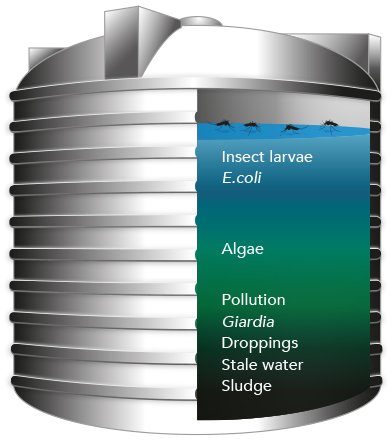
Cloudy tank water is one of the most common concerns for Australian homeowners who rely on rainwater. Whether you use your rainwater tank for drinking, washing, gardening or livestock, cloudy water is a sign that something has changed within your water storage system. While the problem is often easy to resolve, ignoring it can lead to poor water quality, blocked filters and unnecessary wear on pumps and plumbing.
Understanding what causes cloudy tank water is the first step towards restoring clean, clear water and protecting your rainwater tank for years to come.
Why Is My Tank Water Cloudy?
Cloudy water can appear suddenly after heavy rain or develop gradually over time. In many cases, the water itself is safe, but the cloudiness indicates suspended particles or biological activity that should be investigated.
Some of the most common causes include:
- Sediment stirred up after heavy rainfall
- Fine dust, dirt and organic matter entering the tank
- Algae growth caused by sunlight
- Bacterial growth inside poorly maintained tanks
- Air bubbles introduced by the pump
- Damaged or missing inlet strainers
- Dirty gutters and blocked leaf guards
- Worn or clogged water filters
Identifying the exact cause makes it much easier to choose the right solution.
Heavy Rain Can Stir Up Sediment
One of the most common reasons for cloudy rainwater is heavy rainfall. During a storm, water enters the tank much faster than usual, stirring up sediment that has settled on the bottom over many years.
This fine sediment remains suspended throughout the water for several hours or even several days before settling again.
If the cloudiness disappears after standing for a day or two, sediment is usually the cause.
How to fix it
- Allow the sediment to settle naturally.
- Avoid drawing water immediately after major storms if possible.
- Install a calming inlet that reduces turbulence.
- Schedule a professional rainwater tank cleaning if excessive sediment has accumulated.
Dirty Gutters and Roof Debris
Your roof acts as the collection surface for your entire rainwater system. Leaves, bird droppings, pollen, ash, dust and other contaminants are washed into the tank every time it rains.
Without regular maintenance, these contaminants build up and can cause cloudy water.
How to fix it
- Clean gutters regularly.
- Install quality leaf guards.
- Replace damaged gutter mesh.
- Ensure downpipes remain clear.
- Fit a first flush diverter to prevent the dirtiest roof water from entering the tank.
Algae Growth
If sunlight reaches the water inside your tank, algae can begin growing surprisingly quickly. Green algae not only make the water appear cloudy but may also produce unpleasant tastes and odours.
Common causes include:
- Clear inspection lids
- Cracked tank lids
- Missing inspection covers
- Light entering through translucent fittings
How to fix it
- Ensure the tank is completely sealed from sunlight.
- Replace damaged lids.
- Repair cracked inspection openings.
- Remove algae during a professional tank clean if necessary.
Bacteria and Organic Build-Up
Leaves, insects and organic matter gradually decompose inside rainwater tanks. This provides nutrients for bacteria and microorganisms, which can create cloudy water and unpleasant smells.
If your water has become cloudy and has an unusual odour, organic contamination may be responsible.
How to fix it
- Inspect the inside of the tank.
- Remove accumulated sludge.
- Clean the tank professionally.
- Replace old filter cartridges.
- Consider UV water treatment if the water is used for drinking.
Air Bubbles Can Make Water Look Cloudy
Not all cloudy water indicates contamination.
Sometimes water appears milky white immediately after leaving the tap because the pressure pump introduces tiny air bubbles into the water.
A simple test is to fill a clear glass and allow it to stand.
If the cloudiness clears from the bottom upwards within a minute or two, the issue is simply trapped air.
How to fix it
Usually, no repair is required. However, if the problem becomes excessive, have the pressure pump inspected for air leaks on the suction side.
Worn Water Filters
Whole house water filters gradually collect dirt, sediment and organic material. Once heavily loaded, they may reduce water flow and contribute to poor water quality.
Many homeowners forget that filter cartridges require regular replacement.
How to fix it
Replace filter cartridges according to the manufacturer’s recommended service intervals or sooner if water pressure drops or water quality declines.
How to Prevent Cloudy Tank Water
Regular maintenance is the easiest way to keep your rainwater supply clean.
A healthy rainwater harvesting system includes:
- Regular gutter cleaning
- Leaf guards
- First flush diverters
- Sealed tank lids
- Clean inlet strainers
- Routine filter replacement
- Periodic rainwater tank cleaning
- Pump servicing when required
Preventative maintenance is almost always less expensive than repairing a contaminated water system later.
Is Cloudy Tank Water Safe to Drink?
Cloudy water should never be ignored, particularly if it is being used for drinking or food preparation.
Cloudiness alone does not always indicate harmful contamination, but it can be a warning sign that bacteria, algae, sediment or organic matter are present.
If you notice cloudy drinking water, unusual smells or changes in taste, investigate the cause before continuing to use the water. Installing quality filtration and UV sterilisation can provide additional protection where rainwater supplies the household.
When Should You Call a Professional?
If cloudy water persists for several days, develops a bad smell, becomes discoloured or repeatedly returns after cleaning, it may be time for a professional inspection.
An experienced rainwater specialist can inspect your tank, pump, filters and plumbing to identify the underlying cause and recommend the most effective solution.
Keep Your Rainwater Clean All Year Round
A well-maintained rainwater tank should consistently deliver clean, fresh water. Most cases of cloudy tank water are caused by sediment, roof debris, algae or overdue maintenance, all of which can be prevented with regular inspections and servicing.
Whether you need professional rainwater tank cleaning, replacement water filters, UV water filtration, pressure pump servicing or expert advice, maintaining your entire rainwater harvesting system will help ensure reliable, high-quality water for years to come.
Solutions and How to Keep Your Rainwater Clear and safe