


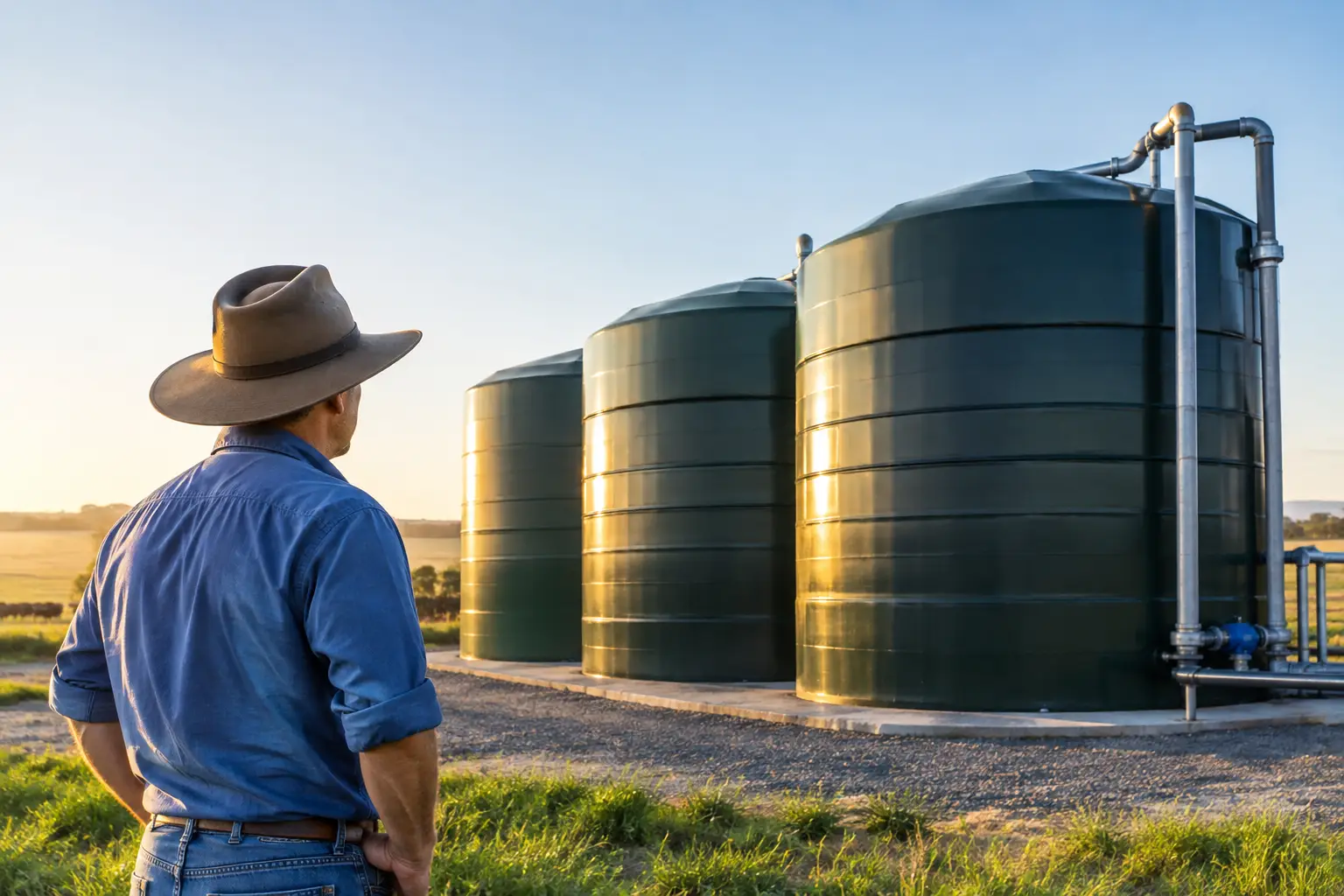
Molasses is a valuable feed input, but it is not a simple liquid to store. Thick consistency, changing temperatures and the need for clean, controlled dispensing all make molasses storage tanks a more specialised purchase than a standard rainwater tank. Get the tank, fittings and site preparation right at the start and daily feeding becomes easier, cleaner and far less wasteful.
For cattle, dairy, sheep and mixed-farming operations, the right setup depends on how much molasses you use, how it arrives on site and how it will be transferred into lick feeders, feed mixers or transport containers. A cheap tank that is difficult to empty or clean can cost far more in lost product and labour over time.
What makes molasses difficult to store?
Molasses is dense and viscous. In cooler weather it flows slowly, particularly through undersized pipework, sharp elbows and small valves. A tank that works well for water may be unsuitable for molasses if its outlet is too small, its base does not encourage drainage, or the material has not been assessed for compatibility.
Its weight also matters. Molasses is heavier than water, so a full tank places substantial load on the tank wall, base and supporting pad. Always work from the product supplier’s density information and the tank manufacturer’s approved capacity. Do not assume that a tank with a given water volume rating is automatically suitable for the same volume of molasses.
Molasses can also ferment or build pressure if it is contaminated or stored incorrectly. A properly designed vent, secure lid and clean filling arrangement help protect both the product and the tank. If the molasses includes additives, blends or minerals, check the current Safety Data Sheet and confirm material compatibility before ordering.
Choosing molasses storage tanks by material
The best material depends on the molasses formulation, storage temperature, tank size and installation method. Compatibility should be confirmed with both the molasses supplier and tank manufacturer, especially where additives are involved.
Polyethylene tanks
A purpose-approved polyethylene tank can be a practical option for many farm installations. Poly tanks are corrosion resistant, relatively easy to position and available in a wide range of capacities. For outdoor use, choose a quality UV-stabilised tank made for Australian conditions.
The key is not to select a standard poly water tank by appearance alone. The tank must be approved for the product’s specific gravity and chemical characteristics. Wall thickness, outlet reinforcement, lid design and warranty conditions all need to suit the intended use.
Steel tanks and lined systems
Steel tanks can suit large-volume storage where site access and foundations allow, but the internal lining and all wetted components must be appropriate for molasses. If a liner, coating, gasket or fitting is not compatible, the result can be contamination, corrosion or premature failure.
For large installations, a steel solution may offer worthwhile capacity and footprint benefits. It also requires careful engineering of the slab or ring base, outlet arrangement and access for cleaning and inspection.
Purpose-built industrial tanks
Where molasses is part of a commercial feed operation, a purpose-built industrial or chemical storage tank may be the sensible choice. These systems can accommodate larger outlets, manways, reinforced fittings, level monitoring and controlled transfer equipment. The higher upfront price is often justified where frequent deliveries and regular dispensing are part of the operation.
Size the tank around deliveries and usage
Tank capacity should reflect more than the number of animals on the property. Start with your average daily consumption, then consider seasonal demand, supplier delivery minimums, road access and how much reserve stock you want during wet weather or peak feeding periods.
A tank that is too small can force frequent deliveries and leave you exposed when trucks cannot reach the property. One that is excessively large may tie up working capital and leave product sitting for longer than necessary. The right answer often sits between these two extremes.
Allow for a safe operating margin rather than filling to the absolute brim. Headspace supports safe filling and reduces the chance of overflow. It also gives you room to manage delivery variations without rushing to use product that has been stored for too long.
If you are comparing several tank sizes, ask for the usable capacity, overall height, diameter, inlet height and outlet size. These measurements matter as much as the nominal litre figure, particularly under a shed, beside a feed pad or on a constrained rural site.
Fittings that make dispensing practical
The outlet is where a good molasses setup earns its keep. Small plumbing fittings intended for domestic water can restrict flow and make a thick product frustrating to handle. Specify an outlet large enough for the product, your transfer method and the distance to the feeding point.
A full-bore valve is generally easier to operate and less prone to restriction than a small, convoluted fitting. Position it where it can be reached safely and protected from stock, vehicles and accidental knocks. Include isolation points so hoses, pumps or dispensers can be serviced without emptying the tank.
Most working systems need a secure fill point, a vent, a level indication method and an outlet arrangement designed for cleaning. Depending on the setup, you may also need a transfer pump rated for viscous liquids, suitable hose, camlock-style connections, a non-return valve or a flow meter. Do not select a standard rainwater pump for molasses unless the pump supplier confirms it is designed for the application.
Cold conditions can turn a straightforward gravity-feed system into a slow job. In cooler districts, tank placement, insulated pipework or an approved heating arrangement may be worth considering. Heating must be engineered and installed safely, with controls appropriate for the tank and product. Direct, improvised heating is not a solution.
Site preparation is part of the tank purchase
A full molasses tank needs a level, stable foundation designed for the filled weight. For smaller poly tanks, this may be a properly prepared compacted base or concrete pad, subject to the tank manufacturer’s requirements. Larger or commercial installations often need an engineered slab and site-specific advice.
Choose a location that allows a delivery vehicle to fill the tank without crossing soft ground, tight gates or stock areas. Leave access around the tank for checking levels, operating valves and cleaning up spills. A tank hidden behind machinery may look tidy on day one, but it becomes difficult to use and maintain.
Think about drainage as well. Keep the installation away from waterways, drains and areas where a spill could travel downhill. Appropriate bunding or secondary containment may be required by your site conditions, local requirements or farm management plan. It is far easier to plan containment before the tank is installed than retrofit it afterwards.
Keep product quality and safety in view
A clean, sealed tank helps protect molasses from rainwater, dust, insects and other contamination. Check lids, vents and seals routinely, particularly after storms or busy feeding periods. If the product has an unusual smell, visible mould, gas pressure or unexpected separation, stop and seek advice from the supplier before using it in feed.
Record delivery dates, batch details and approximate volumes used. This gives you a clearer view of consumption and helps identify leaks, dispensing losses or changes in feed demand. It also makes it easier to plan the next delivery before stock becomes critical.
Staff and family members should know which valve does what and how to respond to a spill. Keep hoses capped when not in use, avoid overfilling portable containers, and make sure the tank is not accessible to children or animals. These simple habits protect the product and reduce avoidable mess around the feed area.
Buy for the whole system, not just the vessel
The tank is only one part of a dependable molasses handling system. Its material approval, base, fittings, transfer equipment and delivery access need to work together. Before you buy, provide the product specification, intended capacity, site photos and dispensing plan so the proposed tank can be checked against the job.
Central Coast Water Tanks is trusted for over 30 years in practical storage solutions, from coast to country. If you are planning a molasses installation alongside farm water, pumps or other rural infrastructure, speak with an experienced supplier early and build a system that remains easy to fill, operate and maintain long after the first delivery.