


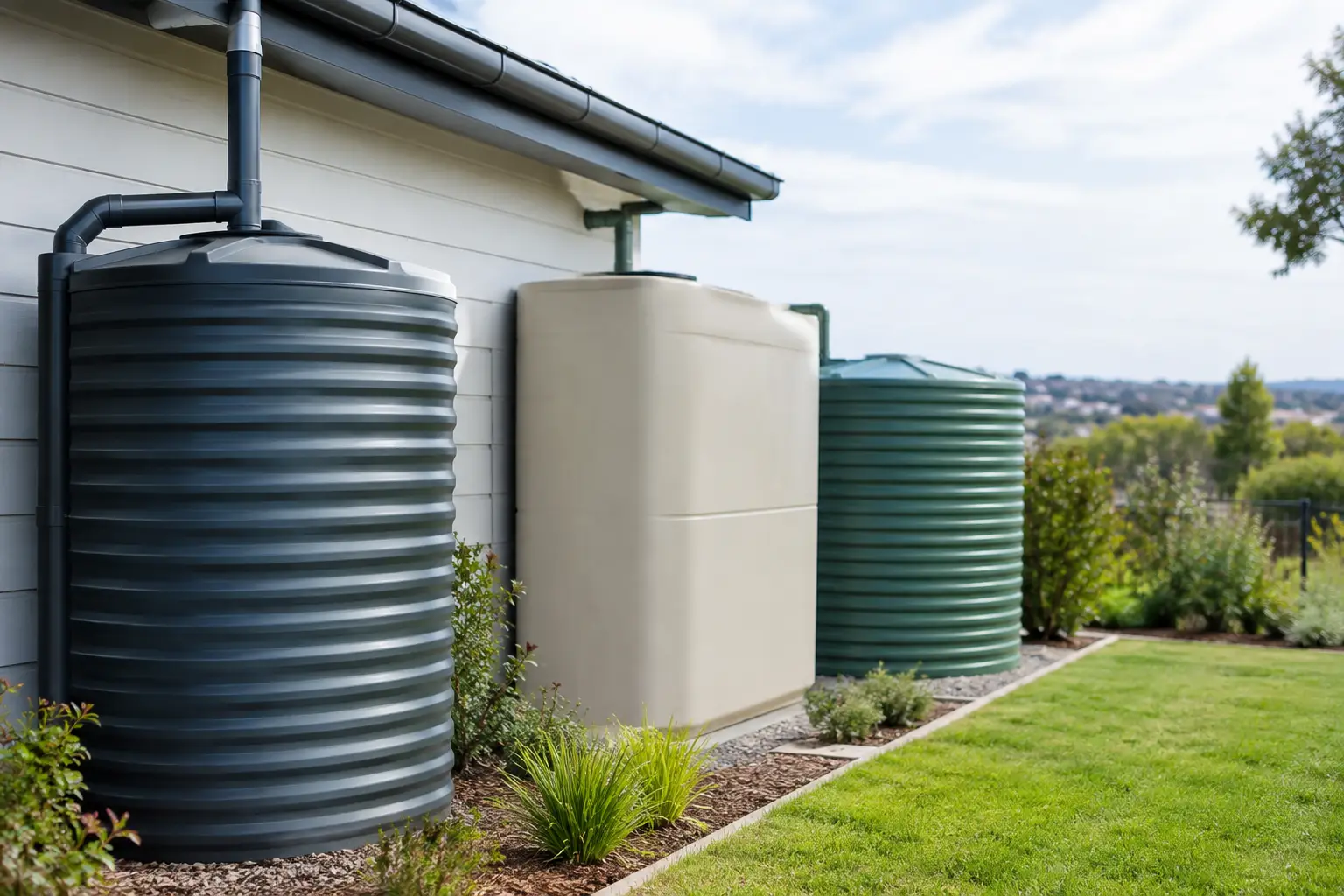
A full rainwater tank is a valuable asset, but the real question is what happens when a dry spell stretches on, the power goes out, or several people need showers before work. A rainwater mains comparison is not simply about choosing cheaper water. It is about selecting a supply arrangement that keeps your home, shed, livestock or garden reliably supplied without wasting the water you have collected.
For many Australian properties, rainwater works best alongside the mains rather than as a complete replacement. The right arrangement depends on your roof catchment, tank capacity, household demand, local rules and how much hands-on management you are comfortable with. Below is a practical comparison of the most common options.
Rainwater vs mains water: the practical difference
Mains water arrives under pressure and is treated by the local authority. It is convenient, although charges usually apply through a combination of fixed service fees and usage costs. Rainwater is collected at your property, stored in a tank and generally pumped where pressure is needed. Once the system is installed, every litre captured from the roof can reduce demand on the mains supply.
That does not mean tank water is automatically free or maintenance-free. You need suitable gutters, leaf protection, a first-flush arrangement where appropriate, a correctly sized pump and periodic checks of filters, screens and tank condition. If rainwater is used inside the house, filtration and maintenance become even more important.
The biggest difference is control. Mains water gives dependable supply with little involvement. Rainwater gives you stored water on site, useful in areas with high bills, variable supply or rural conditions, but it needs enough collection area and storage to carry you through dry periods.
Rainwater mains comparison: four common setups
1. Rainwater for outdoor use only
This is the straightforward entry point for suburban homes. Tank water is connected to garden taps, irrigation, toilet top-up in some designs, wash-down points or a shed. The house remains on mains water for drinking, showers, laundry and kitchen use.
The benefit is simplicity. You can reduce garden demand and make useful use of roof runoff without changing the whole household plumbing. A modest tank and pressure pump can be a sensible fit where space or budget is limited.
The trade-off is that savings may be smaller than with whole-house use, especially for households where most water goes through bathrooms, washing machines and toilets. It also leaves you paying for mains water whenever indoor demand is high.
2. Rainwater supplying selected household fixtures with mains backup
Many new homes and major renovations use rainwater for toilets, cold-water laundry taps and outdoor taps, while mains water supplies drinking and bathing points. A rain-to-mains switching device monitors the tank supply and changes to mains water when the tank level is too low or the pump cannot deliver water.
This arrangement can offer a strong balance of savings and convenience. The rainwater system does the work when water is available, then the mains takes over automatically when needed. There is no need to race outside and change valves during a dry spell.
It does require proper plumbing design. The rainwater and drinking-water services must be protected from cross-connection, and the installation needs to meet applicable plumbing and backflow requirements. A licensed plumber should advise on the correct setup for your state, council area and house layout.
3. Whole-house rainwater with mains changeover
On larger blocks, semi-rural homes and properties with reliable roof catchment, rainwater can supply most or all household outlets. A whole-house system commonly includes a larger tank, dependable pressure pump, sediment filtration and, where drinking water is supplied, suitable filtration such as carbon and UV treatment.
Mains water remains available as a backup through an approved changeover arrangement. For families that value water independence but do not want the risk of an empty-tank day, this is often the most practical option. It also gives you flexibility to use stored water during restrictions where permitted, subject to local conditions.
The initial cost is higher because every part of the system matters. A small pump or undersized filter can undermine an otherwise well-sized tank. Cartridge replacement, UV lamp servicing where fitted and pump checks should be budgeted from the outset. Still, for a household with good roof area and regular water use, the long-term value can be compelling.
4. Tank-only supply for off-grid and rural properties
For properties beyond the reticulated water network, there is no mains comparison in the usual sense. Rainwater storage is the primary domestic supply, often supported by bore water, dam water or carted water when conditions demand it.
Storage capacity is the safety margin. A rural household may need enough water to cover drinking, washing, toilets, fire preparedness and stock requirements through a long dry period. The right tank size is therefore based on annual rainfall and roof area, but also on the worst months of the year, household occupancy and delivery access for water carts.
A tank-only property should avoid relying on one component. Consider a quality pressure pump, spare filtration cartridges, accessible isolation valves and a backup power plan where loss of power also means loss of water pressure. For potable supply, treatment should be matched to the source and maintained on schedule.
What usually decides the better option
The cheapest system to buy is not always the best-value system to own. Start with your water demand. A couple in a small home with a productive garden has different needs from a family of five, a hobby farm or a property running cattle troughs and irrigation.
Next, look at the roof. Large, clean roof catchments fill tanks quickly, while a small roof may struggle to support high household demand regardless of tank size. A bigger tank cannot create rainfall, but it can hold more of the rain you do receive for the dry months.
Tank location also affects the decision. Slimline tanks suit side passages, round poly tanks offer excellent capacity for their footprint, and underground tanks can keep yards clear where access and excavation allow. On acreage, larger steel AquaPlate or poly tanks may make more sense because capacity and truck access are usually less restricted.
Finally, think about your tolerance for interruption. If an empty tank would be more than an inconvenience, automatic mains backup is worth serious consideration. If you have no mains available, extra storage and a conservative water-use plan are the equivalent protection.
Pumps, switches and filters are not optional extras
A rainwater system is only as useful as the equipment moving and protecting the water. A pressure pump should match the number of outlets, expected flow rate and pipe run. A pump that is too small can leave showers weak when another tap opens. One that is poorly selected or installed can cycle excessively and wear sooner than it should.
Rain-to-mains switches are designed to maintain supply when the tank is low. They are useful for automatic convenience, but they are not a substitute for adequate tank capacity. If the system spends months on mains water, the issue may be storage, catchment, leaks or water demand rather than the switch itself.
For water used at taps inside the home, filtration needs careful thought. Sediment filtration protects appliances and improves water quality by catching fine particles. Carbon filtration can assist with taste and odour. UV filtration treats microbiological risks when the system is correctly specified and maintained. The best arrangement depends on whether the water is for garden use, laundry, whole-house supply or drinking.
Avoid these costly comparison mistakes
Do not compare systems on tank price alone. Include the base, delivery access, gutters, screens, plumbing, pump, filtration, electrical work and installation. A packaged tank, pump and filter solution can make budgeting clearer and reduce the chance of incompatible parts.
Do not assume every rainwater connection is permitted in the same way. Requirements vary between jurisdictions, particularly where mains backup and internal household plumbing are involved. Use a licensed plumber and check local requirements before work begins.
Also, do not overlook maintenance. Clear gutter debris, inspect inlet screens, check the pump and replace cartridges at the recommended interval. These small jobs protect water quality and help the system perform when you need it most.
Choosing a system that will still suit in five years
If your aim is lower mains use without changing household plumbing, outdoor rainwater supply is a sound starting point. If you want meaningful household savings with no dry-weather fuss, rainwater feeding selected fixtures with automatic mains backup is often the sweet spot. For acreage and rural homes, larger storage with reliable pumping and suitable treatment can turn roof runoff into a dependable primary resource.
Central Coast Water Tanks has been trusted for over 30 years to help customers match tanks, pumps, rain-to-mains switches and filtration to real property needs, from coast to country. Choose the system around your worst dry month, not just your wettest weekend, and you will have water security that earns its place year after year.