

choosing the best pump for rainwater systems is essential a pump that is too small will leave you with weak pressure at the tap. A pump that is too large can short cycle, wear faster and cost more to run than it should. If you are trying to work out the best pump for rainwater tank use, the right answer comes down to how you use the water, how far it needs to travel and how consistent you need the pressure to be.view our range of water tanks pumps’ and pressure systems pumps
For most property owners, choosing a rainwater pump is not really about finding the single “best” model. It is about matching the pump to the job. A household supplying toilets, laundry and showers needs a different setup from a garden tank feeding a hose, and both are different again from a farm transfer system moving large volumes over distance.
What makes the best pump for rainwater tank use?
The best pump for rainwater tank applications is one that delivers enough flow and pressure for your property without being oversized or hard to maintain. In practice, that means looking at four things first: where the water is going, how many outlets may run at once, the vertical lift from tank to outlet, and the pipe length and diameter.
Pressure matters because it affects how usable the system feels day to day. If you are supplying a home, low pressure at the shower or washing machine quickly becomes frustrating. Flow matters because several fixtures may need water at the same time. A pump can have decent pressure on paper but still struggle if two taps, a toilet and the washing machine are all drawing at once.
Reliability matters just as much as performance. Rainwater systems are often expected to work quietly in the background for years. A good pump should be suited to Australian conditions, easy to service and compatible with the tank, controller and filtration system fitted to the property.
The main pump types for rainwater tanks
The most suitable pump type depends on your installation. There is no single answer for every site.
Pressure pumps
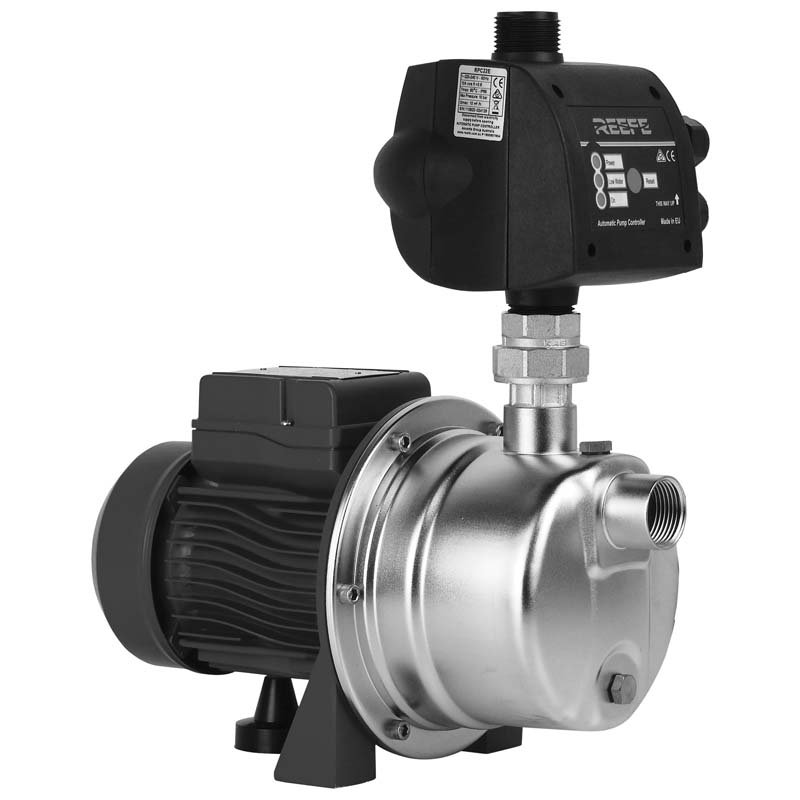
Pressure pumps are the most common option for domestic rainwater supply. They are designed to start automatically when a tap or appliance calls for water and stop when demand ends. For homes using tank water for toilets, laundry, outdoor taps or even full household supply, this is often the practical choice.
A quality pressure pump offers consistent delivery and suits day-to-day use. The trade-off is that pump sizing matters. If it is not matched properly to household demand, it may cycle too often or fail to deliver the pressure expected.
Jet pumps
Jet pumps are often used where the pump is installed above ground and needs strong suction capability from the tank. They are common in domestic and light rural applications and are generally straightforward to access for service.
They can be a solid choice where installation conditions are suitable, although they may be noisier than some alternatives. If the pump is going near a bedroom wall or outdoor living area, noise is worth considering early.
Multistage pumps
Multistage pumps are well suited to households that want stable pressure across multiple outlets. They are designed for higher efficiency and smoother operation, which makes them popular for larger homes or setups where pressure consistency matters.
They usually cost more upfront than basic pump options, but the performance can justify it. If your rainwater tank is supplying more than just a garden hose, a multistage pump is often worth a serious look.
Submersible pumps
Submersible pumps sit inside the tank rather than outside it. Because they operate underwater, they are generally quieter and protected from weather exposure. They can be an excellent option where space is tight or where minimising pump noise is a priority.
The main trade-off is service access. While many submersible systems are reliable, maintenance is less convenient than with an external pump. For some properties that is a minor issue. For others, especially where easy access is important, an external pressure pump may be preferred.
How to choose the right size pump
Pump sizing is where many problems start. Bigger is not automatically better.
A small garden application may only need modest flow and pressure, particularly if it is feeding a hose, drippers or light irrigation. A whole-of-house setup is different. If several outlets may operate together, the pump needs enough capacity to keep up without pressure dropping away.
Start by thinking about peak demand, not just average use. A family home may have someone showering while the toilet refills and the washing machine runs. On a rural property, there may also be outdoor taps, troughs or irrigation points in the mix. That peak period is what the pump needs to handle comfortably.
Pipe run also matters. Water pushed a long distance, uphill or through undersized pipe loses pressure along the way. A pump that looks adequate on a product sheet may underperform once those site conditions are factored in. This is why a proper assessment of head, flow and pipework matters before you buy.
Best pump for rainwater tank household supply
If your tank supplies household fixtures, the best pump for rainwater tank household use is usually an automatic pressure pump or multistage pressure system sized to your peak demand. These pumps are designed for regular starts and stops, consistent pressure and compatibility with common household plumbing layouts.
For a smaller home using rainwater for toilets, laundry and outdoor taps, a compact automatic pressure pump may be enough. For a larger household, dual occupancy setup or property with several active outlets, a multistage pump generally provides better performance and a more stable result.
If drinking water is part of the system, the pump should also work properly with your filtration and treatment equipment. Filters add resistance, and UV systems require dependable flow conditions. The pump, filtration and controls should be selected as one system rather than as separate pieces.
Best pump for garden, farm and transfer use
Not every rainwater tank is feeding a house. Some are there for irrigation, stock water, washdown or transferring stored water between tanks.
For garden use, the right pump is often a smaller pressure pump or transfer pump depending on whether you need pressure at a tap or just movement from one storage point to another. If irrigation is the main purpose, flow rate becomes critical. Drippers, sprinklers and hose use all have different requirements.
On farms and larger acreage, transfer duty can call for a different approach. Moving high volumes over distance is not the same job as supplying a bathroom. In those cases, pump durability, motor quality and duty cycle become especially important. A pump chosen for household pressure may not be the right tool for regular transfer work.
Installation details that affect performance
Even a good pump can disappoint if the installation is poor. Suction line setup, pipe sizing, isolation valves, foot valves, pressure controllers and tank outlet position all affect the final result.
Pump location is one example. External pumps should be protected from weather and installed where they are easy to inspect. They also need stable mounting to reduce vibration and noise. Long suction lines can create priming issues or reduce efficiency, so layout matters.
Filtration also plays a role. If leaves, sediment or fine debris are making their way through the system, pump wear increases and downstream equipment can suffer. A proper rain harvesting setup should include suitable strainers or filtration before water reaches sensitive components.
Common mistakes when choosing a rainwater tank pump
One of the most common mistakes is buying by horsepower alone. Motor size tells only part of the story. Flow curve, head performance and duty type matter more.
Another mistake is assuming every home needs the same pump. A small weekender, a family house and a mixed-use rural property all draw water differently. The best choice depends on real demand, not guesswork.
Noise is often overlooked as well. A pump mounted close to living areas can become an annoyance if it starts frequently. In those situations, pump type and installation method deserve extra attention.
The last issue is piecing together a system from mismatched components. Pump, controller, tank fittings and filtration should work together. That is where practical advice from a supplier with experience across tanks, pumps and treatment equipment can save time and prevent costly changes later.
When expert advice is worth it
If your setup is simple, such as a single garden tap off a small tank, pump selection can be fairly straightforward. Once you move into household supply, long pipe runs, changeover systems or filtration, it becomes more technical.
That is where tailored advice makes a difference. A supplier with hands-on experience can help match the pump to the property, water demand and tank arrangement rather than just selling a unit off a shelf. For many customers, that means fewer performance issues and better long-term value. At North Coast Water Tanks, that practical approach is a big part of getting systems right the first time.
The right pump should feel dependable, not complicated. If it matches your tank, your pressure needs and the way your property actually uses water, you will notice the result every day – steady flow, less fuss and a system that does its job properly.
best pump for rainwater tank installations