


A rainwater tank can be the difference between a property that copes comfortably through a dry spell and one that is constantly watching the water level. For many Australian homes, farms and acreage blocks, rainwater tanks are not an optional extra. They are a practical part of daily water supply, providing water for household use, livestock, gardens, wash-down areas and fire preparedness.
The right system is more than a tank placed under a downpipe. Tank capacity, roof catchment, site access, pump selection, filtration and maintenance all affect how dependable your stored water will be. Getting these decisions right at the start prevents costly changes later.
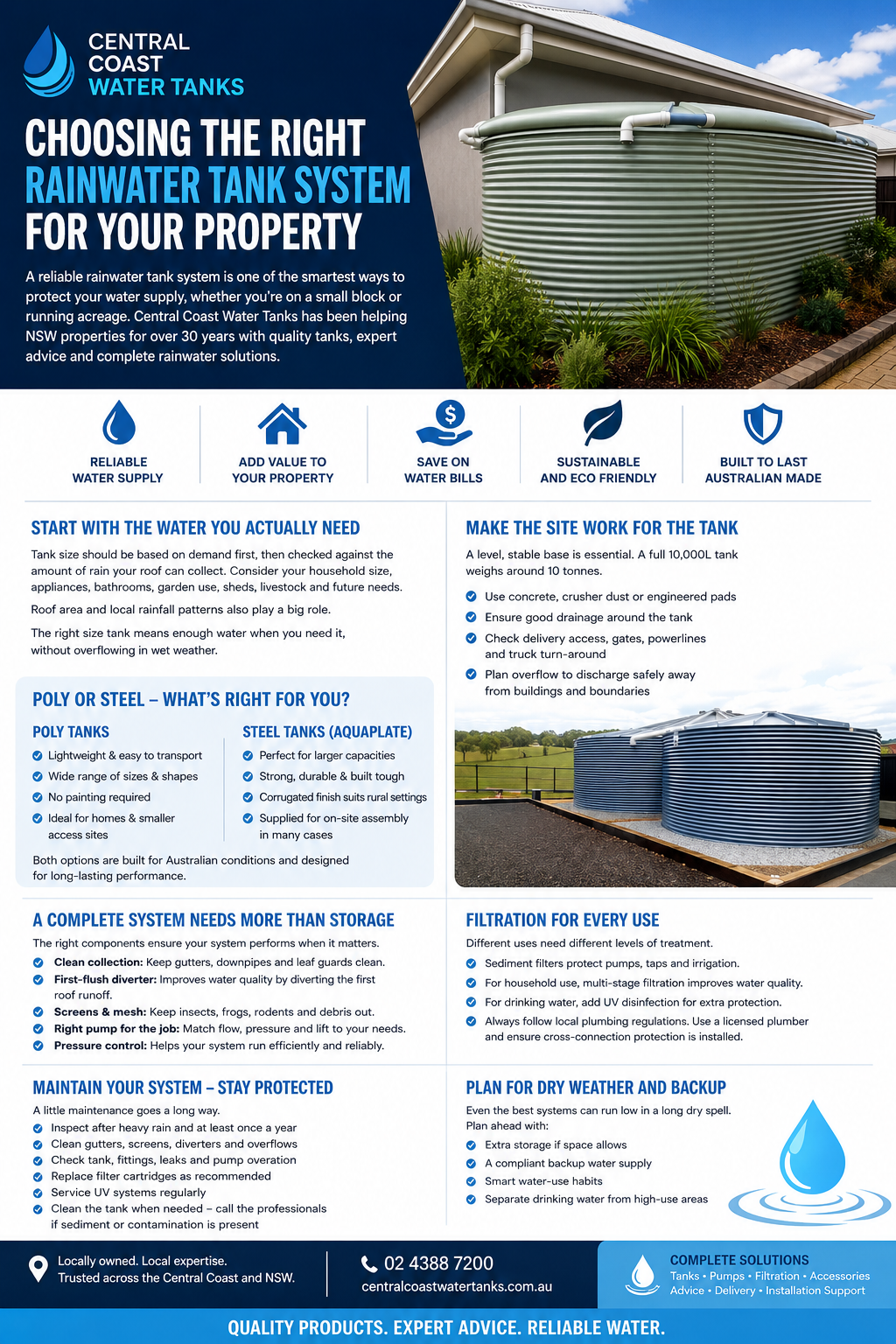
Start with the water you actually need
Tank size should be based on demand first, then checked against the amount of rain your roof can collect. A large tank is useful only if your roof and local rainfall can replenish it. Equally, a tank that is too small may overflow regularly in wet weather but leave you short when rainfall drops away.
For a household using rainwater as its primary supply, consider the number of residents, appliances, bathrooms, toilets, garden use and whether water is also needed for sheds or livestock. A weekend property will generally use far less water than a family home, while a farm may have seasonal demand that changes significantly during dry periods.
Roof area is the other half of the calculation. Every square metre of roof can collect a meaningful amount of water over a year, but losses occur through first-flush diversion, gutter overflow, evaporation and rainfall that is too light to create useful runoff. Local rainfall patterns matter more than an annual average. A district with heavy summer downpours and a long dry season needs enough storage to carry water between events.
It is often sensible to allow room for future demand. An extra bathroom, a growing family, stock expansion or a larger garden can change the system requirement quickly. Where space and budget allow, installing additional storage capacity upfront is usually easier than modifying pipework and foundations later.
Choosing between poly and steel rainwater tanks
Both poly and steel tanks can provide long service when correctly specified, installed and maintained. The better choice depends on site conditions, access, required capacity and personal preference.
Poly water tanks are a popular option for homes, rural properties and sites with restricted access. They are lightweight compared with steel tanks, available in a wide range of capacities and shapes, and do not require painting. A slimline poly tank can work well beside a home, while larger round tanks suit open blocks where footprint is less restricted. Look for food-grade materials and products manufactured for Australian conditions.
Steel and Aquaplate water tanks are often selected for larger capacities, rural applications and properties where a traditional corrugated finish suits the setting. They can be an effective choice where delivery access is limited, as some tanks are supplied for assembly on site. Tank liners are a key part of this system and should be matched to the tank design and intended water use.
There is no single best material for every property. A large steel tank may be ideal for a farm with high water demand, while a poly tank may be more practical for a suburban home with narrow side access. The important point is to choose a quality tank with the appropriate fittings, warranty support and suitability for potable water where drinking supply is required.
Make the site work for the tank
A rainwater tank needs a level, stable base that supports its full weight. Water is heavy – a 10,000-litre tank holds approximately 10 tonnes when full. An uneven or poorly prepared base can cause tank distortion, fitting stress, drainage problems and premature failure.
The base should be properly compacted and sized to support the entire tank floor. Concrete slabs, crusher dust bases and engineered pads can all be suitable depending on the tank type and site. The surrounding ground should drain away from the tank, rather than allowing stormwater to pool around it.
Before ordering, check the delivery path, gates, overhead powerlines, slopes and turning room for trucks. Also consider where the overflow will go during major rain events. It should discharge safely away from buildings, neighbouring properties and the tank base.
A complete system needs more than storage
The tank stores the water, but the collection and delivery equipment determines how well the system performs. Gutters and downpipes should be clean, correctly sized and securely connected. Leaf protection helps reduce debris entering the system, particularly around trees, but it still needs periodic cleaning.
A first-flush diverter can improve stored-water quality by sending the first portion of roof runoff away from the tank. This is especially useful after dry weather, when dust, leaves and bird droppings may have accumulated on the roof. The diverter must be sized correctly and maintained, otherwise it can become another point of blockage.
Tank inlets and overflows should be screened to help keep insects, frogs, rodents and debris out. Mosquito-proof mesh is a small component with a major role in tank hygiene. Check it routinely for damage or blockage.
For water supplied to taps, toilets, washing machines or irrigation, select a pump that matches the job. Pump performance is not just about flow rate. It must also account for the vertical lift from the tank, pipe length, friction losses, the number of outlets in use and the pressure needed at the point of use. An oversized pump can waste energy and create excessive pressure, while an undersized unit can leave showers weak and irrigation ineffective.
A pressure controller or pressure tank may be appropriate depending on the pump arrangement. These components help the system respond reliably to changing demand and can reduce unnecessary pump cycling.
Filtration depends on how the water is used
Water for garden irrigation has different treatment needs from water used for drinking, cooking and bathing. In many cases, a sediment filter is enough to protect pumps, taps and irrigation equipment. For household supply, staged filtration may be required to remove sediment and improve water quality before it reaches internal plumbing.
If rainwater is intended for drinking, consider the whole treatment train: roof condition, gutters, screens, first-flush diversion, tank hygiene, filtration and disinfection. UV sterilisation can provide an additional barrier against microorganisms, but it relies on clear water and correctly maintained pre-filtration. A UV unit cannot compensate for a neglected tank or clogged filters.
local requirments can vary, particularly where rainwater systems connect to internal plumbing or where a property has a backup mains supply. A licensed plumber should complete plumbing work and ensure any cross-connection protection is correctly installed. For commercial and agricultural sites, water quality needs may also depend on the intended use and relevant industry requirements.
Maintain your rainwater tank before problems build up
Rainwater systems are relatively low maintenance, not no maintenance. A short inspection after heavy weather and a more thorough check at least annually can prevent many common issues.
Check gutters, leaf guards, inlet screens, overflow mesh, downpipes and first-flush devices for debris. Inspect the tank exterior for signs of movement around the base, damaged fittings, leaks or sunlight reaching areas that should be sealed. Listen for pumps cycling when no water is being used, as this can indicate a leak or pressure issue.
Filter cartridges need replacement according to water quality, usage and the manufacturer’s recommendations. Do not wait until water flow falls away completely. If a UV system is installed, the lamp and sleeve also require scheduled servicing to maintain treatment performance.
Tank cleaning is not needed on a fixed schedule for every property. It depends on the roof environment, the quality of incoming water, the amount of sediment in the tank and the water’s intended use. If sediment is building up, water has an unusual taste or smell, or contamination is suspected, arrange a professional assessment and cleaning rather than trying to work inside a tank yourself.
Plan for dry weather and system backup
Even well-sized rainwater tanks can run low after an extended dry period. A sensible system plan includes knowing how you will manage that risk. This may mean installing more storage, connecting a compliant backup supply, reducing non-essential use, or separating drinking water from high-volume irrigation demand.
For rural and coastal properties, reliable local advice can save time when selecting tank sizes, pumps, filtration and accessories that work together. North Coast Water Tanks can assist with an end-to-end system, from storage and liners through to pumping, filtration and practical installation support.
A well-planned tank system should be easy to live with: clean water where it is needed, enough reserve for changing conditions, and equipment you can inspect and service without guesswork. Start with realistic demand, prepare the site properly and choose components that suit the whole system, not just the tank.
Rainwater Tanks for Reliable Water Supply