


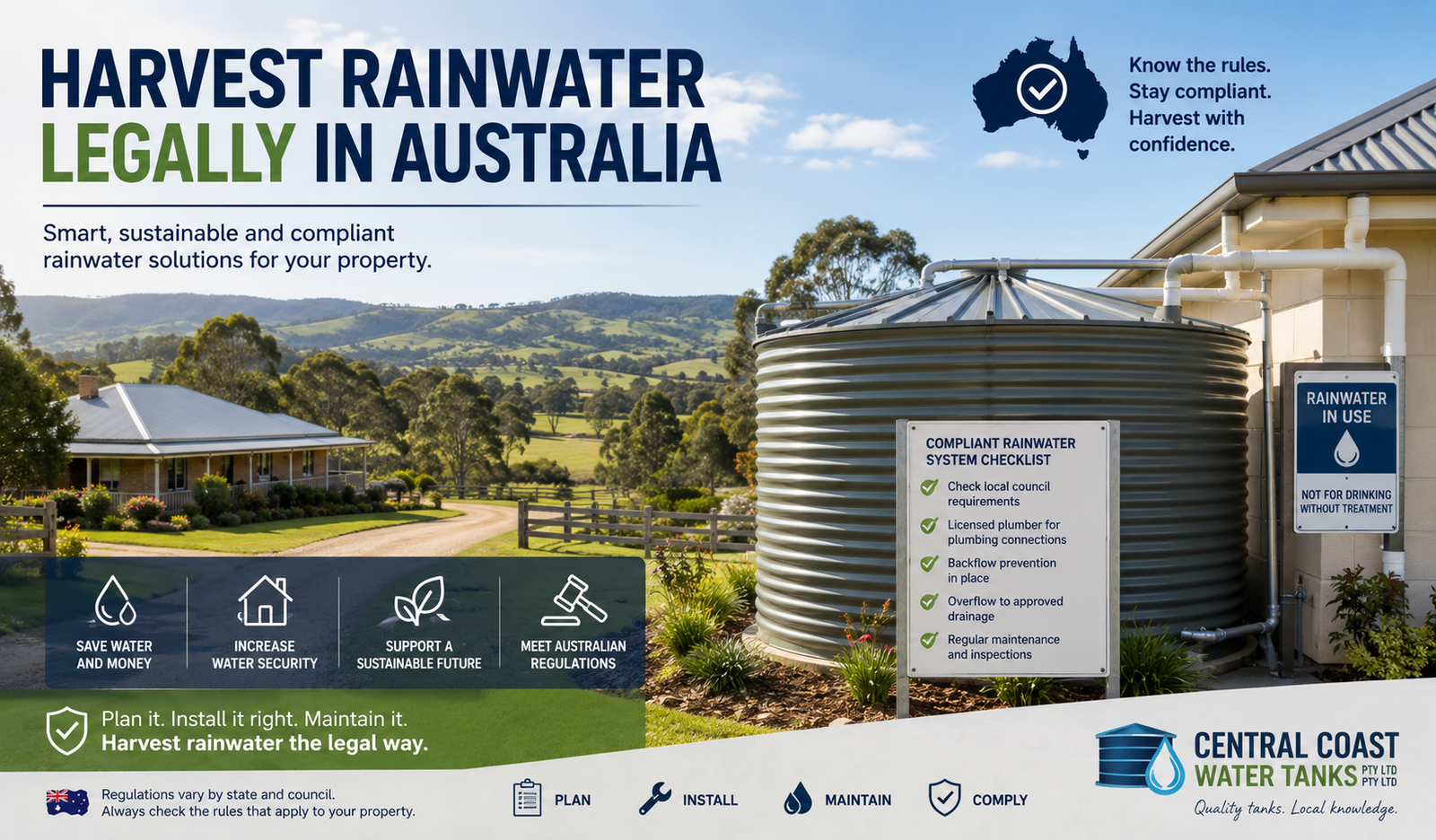
Installing a rainwater tank is one of the most practical ways to reduce your reliance on town water, lower water bills, and improve water security throughout the year. Whether you own a suburban home, rural property or commercial premises, collecting rainwater is generally permitted across Australia. However, understanding the legal requirements before installation is essential.
Although harvesting rainwater is widely accepted, there are still planning regulations, plumbing standards and health requirements that may apply depending on your location and how the stored water will be used. Spending a little time planning your system before installation can save significant costs and help ensure your rainwater system complies with local regulations.
Understanding Rainwater Harvesting Regulations
In most parts of Australia, you are legally allowed to collect rainwater that falls onto your roof. The regulations generally focus less on collecting the water itself and more on how your rainwater tank is installed, connected and used.
Requirements can differ between states, territories and local councils. Before purchasing a tank, it is worth confirming whether planning approval, building approval or exempt development rules apply to your property.
Some factors that may affect approval include:
- The size of the rainwater tank
- Distance from property boundaries
- Installation in heritage or environmentally sensitive areas
- Bushfire or flood-prone land
- Elevated or underground tank installations
Your local council and licensed installer can advise on the requirements that apply to your property.
Choosing the Right Location
Where your rainwater tank is positioned is just as important as selecting the correct size.
A full rainwater tank is extremely heavy. Every litre of water weighs approximately one kilogram, meaning a 22,500-litre tank weighs well over 22 tonnes when full. For this reason, every tank should be installed on a properly prepared, level base capable of supporting the load for many years.
The location should also provide:
- Easy connection to existing downpipes
- Good access for future servicing
- Adequate space for maintenance
- Safe clearance from underground services
- Efficient drainage for overflow water
Planning for maintenance access now makes inspections, cleaning and repairs much easier throughout the life of the system.
Plumbing Must Meet Australian Standards
A simple garden tap connected to a rainwater tank is relatively straightforward. However, once rainwater is connected to household plumbing, compliance becomes much more important.
If rainwater supplies toilets, washing machines or drinking water, the installation should be completed by a licensed plumber familiar with Australian plumbing regulations.
Proper installations may include:
- Backflow prevention devices
- Mains water changeover systems
- Clearly identified rainwater pipework
- Appropriate pressure control
- Safe separation between rainwater and mains water supplies
These measures help protect both your household water quality and the public water supply.
Selecting the Right Filtration System
The quality of your stored rainwater depends on much more than the tank itself.
Leaves, dust, insects and organic matter naturally wash from the roof into the system during rainfall. A well-designed filtration system helps maintain cleaner water while reducing maintenance requirements.
Many systems include:
- Leaf strainers
- First-flush diverters
- Sediment filters
- Carbon filters
- UV sterilisation for potable water applications
The right filtration setup depends on how the water will be used. Water intended for garden irrigation requires far less treatment than water being used throughout the home.
Regular Maintenance Protects Water Quality
Installing the system correctly is only the first step. Ongoing maintenance keeps your rainwater safe while protecting your investment.
Routine maintenance should include:
- Cleaning gutters regularly
- Checking inlet strainers
- Inspecting mosquito-proof screens
- Examining lids and fittings
- Looking for leaks or cracks
- Replacing filter cartridges
- Servicing UV systems where installed
Over time, sediment naturally settles inside the tank. Professional tank cleaning may be beneficial depending on roof conditions, surrounding vegetation and how heavily the stored water is used.
Selecting the Right Tank Size
Choosing the correct tank capacity involves more than measuring available space.
A properly sized system considers:
- Annual rainfall
- Roof catchment area
- Household water usage
- Garden irrigation requirements
- Livestock demand
- Fire protection storage
- Future water requirements
Selecting a tank that is too small can leave you short of water during dry periods, while an oversized system may not deliver the best value for your investment.
Choosing Quality Equipment
A dependable rainwater system is built around quality components that work together.
Poly rainwater tanks remain one of Australia’s most popular choices thanks to their durability, UV resistance and wide range of sizes. Steel rainwater tanks also offer excellent long-term performance, particularly where larger storage capacities or specific design preferences are required.
When water is intended for household use, always select food-grade tanks manufactured specifically for Australian conditions.
Why Professional Advice Matters
Every property is different. Roof size, available space, rainfall patterns and intended water use all influence the ideal system design.
At Central Coast Water Tanks Pty Ltd, we help homeowners, rural property owners and businesses select complete rainwater harvesting solutions, including quality rainwater tanks, pressure pumps, filtration systems, UV treatment and accessories. Our experienced team can recommend a system designed to suit your property’s individual requirements.
Final Thoughts
Harvesting rainwater legally in Australia is generally straightforward when the system is properly planned from the beginning. Checking local council requirements, installing the tank on a suitable base, using licensed trades where required and maintaining the system regularly will help ensure years of reliable performance.
A professionally designed rainwater harvesting system not only provides dependable water throughout the year but also adds long-term value to your property while supporting sustainable water management.
Disclaimer: Regulations relating to rainwater harvesting vary between Australian states, territories and local councils. Always confirm the requirements that apply to your location before installing or connecting a rainwater tank.
Harvest Rainwater Legally in Australia