

A tiny home on the Central Coast may use less water than a conventional house, but it still needs a well-planned water supply. Limited storage, compact plumbing, and variable rainfall mean every part of a tiny home’s water system must work in harmony: from collection and storage to pumping, filtration, hot water, and waste management. When sized correctly, this system is easier to maintain, more cost-effective, and more reliable during dry spells.
For tiny homes on the Central Coast, the design depends on whether the home is permanently placed, often moved, tied to mains water, fully off-grid, or just a weekend getaway. It’s not just about fitting a large tank; it’s about matching storage and equipment to actual usage, roof size, and the water quality you need.
Begin by calculating daily water demand. Water storage should reflect how many people live in the home and their habits. On the Central Coast, a careful household might use 80 to 120 litres per person per day. For a couple, starting with 200 litres per day is sensible. A 5,000-litre tank might give around 25 days of supply, but larger tanks help in dry periods.
Separate essential water use—drinking, cooking, showering, and toilet flushing—from optional uses like gardening. Water-efficient fixtures, like dual-flush toilets and low-flow showerheads, help balance comfort with conservation.
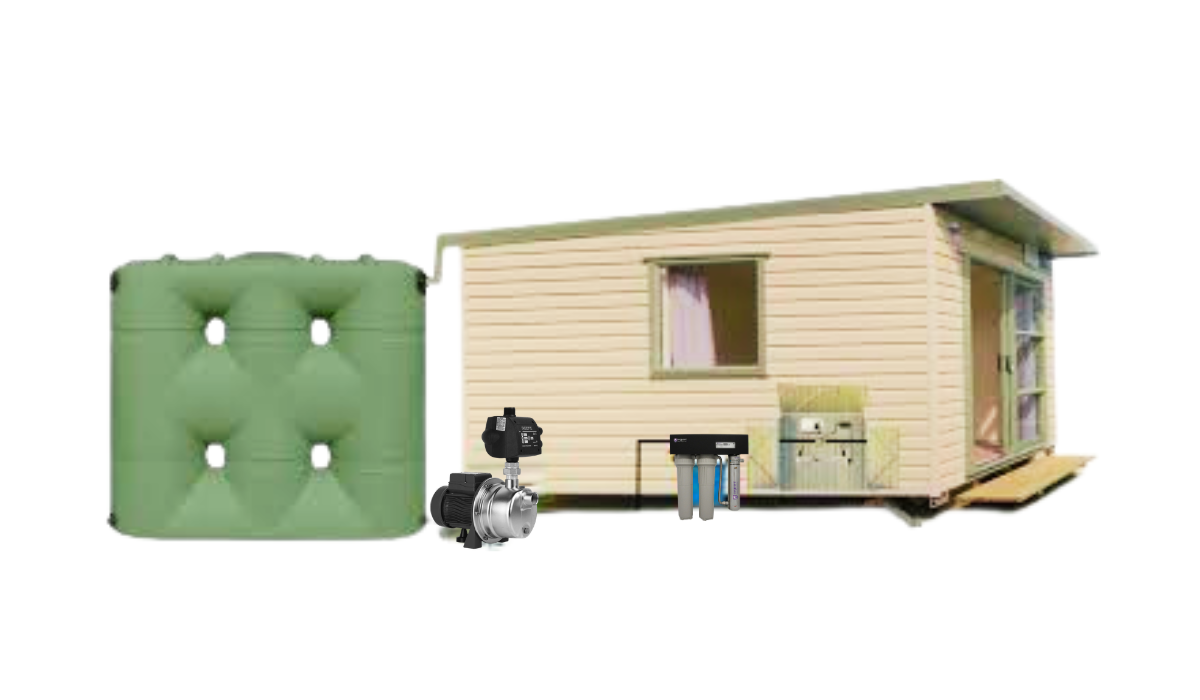
Select a tank suited to the Central Coast setting. Poly tanks are popular because they’re lightweight, durable, and available in slimline shapes ideal for tight spaces. For mobile tiny homes on the Central Coast, weight is critical—a full 2,000-litre tank adds two tonnes. Often, it’s better to keep the tank on a stable pad beside the home.
Ensure the tank works with roof catchment. One millimetre of rain on one square metre of roof gives one litre. If your Central Coast roof is 50 square metres, 100 millimetres of rain can yield 5,000 litres. Maximize your catch by including awnings or nearby structures.
Build the collection system carefully. Clean gutters, well-sized downpipes, leaf strainers, and first-flush devices keep rainwater pure. A screened inlet and overflow prevent pests, and regular checks ensure hygiene.
Choose a pump that suits your Central Coast lifestyle—one that balances flow, pressure, and power use, especially if you rely on solar. And remember, filtration depends on use: basic sediment filters may suffice for washing, but drinking water often needs carbon filtration and UV sterilization.
Finally, don’t neglect wastewater. Tiny homes on the Central Coast need approved systems—septic, composting, or council connections—so plan your wastewater with equal care. At Central Coast Water Tanks, we help craft integrated, practical water systems, ensuring quality, compliance, and local support—so you can enjoy the freedom of tiny home living on the Central Coast.