


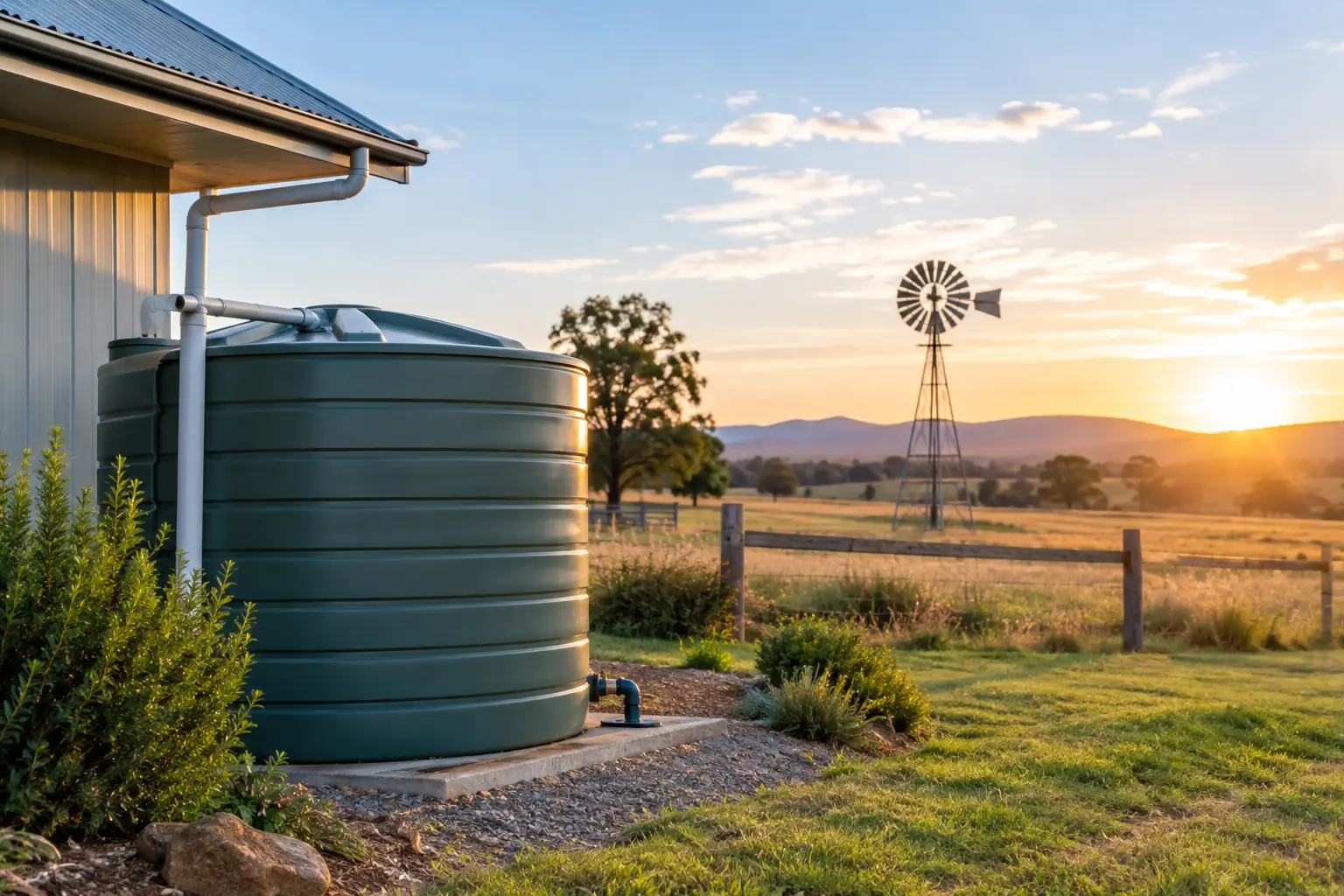
A rural property can have plenty of roof area, a decent tank and still run short of water when it matters most. The usual problem is not one failed product. It is a system that was sized for average conditions, not a dry spell, a full house, stock demand or a long irrigation run. This rural water system guide explains how to plan the collection, storage, pumping and treatment equipment as one working setup.
For acreage homes, farms and remote blocks, the right answer depends on how water is used. A family relying on rainwater has different priorities from a cattle property filling troughs, and both differ again from a shed needing fire water or a grower running irrigation. Start with demand and site conditions, then select quality products that can work together for years.
Start With Your Water Demand
Before choosing tank capacity, work out where the water will go. Household demand includes drinking, showers, toilets, washing machines, taps and outdoor use. Add guests, a granny flat, a caravan site or a future extension if those are likely. On rural properties, stock troughs, wash-down areas, gardens, irrigation and firefighting reserves can quickly become the larger part of the calculation.
Daily consumption is only one side of the equation. You also need to allow for the longest likely period without useful rainfall. A property on the Central Coast may receive more annual rain than an inland Hunter Valley block, but rainfall timing matters more than the annual total. A few heavy storms do not help much if the tank overflows in winter and runs low through a hot, dry stretch.
For a household that depends entirely on tank water, more storage usually provides more security. It also gives you room to capture heavy rainfall rather than watching it leave through the overflow. For a property with mains backup, a smaller tank may be suitable, particularly where the main goal is garden use, toilet and laundry supply, or reducing water bills. The trade-off is simple: larger storage costs more upfront and needs more space, but it reduces reliance on deliveries and mains water when conditions turn dry.
Rural Water System Guide: Calculate Your Catchment
Your roof is the catchment. Its collection potential is based on roof area, local rainfall and collection efficiency. As a simple planning estimate, one millimetre of rain falling on one square metre of roof produces one litre of water before losses. A 200 square metre roof receiving 25 mm of rain can therefore collect about 5,000 litres, less a sensible allowance for first-flush diversion, overflow and minor losses.
This calculation helps identify a common mismatch. A huge tank connected to a small shed roof may not refill quickly enough, while a modest tank connected to a large house and shed roof may spill valuable water in every decent downpour. If you have several roofs, consider whether they can be connected safely and practically to increase your catchment.
Good collection starts at the gutter. Keep gutters clean, make sure downpipes are appropriately sized and fit leaf strainers where needed. First-flush devices can help divert the initial dirty water after dry weather, especially around trees, dusty paddocks and bird-prone roof areas. They need checking and cleaning, though. A neglected first-flush device is not doing its job.
Tank placement matters as well. Choose accessible ground with suitable support, enough clearance for installation and room to inspect inlets, overflows and outlets. Poly tanks are a practical choice for many homes and rural blocks because they are durable, lightweight and available in a wide range of sizes and colours. Steel AquaPlate tanks can suit customers seeking larger capacities, a classic rural look or specific site requirements. Underground tanks are worth considering where space, appearance or site layout makes above-ground storage difficult, but excavation, access and installation costs need to be allowed for from the start.
Choose Storage for Each Job
It is tempting to put every water use on one tank. Sometimes that works. Often, separating critical supply is the smarter approach. A dedicated domestic tank protects household water from high outdoor use. A separate stock or irrigation tank lets you manage agricultural demand without risking the home supply. Where fire preparedness is a priority, speak with your builder, insurer or relevant authority about required access, fittings and any dedicated reserve.
Tank shape is not only an appearance decision. Slimline tanks can work beside a house, under-deck tanks suit tight spaces, and round tanks generally offer excellent capacity for the footprint on open rural land. Consider delivery access too. A steep driveway, narrow gate or difficult paddock track can affect what can be delivered and positioned safely.
Do not overlook fittings. An outlet that is too small can restrict flow. An overflow that is poorly directed can erode ground around the tank. A screened inlet helps keep debris and insects out, while a properly positioned tank outlet helps limit sediment reaching the pump. These details are inexpensive compared with correcting a poor installation later.
Match the Pump to the Application
A pump should be selected for the job it actually has to do, not just because it has a high maximum flow figure. Household pressure pumps need to provide steady pressure for showers, taps, toilets and appliances, including times when more than one fixture is running. A farm or irrigation pump may need higher flow for sprinklers, long runs of pipe or multiple troughs. Fire pumps have their own duty requirements and should be selected for the intended firefighting setup.
The two figures that matter most are flow and pressure, also called head. Long pipe runs, elevation changes, narrow pipe and filters all reduce available pressure. A pump that performs well beside the tank may disappoint at a trough several hundred metres uphill. Share the pipe length, pipe diameter, height difference and intended outlets before buying. That information leads to a much better pump choice than simply choosing the biggest motor.
For household systems, a pressure controller or pressure tank can improve operation depending on the pump design. Dry-run protection is worthwhile where a tank could run low, as it can help prevent pump damage. If your home also has mains water, a rain-to-mains switch can automatically change supply when tank water is unavailable. This is particularly useful for occupied homes, holiday rentals and properties where no one wants to manually manage valves during a dry period.
Keep the pump protected from weather where possible, while allowing ventilation and easy servicing. Install isolation valves so filters, pumps and pipework can be maintained without draining the entire system.
Treat Water According to Its Use
Not all stored water needs the same level of filtration. Water used only for gardens or stock may need basic debris control and reliable pumping. Water used inside a home needs a more considered approach, especially where it is intended for drinking and cooking.
A whole-house filtration system commonly removes sediment first, then improves taste and odour with carbon filtration. The right cartridge size and micron rating depend on water quality, flow demand and how often you want to change cartridges. A small cartridge may cost less initially but can restrict flow or require frequent replacement in a busy household.
UV filtration can provide an added treatment barrier for potable water, but it works best when water is already clear. Sediment can shade microorganisms from the UV light, so pre-filtration is essential. UV lamps and cartridges are service items, not fit-and-forget equipment. Set a maintenance reminder and keep replacement cartridges or service kits on hand, particularly if the property is remote.
Plan for Maintenance and Dry Times
A well-designed rural water system still needs regular attention. Check tank levels, clean gutter protection, inspect screens and make sure overflows discharge away from tank foundations. Monitor pump cycling, pressure changes and unusual noise. These are often early signs of a blocked filter, air leak, failing controller or low water level.
Keep a practical reserve plan for extended dry weather. That may mean restricting irrigation first, rotating stock supply between tanks, arranging a water delivery point, or using mains backup where available. It is far cheaper to make those decisions early than when the last few thousand litres are already spoken for.
Central Coast Water Tanks has been trusted for over 30 years to help customers build systems from coast to country, from a straightforward tank and pump package to complete storage, filtration and rain-to-mains setups. Shop online and save on quality products selected for Australian conditions, but make sure the system suits your roof, water use and site before ordering.
The best time to improve water security is while the tank is full and the weather is calm. Measure your roof, check your demand, walk the pipe route and plan the reserve you want before the next dry spell makes the decision for you.