

A rainwater tank can provide excellent household water, but the water that reaches your tap is only as good as the system behind it. This potable water filtration guide is for homeowners, rural properties and builders who want a practical way to turn stored rainwater into a dependable drinking-water supply. The right setup is not about buying the biggest filter package. It is about matching treatment to your water source, household demand and maintenance routine.
Rainwater starts relatively clean, yet roofs, gutters, insects, dust, bird droppings and sediment can all affect quality before water reaches the tank. Storage conditions, plumbing materials and long periods without rain can also change what comes out at the tap. A well-designed filtration system deals with those risks in stages.
Start with the water source, not the filter
Before selecting cartridges or UV equipment, look at the full collection and storage system. Filtration works best when it is not being asked to fix avoidable problems upstream.
Your roof catchment should be clean and in sound condition, with gutters cleared regularly. Leaf diverters or gutter guards can reduce larger debris, while a first-flush diverter helps keep the dirtiest water from the first part of a rainfall event out of the tank. A screened tank inlet, sealed lid and insect-proof overflow are equally worthwhile. These basic measures reduce sediment and organic matter, extend cartridge life and make the whole system easier to maintain.
Tank condition matters too. Sediment naturally settles over time, especially in tanks supplied by older roofs or surrounded by trees and unsealed roads. If water has an unusual taste, smell or colour, or if the system has been unused for some time, inspect the tank and arrange cleaning where needed. Filters are not a substitute for good tank hygiene.
For a new potable supply, a laboratory water test provides a useful starting point. Testing is particularly sensible where water is shared with tenants, used in a food business, supplied to vulnerable household members or mixed with bore, dam or mains water. It can identify issues that cannot be judged by sight alone.
Potable water filtration guide: build treatment in stages
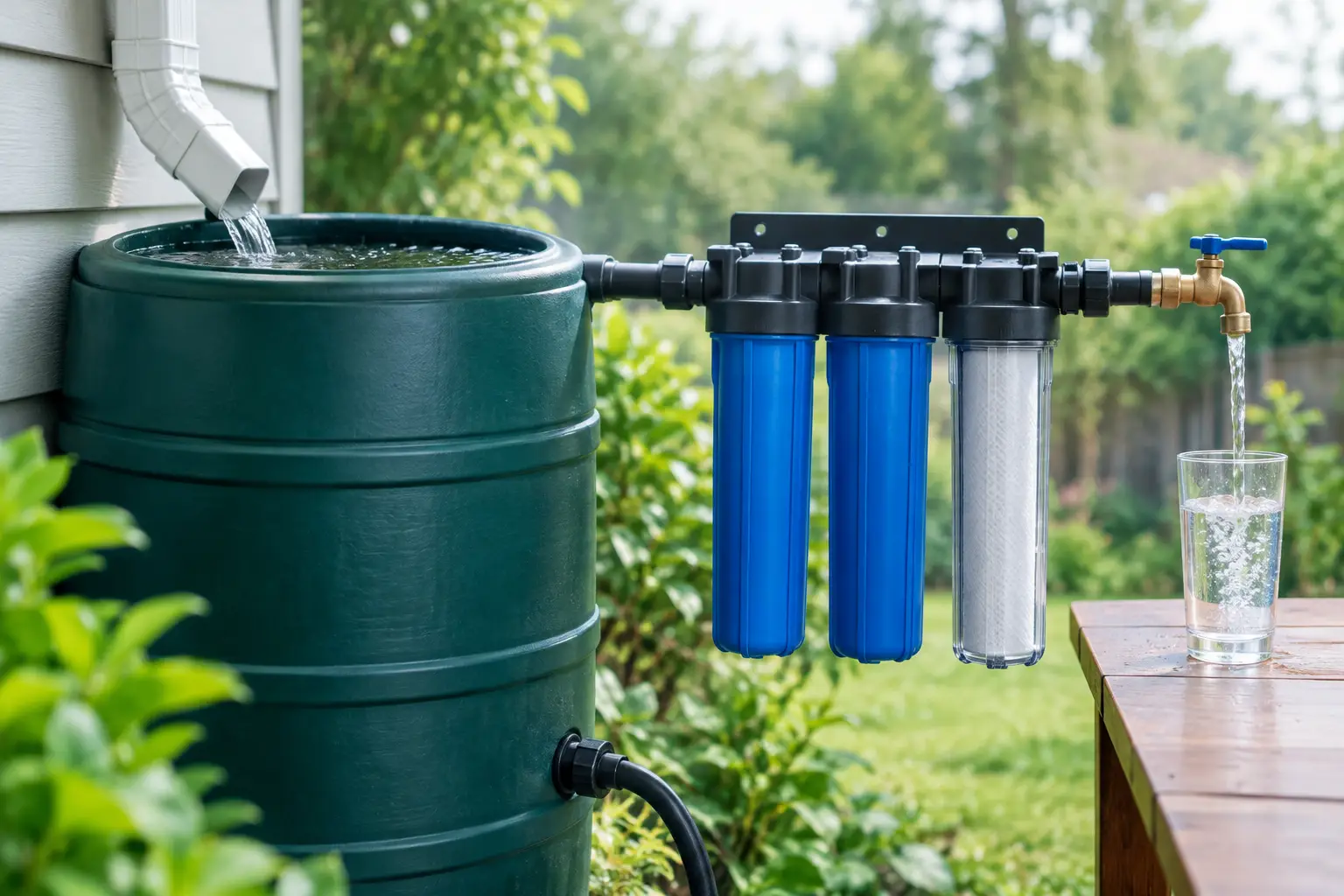
Most rainwater drinking systems use a sequence of sediment filtration, carbon filtration and ultraviolet disinfection. Each stage has a different job, and the order is important.
1. Sediment filtration protects the system
A sediment cartridge catches physical particles such as fine grit, rust, roof dust and tank sediment. It is usually the first cartridge after the pump because it protects downstream carbon cartridges, UV chambers, tapware and appliances.
Cartridges are commonly rated in microns. A larger micron rating catches coarser material and generally lasts longer. A finer rating provides clearer water but can block sooner where tank water carries more sediment. For many homes, a staged approach makes sense: a coarser pre-filter followed by a finer cartridge. The right choice depends on how clean the tank water is and how much water the household uses.
Do not select an extremely fine filter just because it sounds better. If it blocks regularly, pressure drops, the pump cycles more often and household water flow becomes frustrating. A correctly sized filter housing and suitable cartridge rating deliver better day-to-day results.
2. Carbon filtration improves taste and odour
Carbon cartridges are commonly used after sediment filtration. They reduce taste and odour issues and can improve the general drinking-water experience at the kitchen tap or across the home. Carbon is particularly useful if water has a musty tank taste, although the source of that taste should still be investigated.
Carbon cartridges need clear water to perform well. If sediment reaches them first, they can clog prematurely and lose effectiveness. This is why fitting sediment treatment ahead of carbon is more than a neat plumbing layout – it saves money on replacement cartridges.
3. UV treatment addresses microbiological risk
A UV filtration unit exposes water to ultraviolet light to inactivate many microorganisms. For rainwater intended for drinking, cooking and brushing teeth, UV is often the final treatment stage in a whole-house setup.
UV does not remove dirt, colour, sediment or chemical contaminants. It requires pre-filtered, clear water so the light can reach microorganisms effectively. A UV unit also needs consistent power and regular servicing. The lamp may still glow after its effective service life, so follow the manufacturer’s replacement interval rather than relying on appearance alone.
Where a property depends solely on rainwater, a sediment-plus-carbon-plus-UV system is a practical starting point for many households. It is not a one-size-fits-all rule. Water quality, occupancy, plumbing layout and intended use should guide the final design.
Whole-house filtration or a drinking-water tap?
This is one of the biggest buying decisions. A whole-house system treats water after the pump before it reaches bathrooms, laundry, kitchen and outdoor taps. It gives the household filtered water throughout the property and helps protect hot-water systems, washing machines and fixtures from sediment. It is a sensible choice for a full-time rainwater home, a rural residence or a property where all internal water is drawn from the tank.
A point-of-use system treats water at one location, usually under the kitchen sink or at a separate drinking-water tap. It can be a cost-effective option where rainwater is mainly used for toilets, laundry and garden supply, while only drinking and food-preparation water needs additional treatment.
The trade-off is straightforward. Whole-house systems cost more upfront and use higher-flow housings and cartridges, but they provide coverage at every tap. Point-of-use systems cost less to run, but only protect the water outlet where they are installed. If children, guests or workers may drink from multiple taps, whole-house treatment is easier to manage.
Size the system for flow, not just tank capacity
A 22,500-litre tank does not automatically require a large filter system, and a small tank does not mean a small one will do. Filter sizing is driven more by pump flow and simultaneous demand than tank volume.
Think about what happens during a busy morning. A shower may be running while someone uses the kitchen tap and a toilet refills. A filtration system that is too small can restrict pressure even when the pump is capable of supplying more water. Larger housings generally offer higher flow and longer cartridge life, which can be good value for family homes, rural properties and buildings with more than one bathroom.
Check the pump’s rated flow, pressure-switch settings and pipe size when choosing filters. Restrictive cartridges, undersized housings and narrow plumbing all add pressure loss. For high-demand homes, farms with domestic quarters or properties with several buildings, professional advice on flow rates is worthwhile before ordering.
Maintenance is part of safe water
Every filtration system needs a service plan. Neglected cartridges can reduce flow, harbour trapped material and make an otherwise good system perform poorly. Keep a record of installation dates and cartridge changes, especially for UV lamps and service kits.
A practical maintenance routine includes checking filter pressure and water flow, replacing sediment and carbon cartridges when they reach their service interval or show pressure loss, and changing UV lamps as specified by the manufacturer. Clean or replace pre-filter screens and inspect tank inlets, lids and overflows after storms or long dry periods.
Cartridge life varies widely. A household with a clean roof, covered tank and modest demand may get much longer service than a property beneath gum trees or near a dusty access road. Buying replacement cartridges suited to your exact housing size and filter type avoids the common problem of having a system that is due for service but cannot be used because the wrong cartridge was ordered.
Know when filtration needs extra attention
Heavy rain after a long dry spell can carry a larger load of dust and debris from the roof. Bushfire smoke and ash, nearby spray drift, flooding, dead animals in gutters, or any contamination event should be treated seriously. Isolate questionable water where possible, inspect the catchment and tank, and seek appropriate testing or local health advice before returning it to drinking use.
Water from a bore, dam or creek needs a different assessment from roof-collected rainwater. These sources can contain dissolved minerals, iron, manganese, salinity, chemicals or microorganisms that standard sediment, carbon and UV treatment may not solve. Water testing should come first, followed by treatment selected for the actual result.
For homes switching between tank and mains supply, a correctly installed rain-to-mains arrangement can provide continuity during dry weather. It does not remove the need to maintain the rainwater side of the system, but it can make daily water management far easier.
A good potable water setup begins with a clean catchment, a protected tank, a reliable pump and filtration sized for the way you actually live. Central Coast Water Tanks has been trusted for over 30 years to help customers match tanks, pumps, filters and replacement service items from coast to country. Choose quality components, service them on time, and your rainwater supply can remain one of the most practical assets on the property.