

The first few minutes of rain can wash months of dust, leaves, bird droppings and fine debris from your roof straight towards your rainwater tank. A first flush diverter gives that dirty initial runoff somewhere else to go, before cleaner water enters your tank. It is a simple addition to a rainwater harvesting system, but one that can make a real difference to stored water quality, filter life and maintenance.
For homes, sheds, rural properties and off-grid water supplies, it is one of the most practical ways to protect the water you have worked to collect. The right setup depends on your roof area, local conditions and how you use the water, but the principle stays the same: keep the first, dirtiest runoff out of the tank.
What does a first flush diverter do?
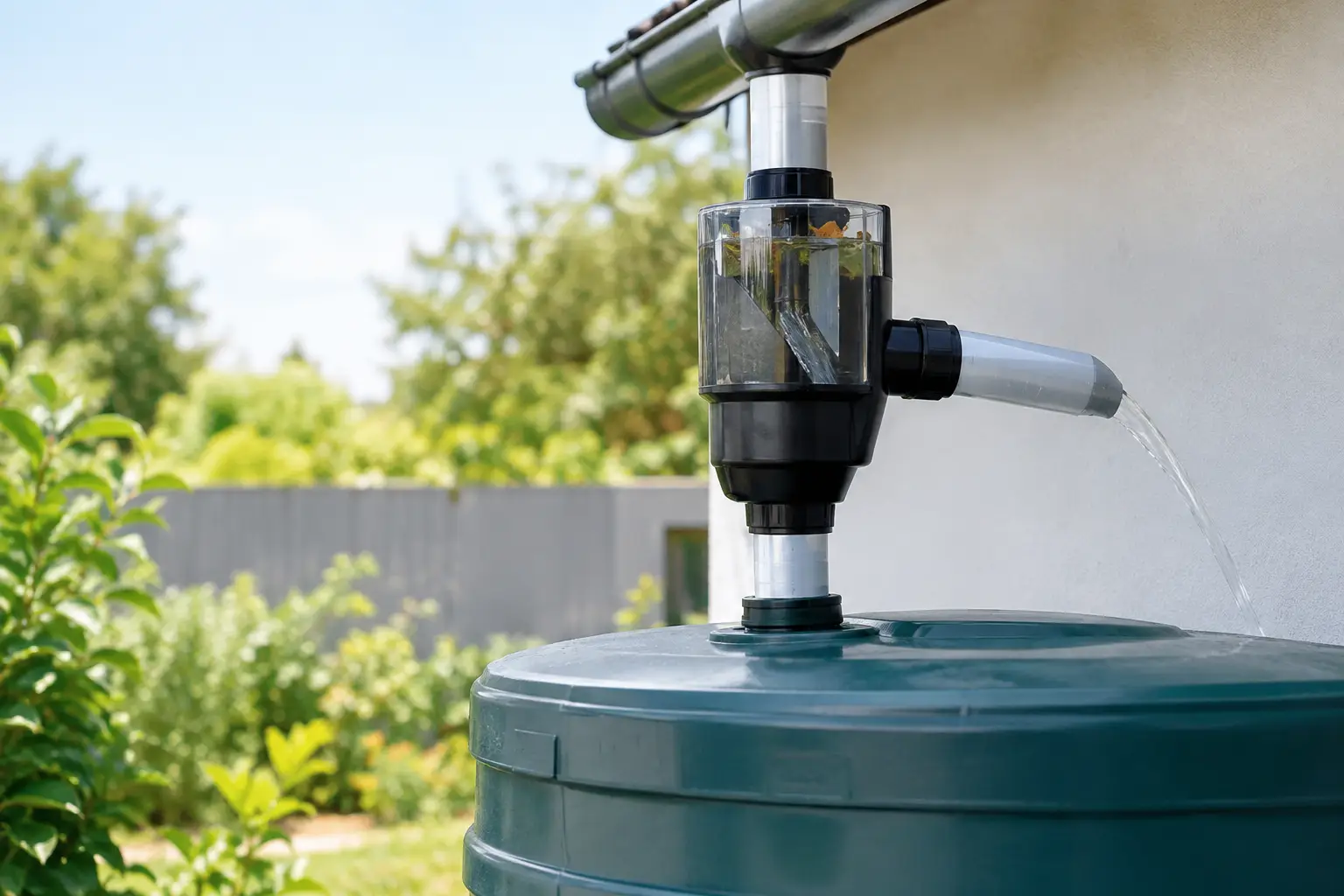
A first flush diverter is fitted to the downpipe before the rainwater reaches the tank. When rain begins, the first volume of water flows into the diverter chamber instead of continuing to the tank inlet. This initial water carries much of the contamination washed from the roof and gutters.
Once the chamber fills, a floating ball or similar sealing device closes the chamber and allows the cleaner follow-up rainwater to continue through to the tank. After the rain, the stored dirty water slowly drains out through a small valve or dripper so the diverter is ready for the next shower.
It does not replace gutter cleaning, leaf protection or water filtration. Think of it as the first line of defence. A clean roof and well-maintained gutters will always give better results, but a diverter helps manage the debris and contaminants that still get through.
Why roof runoff needs managing
Even a roof that looks clean from the ground can collect a surprising amount of material between rain events. Dust from dry spells, pollen, soot, insects, leaves and animal droppings build up on roof sheeting and in gutters. On acreage or farming properties, nearby dirt roads, livestock activity and wind-blown debris can add to the load.
Without a first flush diverter, all of that material enters the tank at once. Larger debris may be stopped by a gutter guard or tank inlet screen, but fine sediment and organic matter can still settle in the tank. Over time, this can increase sludge, place more demand on cartridge filters and create more work when tank cleaning is due.
For water used in toilets, washing machines or garden taps, cleaner stored water still means less sediment around pumps and fittings. For household rainwater used for drinking, cooking or bathing, the benefits are more significant. A diverter helps reduce the load reaching your filtration system, although suitable filtration and treatment are still essential where water is intended for drinking.
Choosing the right first flush diverter size
The key question is how much water to divert before the tank starts filling. There is no single size that suits every property. A small suburban roof in a sheltered area does not face the same conditions as a large shed roof on an exposed rural block.
A common guide is to divert around 0.5 to 2 litres for every square metre of roof catchment. The more debris, dust or bird activity your roof receives, the more first-flush volume may be worthwhile. Long dry periods can also justify a larger diversion volume because more material has time to build up before the next rain.
For example, a 100-square-metre roof may need a diverter capacity somewhere between 50 and 200 litres, depending on local conditions and the intended use of the water. That is why it pays to consider the whole collection system rather than choosing a diverter by downpipe size alone.
A diverter that is too small may fill and send dirty runoff to the tank too quickly. One that is excessively large can discard more water than necessary, which matters in low-rainfall areas or where every litre counts. The practical middle ground is a size suited to your roof, climate and water-quality expectations.
Roof area is not the only factor
The roof itself matters as well. Smooth metal roofing generally sheds water and debris differently from tiled roofs. A roof beneath overhanging trees may need more attention than one in an open area. Properties close to busy roads, coastal salt spray or construction activity can also have higher levels of dust and airborne particles.
If you collect rainwater from multiple roof sections, consider whether each downpipe needs its own diverter. One diverter on a single line only treats the water flowing through that line. For larger systems, treating each collection point is usually more effective than relying on one unit downstream.
Where a first flush diverter fits in the system
A well-planned rainwater system works in stages. Gutter guards help stop leaves and larger debris at the roofline. Downpipe strainers and tank screens provide further protection. The first flush diverter then removes the initial dirty runoff, while the tank stores the cleaner water that follows.
From there, your pump, pressure controller and filtration equipment should match the water application. A garden or stock-water system may only need good screening and reliable pumping. A household supply system may include sediment filtration, carbon filtration and UV treatment, depending on the water source, property requirements and whether the water is used for drinking.
Installing a diverter before the tank also helps protect pumps indirectly. Sediment that stays out of the tank is less likely to travel through a pump, block a filter cartridge early or settle around tank outlets. This can save money over the life of the system, particularly where a tank supplies the house every day.
Installation details that make a difference
A first flush diverter needs to be installed vertically and in the correct direction of flow. It should be accessible from ground level where possible, because the drain point needs checking and occasional cleaning. Hiding it behind cladding or placing it in a difficult corner can turn a simple maintenance task into one that gets missed.
Use compatible pipe sizes and fittings so rainwater can move freely into the tank during heavier falls. The overflow and tank inlet also need enough capacity for the roof catchment. A diverter can improve water quality, but it cannot correct undersized gutters, blocked downpipes or poor tank overflow design.
In frost-prone locations, check whether the diverter and drain arrangement are suitable for local conditions. In bushfire-prone areas, your water collection system should also be considered alongside fire preparedness requirements, tank access and pump arrangements. These are separate design issues, but they should be planned together on rural and acreage properties.
If you are adding a diverter to an existing tank, inspect the gutters and inlet screens at the same time. There is little value in fitting a new component while leaves are bypassing gutter guards or an old tank screen is damaged.
Maintaining your diverter after rain
First flush diverters are low-maintenance, not no-maintenance. The drain orifice at the bottom must empty the chamber between rain events. If it blocks with sediment or insects, stale water can remain inside and reduce the unit’s capacity for the next rainfall.
Check the drain regularly during the wetter months, then inspect the diverter after long dry spells and the first substantial rain. Clean out any settled debris, make sure the ball or sealing mechanism moves freely, and look for cracked pipework or loose fittings. If water is draining too slowly, clear the outlet according to the product instructions.
A useful routine is to check gutters, leaf screens, tank inlets and the diverter together. This keeps the collection side of your water system working as intended and helps you spot small issues before they affect tank water quality.
Is a first flush diverter worth fitting?
For most rainwater tanks, yes. It is a relatively straightforward component that reduces the amount of roof contamination entering stored water. The value is especially clear for homes using tank water indoors, properties with trees near the roof, rural sites exposed to dust, and tanks connected to pumps and filtration equipment.
That said, it is not a licence to ignore regular maintenance or drinking-water treatment. Rainwater systems perform best when the tank, pump, filters, roof catchment and accessories are selected as one working system. Central Coast Water Tanks has been trusted for over 30 years to help customers build practical water setups, from a simple backyard tank to a complete coast-to-country supply system.
When choosing your diverter, start with your roof size and site conditions, then consider how the water will be used. A correctly sized unit, kept clear and paired with suitable filtration, gives your tank a cleaner start every time the rain arrives.