


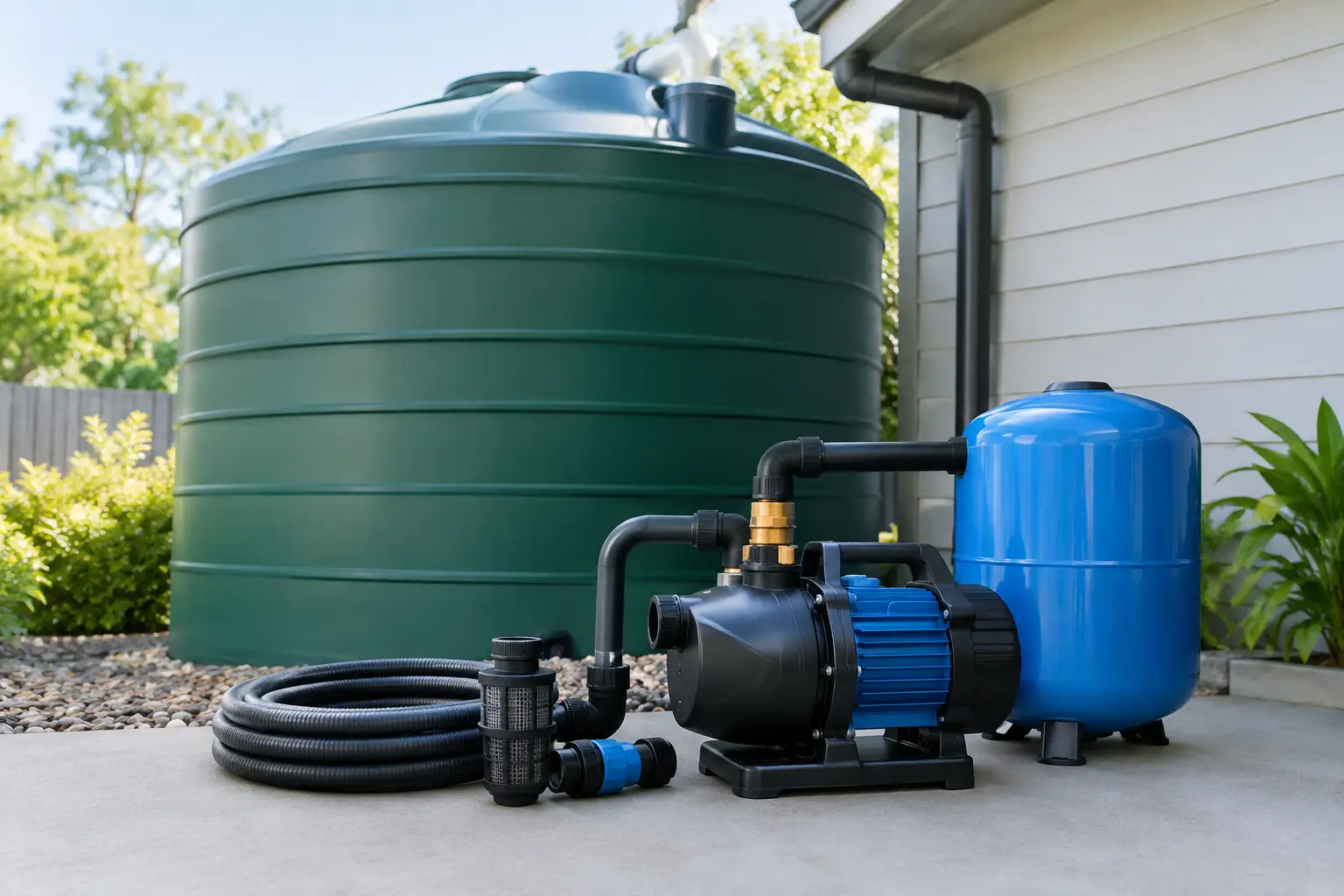
A rainwater tank can hold thousands of litres, but it is the pump that turns stored water into a useful supply at the tap, trough, toilet or irrigation point. Choosing a rainwater tank pump package means looking beyond tank capacity and buying a system that delivers the pressure, flow and protection your property actually needs.
For a suburban home, that may mean reliable water pressure for toilets, laundry and garden taps. On acreage, it could mean moving water across long pipe runs to stock troughs, sheds and irrigation zones. The right package saves time, reduces the chance of mismatched fittings or undersized equipment, and makes it easier to set up a dependable water supply from day one.
What Is Included in a Rainwater Tank Pump Package?
A pump package combines the key components needed to draw water from a rainwater tank and send it where it is required. The exact inclusions vary, but a well-matched package commonly includes a pressure pump, connection fittings, a suction line or tank outlet connection, and pump protection such as dry-run protection or a pressure controller.
Some packages are designed for basic garden and shed use. Others are built for whole-house rainwater supply and can include a rain-to-mains switch, filtration equipment and connections for mains-water backup. Rural packages may instead focus on higher flow rates, long-distance delivery, irrigation or livestock watering.
Buying components separately can work well when you already know your pipe sizes, flow requirements and preferred brands. For many homeowners and first-time tank buyers, however, a package removes much of the guesswork. It also helps ensure the pump, fittings and intended application are suited to one another.
Start With How You Will Use the Water
The best pump is not simply the biggest one. A larger pump can cost more to run, create unnecessary pressure, and cycle too often if it is oversized for the job. Start with the outlets that may operate at the same time and the distance between the tank and those outlets.
Garden, shed and general outdoor use
For a tank supplying garden hoses, wash-down areas and a shed tap, a compact automatic pressure pump is often a practical choice. You still need enough pressure for a hose nozzle and enough flow for convenient watering, but the demand is usually lower than a whole-house system.
Consider where the pump will sit. A pump close to the tank with a short suction line generally performs better than one trying to pull water over a long distance. If the outlet is far from the tank, pipe size matters as much as pump performance. Small pipe over a long run restricts flow and can leave a good pump working harder than it should.
Whole-house rainwater supply
A house pump needs to cope with changing demand. A toilet may flush while the washing machine is filling and someone is running a shower or garden tap. For this application, choose a quality automatic pressure pump rated for domestic use, with enough flow and pressure for the number of outlets in the home.
If rainwater is connected to internal plumbing, filtration is usually part of the conversation. Water used for toilets and laundry still benefits from sediment filtration to protect taps, valves and appliances. Where tank water is intended for drinking, cooking or bathing, use a properly specified whole-house filtration system and seek advice on the treatment level needed for your water source and household.
A rain-to-mains switch can also be worthwhile. It automatically changes the supply to mains water when the tank is low, helping prevent an unexpected loss of water to connected fixtures. It is particularly useful for homes that rely on tank water every day but need a practical backup during dry periods.
Acreage, livestock and irrigation
A rural property often needs more flow, more pressure at distance, or both. A pump that is suitable for a small backyard may not keep up with several troughs, irrigation lines or a long run to a paddock. Elevation matters too. Pumping uphill requires additional pressure, so a system that works well on level ground may fall short on a sloping block.
For irrigation, consider the requirements of the sprinklers, drippers or spray heads rather than the tank alone. Drip irrigation usually works at lower flow and pressure than large sprinklers. Stock troughs may not require high pressure, but a high flow rate can be valuable if several troughs need filling after hot weather.
Where water is needed for fire preparedness, use equipment specified for that purpose and plan the full system carefully, including tank capacity, access, fittings and any local requirements. A domestic pressure pump is not automatically a fire pump.
Flow Rate and Pressure: The Numbers That Matter
Pump specifications can look technical, but two figures do most of the work: flow rate and head pressure. Flow rate, usually shown in litres per minute, is the volume of water the pump can deliver. Head pressure is the force available to push water through pipework, uphill and out through taps or sprinklers.
A pump’s advertised maximum flow is normally measured under ideal conditions. Once water travels through filters, elbows, check valves, narrow pipe, long pipe runs and height changes, the available flow falls. That is why choosing solely from the biggest number on the box can lead to disappointment.
As a practical guide, make a note of four things before choosing a package:
- the number of outlets likely to run together;
- the longest pipe run from the tank;
- the height from the pump to the highest outlet; and
- whether filters, irrigation equipment or a mains-changeover system will be fitted.
These details make it far easier to select a pump that suits the real installation, not just the tank size.
Do Not Overlook Pump Protection
Rainwater pumps are built to move water, not air. If a tank runs dry or a suction line loses its prime, a pump can overheat or suffer internal damage. Dry-run protection is therefore a sensible inclusion for many installations, especially where tank levels can fall quickly in summer or the property is not occupied every day.
A pressure controller or automatic pump controller starts the pump when a tap opens and stops it when demand ends. This gives you water on demand without manually switching the pump on and off. Quality controllers can also help identify a loss of prime or dry-run event, although features vary by model.
For exposed installations, think about weather and maintenance as well. A pump cover can protect equipment from direct sun and rain while allowing ventilation. Keep the area accessible so you can inspect fittings, clean filters and check for leaks. Do not bury a pump behind the tank where a simple service job becomes a major task.
Match the Tank Outlet, Pipework and Filtration
A good pump cannot overcome poor plumbing choices. Your tank outlet size, pipe diameter, suction arrangement and filters need to be compatible with the pump and intended demand. Restrictive fittings are a common cause of low flow, particularly when a large pump has been connected to undersized pipework.
Tank water should be screened before it enters the tank, and a first-flush device can help reduce the debris carried from the roof after dry weather. At the pump end, a foot valve or suitable suction fitting helps retain prime where required. A filter before the pump may protect the equipment, while whole-house cartridge filters are usually installed after the pump for domestic water treatment. The right order depends on the system design and the equipment manufacturer’s instructions.
Replacement cartridge size is worth considering before you buy. Standard cartridge housings are convenient because service items are readily available, while larger housings can reduce pressure loss and extend the time between changes on a busy household supply.
When a Package Deal Makes Better Sense
A tank, pump and filter combo can be a smart buy when you are starting from scratch, building a new home, adding a granny flat, fitting out a shed or upgrading an unreliable old pump. It gives you a clear path from roof catchment to usable water and can deliver better value than piecing together individual items.
It depends on how specialised your needs are. A straightforward domestic setup is often well suited to a package. A property with unusual elevation, very long pipe runs, multiple buildings, large irrigation demand or fire-water requirements may need a more tailored selection. In those cases, taking the time to confirm pump curves, pipe sizing and control equipment can prevent costly changes later.
Central Coast Water Tanks has been trusted for over 30 years to help customers choose quality water storage, pumping and filtration equipment from coast to country. Whether you need a compact package for a backyard tank or a higher-capacity setup for acreage, buying from a supplier that understands the complete system makes the decision simpler.
Before you order, measure the run, list the outlets and be clear about whether the water is for garden use, household supply, livestock, irrigation or a combination of jobs. That small amount of planning will help you choose a rainwater tank pump package that delivers dependable water when you turn the tap on – not just on installation day, but through the seasons ahead.