

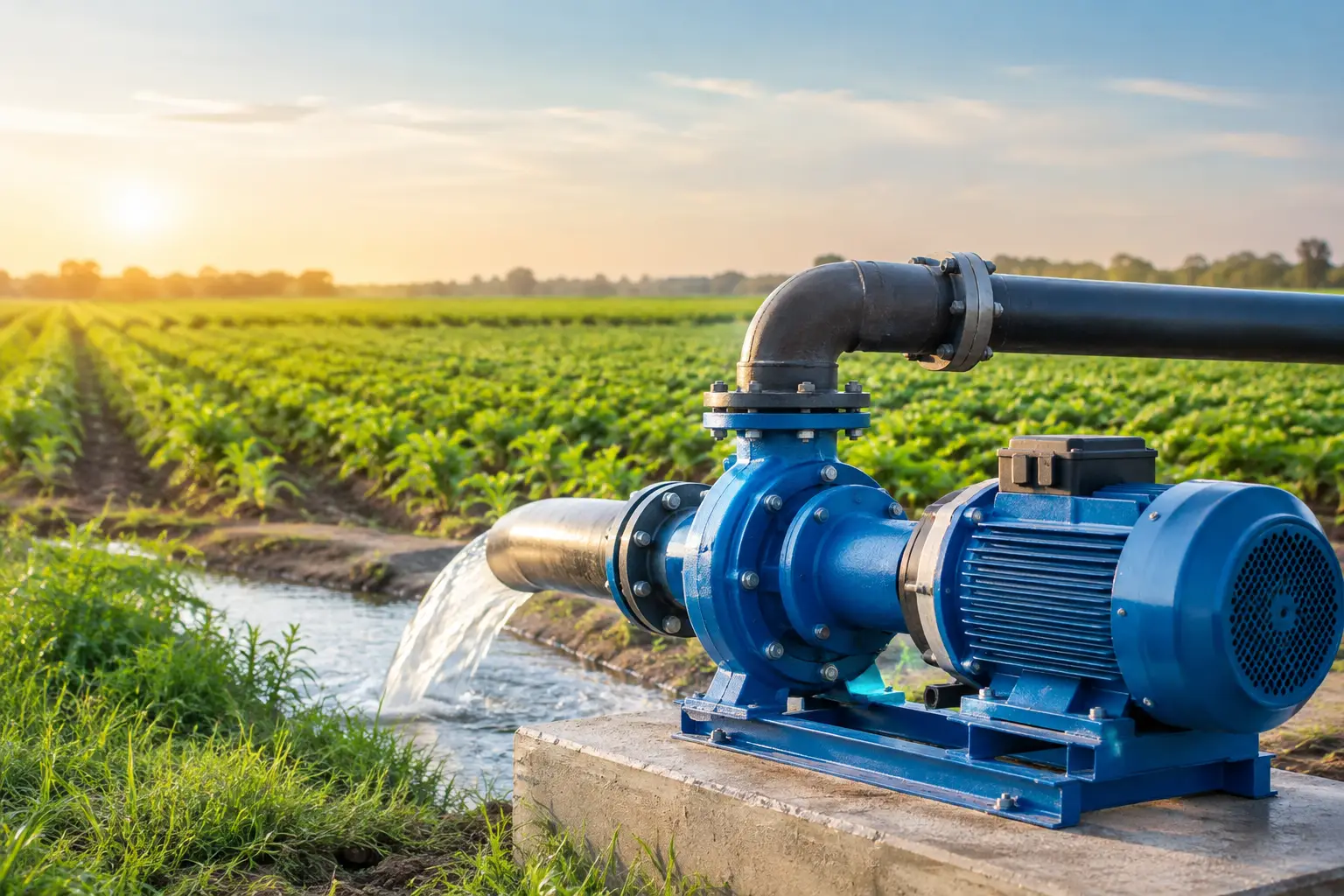
A pump that looks right on paper can be a costly mismatch once it is asked to lift water from a dam, push it uphill and run several irrigation zones. Good farm irrigation pump selection starts with the job at the end of the pipe, not the pump on the shelf. Whether you are watering stock, a market garden, orchards, pasture or shelterbelts, the right unit needs to deliver enough water at enough pressure without wasting power or cutting out under demand.
For rural properties, one pump often ends up doing more than one task. It may transfer dam water to a header tank in the morning, supply troughs through the day and feed irrigation later on. That can work, but only when the system has been planned around the most demanding duty. A pump selected only for easy transfer work may struggle with sprinklers, while an oversized high-pressure pump can cost more to buy and run than the application needs.
Start Farm Irrigation Pump Selection at the Outlet
The two figures that determine most pump choices are flow and pressure. Flow is the volume of water required, usually measured in litres per minute or litres per hour. Pressure is the force needed to move that water through pipework and operate sprinklers, drippers or other outlets. Both must be achieved at the same time.
Start by looking at the irrigation equipment. Drip irrigation usually needs lower flow and regulated pressure. Sprinklers, travelling irrigators and larger spray lines may need considerably more flow and pressure. Manufacturers commonly state an operating flow and pressure for each sprinkler or irrigation line. Add up the outlets that will run at once, rather than every outlet installed across the property.
For example, if four sprinklers each require 18 litres per minute, the pump must provide at least 72 litres per minute at the required operating pressure. If the property is set up in zones and only one zone runs at a time, size the pump for that zone. This is often the practical way to reduce pump size, power use and the cost of upgrading pipework.
Allow a sensible margin, but do not simply buy the biggest pump available. Excess flow may force you to throttle valves, create water hammer or make low-flow drip zones hard to control. A correctly sized pump working near its efficient range is usually the better long-term buy.
Work Out Total Head, Not Just Distance
A pump has to overcome more than the vertical lift from the water source. The full requirement is called total head, and it combines the lift, the pressure needed at the outlet and friction losses through pipes, fittings, filters and valves.
As a useful guide, 10 metres of head is approximately 100 kPa of pressure. If sprinklers need 300 kPa at the far end of the line, that alone represents about 30 metres of head. Add the height from the dam, creek, tank or bore to the highest point of the system, then allow for friction in the pipework. Long runs, undersized poly pipe, elbows, check valves and filtration all add resistance.
This is where many rural water systems lose performance. A pump may be rated for a strong flow at low head, but that advertised figure falls as head increases. Always read the pump performance curve and find the flow it can actually deliver at your calculated head. Do not select from the maximum-flow number printed on the carton.
Pipe diameter matters just as much as pump capacity. A larger mainline can substantially reduce friction over a long paddock run. Spending a little more on correctly sized pipe can let you choose a smaller, more efficient pump and provide stronger, more consistent pressure at the farthest outlet.
Match the Pump Type to the Water Source
The water source often determines the pump style before flow and pressure are even considered. Surface water, stored rainwater and bores each have different practical limits.
A surface-mounted transfer or irrigation pump is commonly used beside a dam, creek, turkey nest dam or above-ground tank. These pumps draw water through a suction line, but suction lift is limited. While theory suggests close to 10 metres, a practical suction lift is generally closer to 7 metres or less once pipe losses, water temperature and site conditions are considered. Keep the pump as close and as low as possible to the water source, with a short, airtight suction line.
For a deep bore, sump, creek bank or source where suction lift is unsuitable, a submersible pump is often the sensible answer. Because it pushes rather than pulls, it avoids many suction-side issues. Bore pumps also need to suit bore diameter, water level, required delivery head and available power supply.
Tank-fed irrigation can be straightforward, provided the tank outlet, suction plumbing and pump inlet are not restricted. If a pump is also supplying a house or shed, separate irrigation zones and suitable controls can prevent a demand change in the garden or paddock from affecting domestic pressure.
Clean Water, Dirty Water and Filtration
Water quality is not a minor detail. Clean rainwater from a tank can suit many pressure pump and irrigation pump options. Dam and creek water may carry sand, algae, leaf matter or fine sediment that can wear seals, block sprinklers and clog drip emitters.
Use a suitable foot valve and strainer on surface-water suction lines. If your source is shallow, avoid placing the intake directly on the bottom where it can pull in mud and grit. Floating intakes can help draw cleaner water from below the surface where site conditions allow. Downstream filtration should match the irrigation method, with finer filtration generally needed for drip systems than for broad-acre sprinklers.
Filters protect the pump and outlets, but they also create pressure loss as they become dirty. Choose a filter with enough capacity for the required flow and allow for cleaning access. A filter that is difficult to service is often ignored until it becomes the reason pressure has disappeared.
Choose the Right Power and Controls
Electric pumps are a common choice where reliable mains power is available. They are convenient, quieter than engine-driven options and well suited to scheduled irrigation. Check the electrical supply before ordering, especially on older rural properties. A larger pump may need three-phase power, while a smaller single-phase unit can be a more practical fit.
Petrol or diesel pumps suit remote paddocks, emergency transfer work and mobile irrigation setups where power is unavailable. They offer flexibility, but fuel use, servicing, noise and manual operation need to be factored in. If the pump will be moved by ute or tractor between water points, weight, priming time and hose connections matter as much as headline performance.
Solar pumping can be an excellent option for stock watering and slow, steady transfer to a storage tank. It works best when the system is designed around available sunlight and water can be stored for use when the sun is down. Solar is not automatically the best choice for high-flow irrigation over short periods, unless the array, controller and storage capacity have been properly sized.
Controls make a pump system easier to live with. Pressure controllers, pressure switches, float switches, timers and irrigation controllers can all have a place, depending on the job. Dry-run protection is particularly valuable where a tank can run low or a dam level changes. It can prevent an avoidable pump failure when water supply is interrupted.
Think About Duty Cycle and Future Expansion
A pump that runs for 10 minutes to top up a trough has a very different workload from one that runs for four hours across a summer irrigation cycle. Check the pump’s duty rating and avoid expecting a light domestic pump to do continuous agricultural work. Heat, frequent starts and long run times are hard on undersized equipment.
Consider what the system may need to do in two or three years. Adding another irrigation zone, extending lines to a new paddock or fitting more troughs can push a closely matched pump beyond its useful range. Planning capacity for likely growth is sensible. Paying for capacity that will never be used is not.
It is also worth separating transfer and irrigation duties where the water source and budget allow. A transfer pump can fill a header tank steadily, while a pressure pump supplies controlled irrigation from stored water. This arrangement can reduce stress on a source pump and gives more consistent pressure, particularly where a dam or bore has limited recovery.
Buy the Complete System, Not Just the Pump
The best pump cannot overcome poor installation. Include the suction hose or pipe, foot valve, strainers, fittings, isolation valves, check valves, filters, pressure gauge and correctly sized delivery pipe in the planning stage. If the pump is exposed, provide weather protection and a stable base while keeping ventilation around the motor or engine.
Before you order, write down the water source, vertical lift, pipe size and length, number of outlets running together, required outlet pressure, water quality and available power. These details turn a vague request for a “good farm pump” into a specification that can be matched to proven equipment.
Central Coast Water Tanks has been trusted for over 30 years to help customers build practical water systems from coast to country. When choosing farm and irrigation pumps, focus on the performance you need at the farthest outlet, not the biggest number on a brochure. That is the choice that keeps water moving when the paddock needs it most.