


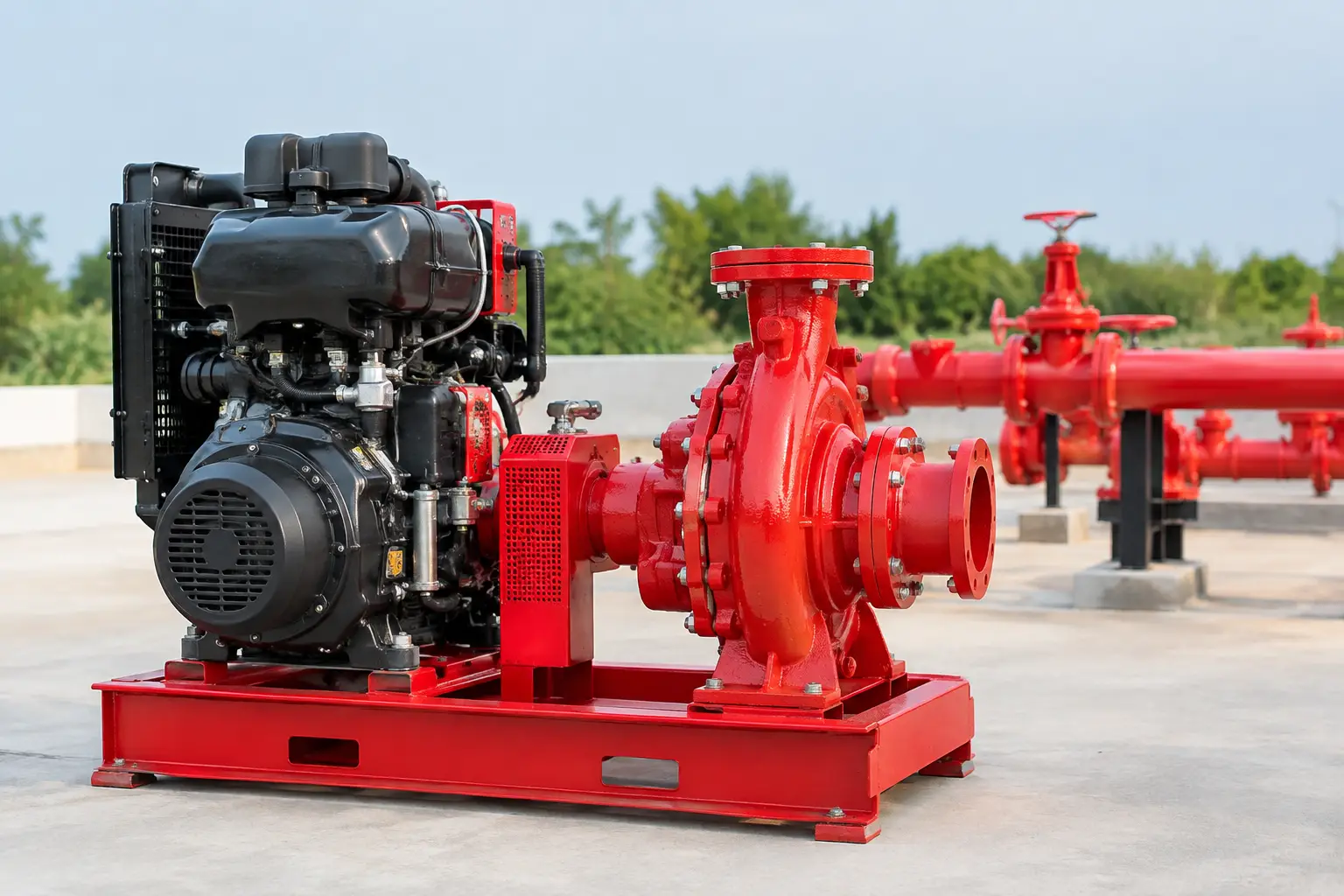
When a grassfire is moving across a paddock or embers are landing around a shed, there is no time to work out whether your pump has enough pressure, the hose fittings match or the water tank outlet is too small. A petrol fire fighting pump gives rural and acreage property owners an independent water source when mains power is unavailable, but only when the complete system has been selected and maintained properly.
For many Australian properties, it is a practical part of a wider fire-readiness plan alongside cleared access, suitable water storage, hose coverage and a sensible evacuation plan. The right unit can also earn its keep outside fire season, moving dam water, washing down machinery or supplying water to remote areas of the property.
What a petrol fire fighting pump needs to do
A fire pump is designed to move water at useful pressure through a hose, often over a considerable distance from a tank, dam or creek. Unlike a basic transfer pump, which may shift high volumes at lower pressure, a dedicated fire-fighting pump is built to provide the pressure needed for a fire hose, nozzle or sprinkler arrangement.
The best choice depends on the water source, the length and diameter of hose, the elevation between pump and water, and what you need to protect. A compact unit may suit a house block with a nearby rainwater tank. A larger twin-impeller pump may be more appropriate for a farm, long driveway, machinery shed or several buildings spread across an acreage property.
Do not choose on engine size alone. Horsepower is only one part of the picture. Pressure, flow rate, suction lift and pump construction matter just as much. A pump that looks powerful on paper can still disappoint if it is paired with undersized hose, restrictive fittings or a poor water supply.
Pressure and flow: getting the balance right
Pressure is usually shown in metres of head or psi, while flow is measured in litres per minute. Both figures matter, but they serve different purposes.
Higher pressure helps water travel through longer hose runs and gives a stronger stream at the nozzle. It is valuable where the pump is set beside a tank and the hose needs to reach around a house, shed, stockyards or boundary. Flow is the volume of water delivered. Good flow helps wet down larger areas and keeps a hose stream effective for longer.
As a practical rule, a property with a standard fire hose and a short run from tank to building can often use a smaller high-pressure pump. Larger rural properties generally benefit from more flow and pressure capacity, especially if the pump may be used with longer hoses, a fire reel or multiple outlets.
Bear in mind that quoted maximum figures are tested under ideal conditions. Every bend, fitting, rise in ground level and extra metre of hose reduces real-world performance. Allowing a margin is usually better value than buying the smallest pump that just meets the specification.
Single-impeller or twin-impeller?
A single-impeller pump is often a sensible choice for smaller domestic and lifestyle blocks. It is generally lighter, simpler to handle and suitable for shorter hose runs where strong water pressure is still required.
Twin-impeller pumps are commonly chosen for larger properties and more demanding fire-preparedness applications. They generally provide higher pressure, making them better suited to longer hose runs, elevated sites and situations where the pump needs to deliver water confidently across a broad area. The trade-off is greater cost, weight and fuel use.
A larger pump is not automatically the right answer. If your tank outlet, suction hose or delivery hose is too small, it can restrict the system before the pump reaches its potential.
Match the pump to your water source
Most petrol fire pumps are self-priming centrifugal pumps, but they still need to be primed before use. The pump casing is filled with water, allowing it to draw water through the suction hose. Never expect a centrifugal pump to pull water through a dry suction line from scratch.
A rainwater tank is usually the easiest water source because it offers clean water and a stable supply point. For fire use, check that the outlet is large enough and accessible. A tank with a small domestic outlet may not deliver enough water to support a high-capacity pump. A dedicated fire outlet and suitable valve arrangement make set-up much faster when every minute counts.
Drawing from a dam, creek or pool can be useful on rural land, but it adds variables. Use a reinforced suction hose that will not collapse under vacuum, along with a foot valve and strainer to keep leaves, sticks and sediment out of the pump. Position the strainer below the water surface but clear of the muddy bottom.
Suction lift is another limitation to understand. Pumps can only lift water a limited vertical distance, and their performance falls as that distance increases. Keeping the pump as close and as low as practical to the water source will improve priming and output. If the water level in a dam is well below the pump site, a different arrangement may be needed.
Build a complete fire-pump set-up
A pump on its own is not a fire-fighting system. Before fire season, lay out the complete set-up and confirm that every part connects without adapters being hunted down in the shed.
Your system should include a suitable suction hose, foot valve and strainer, delivery hose, nozzle, hose fittings and fuel container. A fire hose is generally preferable to a lightweight garden hose because it is built for higher pressure and harsher use. Layflat hose is useful for moving water over distance, while a fitted fire reel can provide quick access around a home or workshop.
Check the fittings on your tank outlet, pump inlet and pump outlet. Camlock fittings are popular on rural properties because they are quick to connect, while threaded fittings remain common on tanks and pumps. Whatever style you use, standardising sizes across the property makes replacements and emergency set-up far easier.
Where possible, keep the pump, hoses and fittings together in a known location. A pump tucked behind stored gear, with the suction hose in another shed, is less useful than a modest unit that can be started and deployed quickly.
Petrol engines are valuable when power is out
Electric pumps are convenient for everyday household water pressure, but they rely on a working power supply. A petrol engine gives a fire pump independence during outages, which is one reason it remains a popular option for rural and off-grid properties.
That independence comes with maintenance responsibilities. Run the engine periodically rather than leaving it untouched until a hot, smoky day. Check the oil level, fuel condition, recoil starter, spark plug and pump seals. Stale petrol can cause starting problems, so follow the engine manufacturer’s fuel-storage guidance and use fresh fuel before the season begins.
Operate the pump outdoors on level ground, well away from dry grass, fuel stores and enclosed buildings. Petrol engines produce heat and exhaust fumes. Keep children and untrained operators away, and never refuel a hot engine.
Water storage matters as much as pump capacity
A high-pressure pump cannot compensate for an empty tank. When planning fire protection, consider how much dedicated water your property can hold, how reliably it is replenished and whether the volume is available when it is needed most.
Households relying on rainwater should avoid assuming their normal domestic supply will always provide enough reserve after a dry summer. Farms may need to account for stock water, irrigation demands and multiple buildings. This is where a larger rainwater tank, a dedicated reserve or connected storage can make a meaningful difference.
Check local planning requirements and advice from your relevant fire authority, particularly for new builds, bushfire-prone areas and properties with specific water-supply obligations. A pump and tank arrangement should support your property plan, not replace professional guidance or a decision to leave early when conditions become unsafe.
Choose for the job, then test before summer
Central Coast Water Tanks has been trusted for over 30 years by customers looking to put together practical water systems from coast to country. The best petrol fire pump is one that suits your tank, hose run, water source and property layout, with proven components that are ready to use rather than merely stored away.
Before the weather turns hot, connect the suction line, prime the pump and run water through every hose and nozzle. Confirm who in the household can start it, where the shut-off valves are and how long it takes to reach each key area. That simple test can reveal a loose fitting, blocked strainer or missing adaptor while there is still time to fix it.