

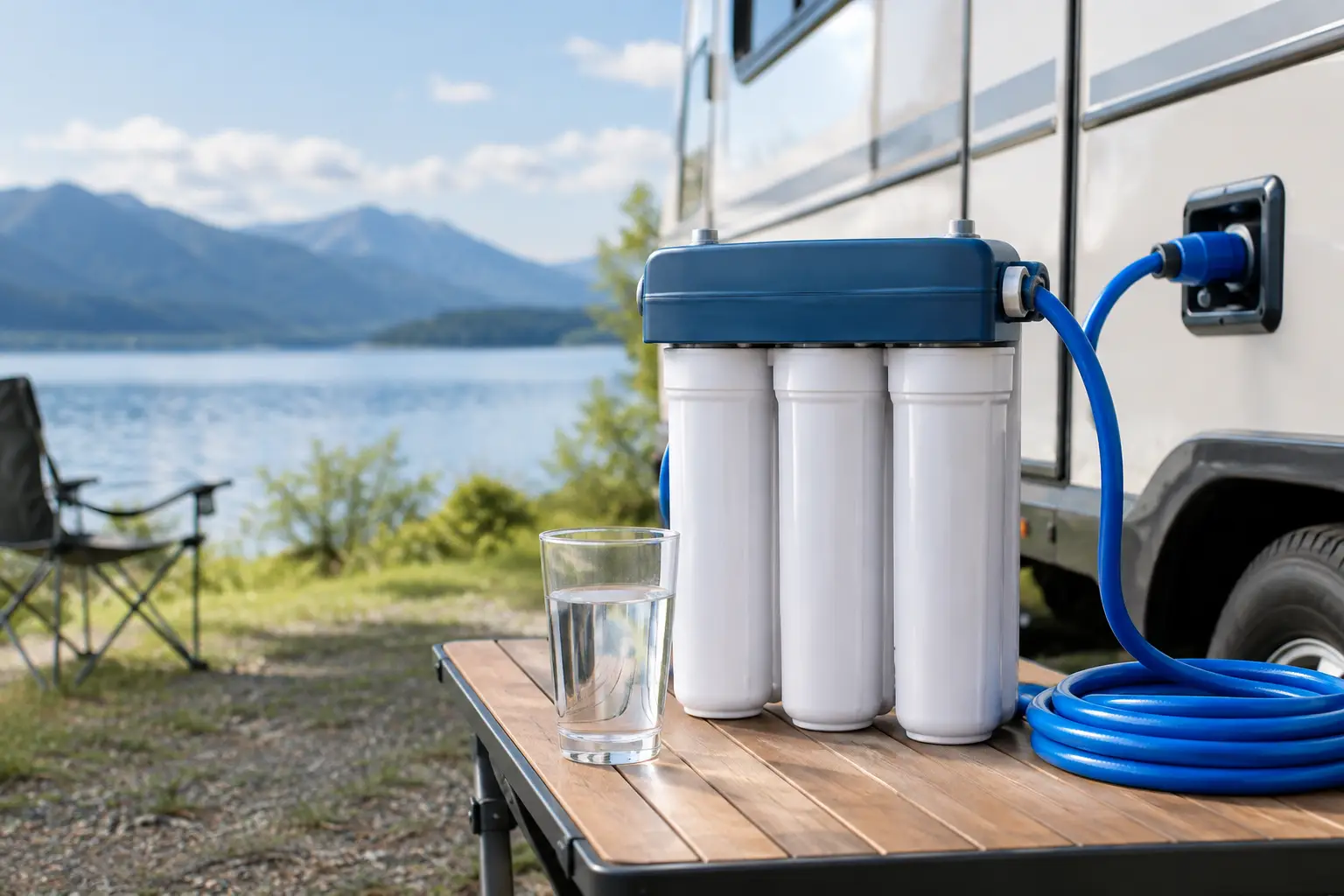
A questionable campground tap can turn a great trip into a nuisance quickly. A caravan water filtration system helps remove sediment, unpleasant tastes and odours from water before it reaches your drinking tap, tank or appliances. The right setup depends on where you travel, how much water you carry and whether you want better-tasting town water or a higher level of treatment for remote stops.
For most Australian caravanners, the sensible approach is to filter water as it enters the van, then keep the tank, hose and fittings clean. That protects the water you drink and can also reduce grit getting into pumps, taps and hot-water systems.
Start with the water you are likely to use
Not all water sources need the same treatment. Water from a serviced caravan park is usually treated, but it may pick up a chlorine taste, fine sediment or odour through ageing pipework. A sediment and carbon filter is often enough to make that water more pleasant to drink.
Tank water, bore water and water from remote properties need more thought. Rainwater can contain fine debris, while bore water may have sediment, minerals or an unpleasant taste. Water from an unknown source can carry microbiological risks that a basic cartridge filter will not necessarily address. Filtration improves water quality, but it cannot make every source safe without the correct treatment stages and maintenance.
If your trip regularly takes you from coastal parks to inland free camps, choose a system that can be serviced easily and matched to the water source. Carrying a spare cartridge is far more practical than trying to find the right replacement in a small town on a public holiday.
What a caravan water filtration system should include
A good caravan filtration setup is usually built around one or more filter housings, suitable cartridges, food-grade hose connections and fittings that suit the van’s plumbing. The best arrangement is not always the largest one. It needs to fit your available space, deliver enough flow for the way you use water and remain simple enough to maintain on the road.
Sediment filtration for dirt and debris
A sediment cartridge captures physical particles such as sand, rust, silt and fine debris. It is particularly useful when filling from rainwater tanks, older park taps or rural supplies. Common options include 5-micron cartridges for finer filtration and 10- or 20-micron cartridges where water has more visible sediment and you want to avoid restricting flow too quickly.
Finer is not automatically better. A very fine cartridge can block faster when the source water is dirty, reducing shower pressure and putting extra demand on your pump. For many caravans, a washable or replaceable sediment pre-filter followed by a carbon cartridge provides a practical balance.
Carbon filtration for taste and odour
Carbon cartridges are popular with caravanners because they reduce chlorine taste, odours and a range of organic compounds. They can make treated park water considerably more pleasant for drinking, cooking and making tea or coffee.
Carbon does have limits. It is not a substitute for proper disinfection when the water source is uncertain, and it should be replaced on schedule. Once a cartridge is exhausted or left wet for long periods without use, it can become less effective. Check the cartridge specifications rather than relying on appearance alone.
UV treatment for extra protection
UV filtration treats water by exposing it to ultraviolet light, which can deactivate many microorganisms when the system is correctly sized and maintained. It is useful for caravans that regularly draw from rainwater tanks, remote properties or off-grid supplies where drinking-water quality is less predictable.
UV systems work best with clear water. Sediment can shield microorganisms from the UV light, so a pre-filter is essential. They also need reliable power, a clean quartz sleeve and lamp replacement at the recommended interval. For a weekend van used mainly in serviced parks, UV may be more system than you need. For extended touring or remote travel, it can be worthwhile peace of mind.
Choose the right installation point
An inline filter attached between the tap and drinking-water hose is the simplest option. It is portable, quick to connect and easy to move between a caravan, camper trailer or motorhome. It is best suited to filtering water as you fill the tank or when connected directly to mains pressure.
A permanently mounted system inside a locker, under a seat or near the water pump offers greater protection for the van’s plumbing. Depending on the layout, it can filter water entering the tank, water leaving the tank, or only the line supplying a dedicated drinking-water tap. Each approach has a trade-off.
Filtering before the tank helps keep sediment out of stored water, but the cartridge may clog faster when the supply is dirty. Filtering after the tank protects the taps and provides treated drinking water, but it does not stop debris entering the tank in the first place. A separate drinking-water tap with a compact filter is a cost-effective choice when you do not need filtered water for showering or washing up.
Match flow rate to your pump and household needs
Caravan pumps vary widely in pressure and litres per minute. Your filtration system must keep up without causing a noticeable drop in flow. A compact single housing may suit a small camper with one tap, while a family caravan with a higher-output pump and regular shower use may benefit from larger filter housings.
Standard 10-inch cartridges are compact and widely available, making them a practical option where locker space is limited. Larger 20-inch or jumbo-style housings generally offer more surface area, better flow and longer cartridge life, but they take up more room and add weight. Measure the available space before buying, including enough clearance below the housing to remove the cartridge.
Pay attention to connection sizes as well. Restrictive fittings, undersized hose and poor-quality quick-connects can undermine an otherwise capable system. Use food-grade drinking-water hose and fittings rated for potable water, particularly on the inlet side of the van.
Keep the tank and hose clean
Even the best filter cannot compensate for a dirty filling hose or neglected tank. Store your drinking-water hose with capped ends, separate from any general-purpose hose used for washing the ute or rinsing muddy gear. Before filling from an unfamiliar tap, let the water run briefly to clear the outlet and check that the connection is clean.
Clean and sanitise the caravan water tank according to the manufacturer’s guidance, especially after a long period in storage. Replace damaged filler caps and seals, as dust and insects can enter through small gaps. If water develops a smell, changes colour or has visible particles, stop using it for drinking until you have identified the cause and cleaned the system.
When fitting or changing cartridges, wash your hands, clean the filter housing and lubricate O-rings with a suitable food-grade lubricant if required. Reassemble carefully and check for leaks under pressure before packing up.
Replacement cartridges are part of the system
Filter housings last for years when looked after, but cartridges are consumable items. Their service life varies with water quality, usage and cartridge type. A cartridge used occasionally with clean town water may last much longer than one used to fill a tank from dusty rural supplies.
Do not wait until the flow stops completely. Reduced pressure, a return of chlorine taste, visible discolouration or a cartridge reaching its recommended service interval are all signs it is time to replace it. Keep the housing size, cartridge type and micron rating recorded in the van so ordering replacements is straightforward.
For longer trips, pack at least one spare sediment cartridge and one spare carbon cartridge. If you rely on UV, carry the details of the correct lamp and know its replacement date. This small amount of preparation can prevent a simple maintenance job becoming a trip interruption.
Buy for the trips you actually take
A compact sediment and carbon setup is usually the best value for caravanners spending most nights in serviced parks. Travellers who fill from tanks, bores and rural properties may need staged sediment filtration and UV treatment. Those who only want better drinking water can save money with a dedicated filtered tap rather than treating every litre used in the caravan.
Central Coast Water Tanks has been trusted for over 30 years to help customers match quality water products to real-world conditions, from the coast to country. Choose proven components, allow room for servicing and stock the cartridges you will need before heading away. Clean water should be one less thing to worry about when the road opens up.