

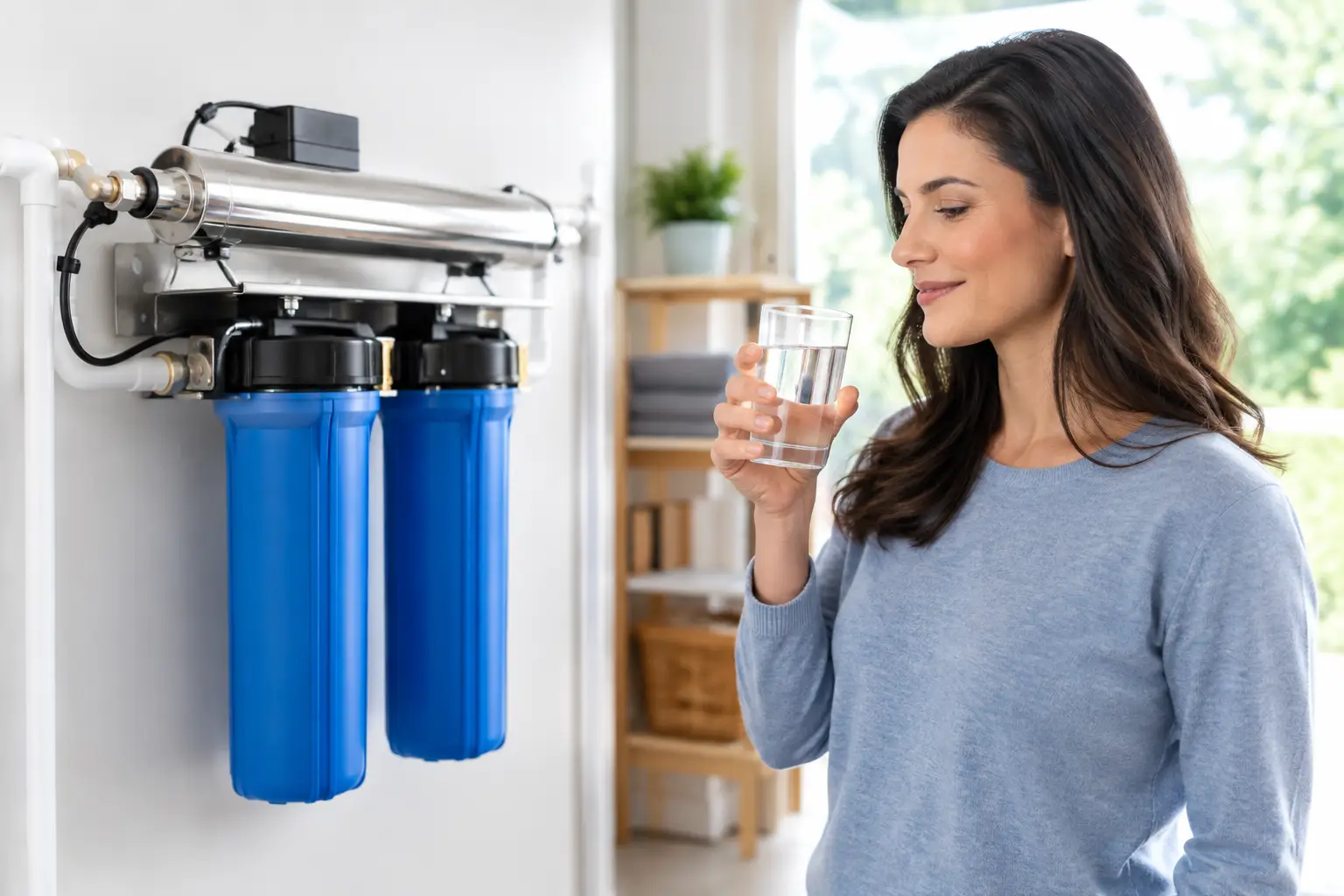
A whole house UV water filter treats water as it enters the home, so every connected tap, shower and appliance receives disinfected water. For Australian homes relying on rainwater tanks, this can be a practical final barrier against microbiological contamination – but only when the tank, pump and pre-filtration are set up properly.
UV filtration is often chosen by homeowners, acreage properties and off-grid households that want treated rainwater throughout the house without relying on chemical dosing. It is also a sensible option where tank water is used for drinking, cooking, bathing and laundry. The key is understanding what UV does well, what it cannot do, and how to select a system that suits your household’s actual water demand.
What a whole house UV water filter does
A UV system passes water through a stainless-steel chamber containing a UV lamp. The ultraviolet light inactivates microorganisms such as bacteria, viruses and protozoa as the water moves through the chamber. Unlike a chemical treatment, it does not change the taste, smell or colour of the water.
For a rainwater home, the system is normally installed after the pump and before the house plumbing. Water is filtered first, then exposed to UV light immediately before it is distributed around the property. This gives you treated water at the kitchen sink, bathrooms, laundry and any other connected outlet.
That said, UV is not a catch-all filter. It does not remove sediment, dissolved minerals, heavy metals, pesticides, salt, tannins or chemical contamination. It also cannot work at its best when the water is cloudy. Fine particles can shield microorganisms from the UV light, which is why sediment filtration ahead of the UV unit is essential.
Start with water quality, not the UV unit
A quality rainwater system begins at the roof and tank. A clean roof catchment, leaf screening, first-flush diverter, sealed tank inlet and secure tank lid all reduce the load on your filters. If organic matter, dirt and animal droppings are regularly reaching the tank, no single filter can make up for poor collection hygiene.
Tank condition matters too. A tank with heavy sediment on the floor, signs of algae, damaged screens or an open inspection point should be attended to before investing in filtration. If your water has an unusual taste, odour, colour or known contamination risk, testing the water can help identify whether standard sediment, carbon and UV filtration is suitable or whether more specialised treatment is needed.
For many domestic rainwater systems, a staged setup works well: a washable or replaceable sediment cartridge captures fine dirt, a carbon cartridge can improve taste and odour, and the UV unit provides disinfection as the final stage. The right cartridge micron rating depends on water quality and the UV manufacturer’s requirements. Finer cartridges produce clearer water but may restrict flow sooner, particularly after heavy rain or when the tank has been disturbed.
Size your UV system for peak flow
The most common buying mistake is selecting a UV unit based only on the number of people in the household. Household size is useful, but flow rate is the more critical figure.
A family home can have a shower running while someone uses a kitchen tap and the washing machine fills. A larger rural home may also have several bathrooms, a granny flat or accommodation connected to the same supply. If water moves through the UV chamber faster than the unit’s rated flow, it may not receive the required UV dose.
Check the system’s stated flow rating at its nominated UV dose and compare it with the expected peak demand from your pump and household fixtures. Do not simply match the system to the pump’s maximum advertised flow. Plumbing layout, pressure settings and the number of outlets operating at once all influence real demand, but a UV filter should comfortably cover the flow your home can draw.
A correctly sized unit should also avoid creating a noticeable pressure drop. If you have invested in a good pressure pump for a large home, undersizing the filter train can leave showers and taps feeling disappointing. Larger housings, suitable pipe sizing and compatible cartridges help maintain usable pressure.
Consider the pump and pressure system
Your pump needs to supply enough pressure and flow through the filters and house pipework. A small pump paired with a large home will struggle regardless of the UV system installed. On the other hand, a high-flow pump requires a filter and UV chamber rated to handle that output safely.
For rainwater-to-mains systems, the location and plumbing arrangement need careful planning so filtered tank water and mains backup operate as intended. This work should be completed by a licensed plumber in line with applicable Australian plumbing requirements. It is especially important where mains water, rainwater and any separate non-potable lines are present on the same property.
The filter order matters
A whole-house treatment system is more than a UV lamp mounted on a wall. The components need to work in the right sequence. A typical rainwater setup includes:
- a tank outlet and pump with appropriate inlet protection
- sediment filtration to remove particles that reduce UV performance
- optional carbon filtration where taste, odour or organic compounds are a concern
- a UV disinfection chamber as the final treatment stage
- isolation valves and suitable plumbing connections for servicing
Placing the UV chamber after the cartridges keeps the water clear before it reaches the lamp. Placing it before a sediment filter defeats the purpose. It is also worth allowing room around the unit. UV lamps generally need to be withdrawn from one end of the chamber during replacement, and cramped installations can turn a straightforward service job into a frustrating one.
A bypass can be useful during maintenance, but it must be managed carefully. If untreated water can bypass the UV unit and feed drinking outlets, everyone in the household needs to understand when that line is open. Many owners prefer a simple arrangement with isolation valves so the system can be serviced without confusion.
Ongoing servicing is part of safe operation
UV filtration is low-chemical, not maintenance-free. The lamp may still glow after its effective germicidal output has reduced, so it should be replaced according to the manufacturer’s service interval, commonly around 12 months. The quartz sleeve around the lamp also needs inspection and cleaning because mineral scale or film can block UV transmission.
Sediment and carbon cartridges require regular replacement as well. Their service life depends on tank water quality, rainfall patterns, household use and cartridge size. A cartridge that is heavily loaded with dirt can restrict flow and put extra strain on the pump. If pressure at the taps has dropped, check the cartridges before assuming the pump is at fault.
Keep a simple service record for cartridge changes, lamp replacement and tank cleaning. It is particularly useful on rural properties, holiday homes and rentals where more than one person may look after the water supply. A UV controller with an alarm or service reminder adds another layer of reassurance, but it should not replace regular visual checks.
Watch for these signs
Cloudy water, a sudden pressure drop, a UV alarm, visible sediment in cartridge housings or a damaged lamp sleeve all need attention. After major roof work, a bushfire event, a long dry spell or heavy rainfall that stirs sediment, inspect the tank and filtration system sooner than usual.
If you are away for extended periods, consider how the system will be restarted. Flush stagnant water from relevant lines, inspect filters and confirm the UV unit is operating before relying on the supply for drinking.
Is UV filtration worth it for your property?
For homes using rainwater as their main supply, a whole-house UV system can be a worthwhile investment in everyday water confidence. It suits families who want treated water at every outlet, rather than relying on a small filter at one kitchen tap. It can also make sense for homes with guests, tenants or workers who may not know the history of the tank water.
The trade-off is the upfront cost of the complete system and the ongoing cost of lamps, sleeves and cartridges. A basic under-sink filter may cost less, but it only treats one outlet and does not protect bathroom taps, showers or appliances. A UV unit provides broader coverage, provided the tank water is properly pre-filtered and the system is serviced.
Central Coast Water Tanks has been trusted for over 30 years to help customers match tanks, pumps, filters and accessories into practical water systems from coast to country. When comparing options, look beyond the purchase price and check the rated flow, cartridge housing size, replacement part availability and the space needed for installation.
The best system is the one that matches your tank water quality, household demand and service routine. Choose quality components, keep the tank clean, and give the filters and UV lamp the attention they need – then your rainwater supply can work hard for the whole home.