


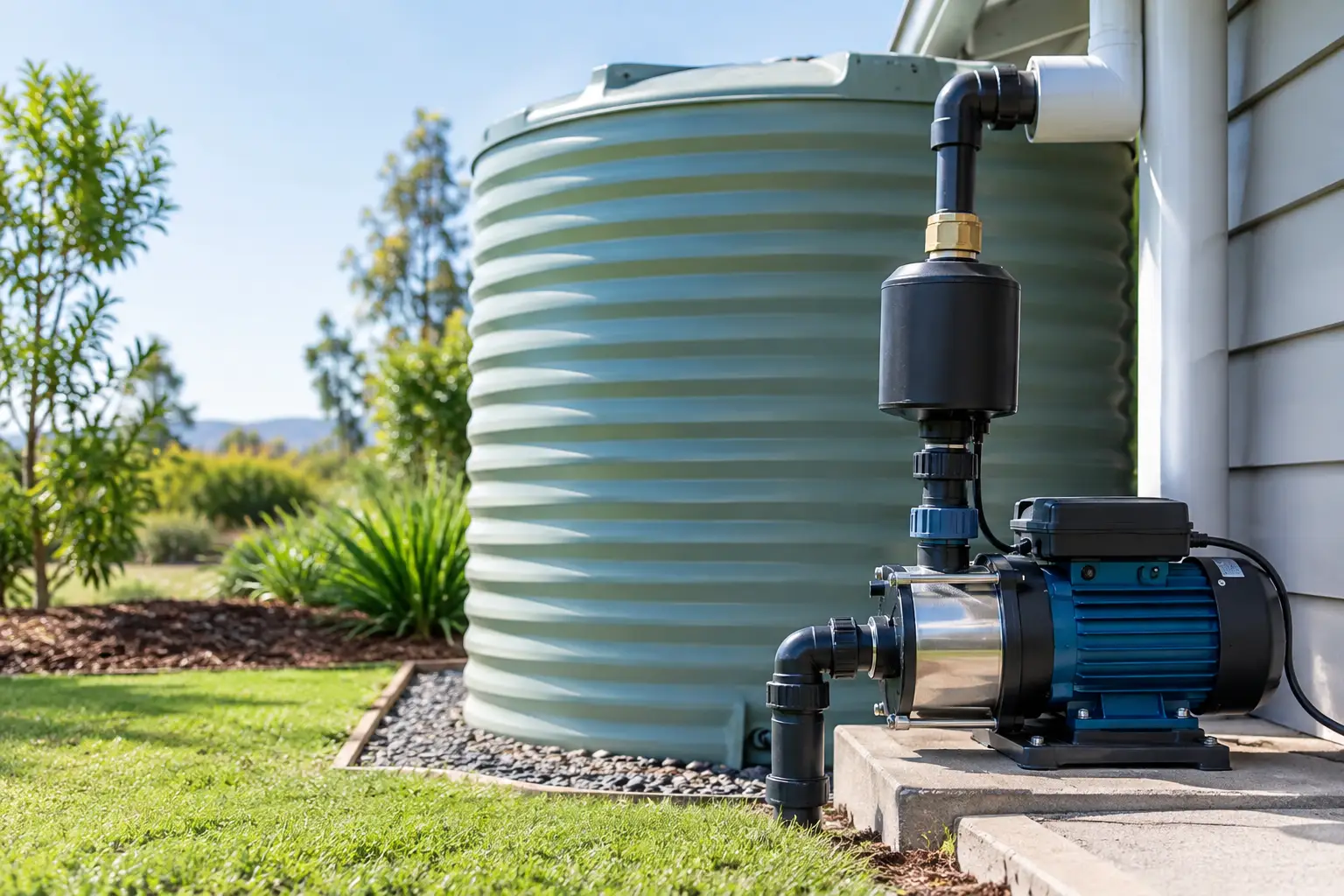
A rainwater tank is only as useful as the water pressure it can deliver. The best pump for rainwater tank systems is not simply the biggest model on the shelf. It is the pump that suits your household demand, pipework, tank location and the jobs you need it to do – whether that is flushing toilets, running a washing machine, watering the garden, supplying a farmhouse or moving water across acreage.
Choose too small and you will notice weak showers, slow garden sprinklers or a pump that struggles when two taps are open. Choose too large and you can spend more than necessary, create excess cycling and place unnecessary demand on your power supply. Getting the match right from the start saves money and gives you dependable water where you need it.
Start with how you will use the water
The right pump category follows the application. A compact garden pump may be perfectly adequate for a suburban tank feeding hose taps and a small irrigation line, but it is not generally the right choice for a whole home. Likewise, a high-output farm pump is not automatically better for a three-bedroom house with a 5,000-litre rainwater tank.
For garden-only use, look for a pressure pump with enough flow to operate your preferred sprinkler or hose nozzle. If you want to run one sprinkler at a time, your required flow is modest. Several sprinkler zones, long hose runs or drip irrigation across a larger block can need considerably more flow and pressure.
For a house supplied by rainwater, select a domestic pressure pump designed for continuous household service. It needs to provide comfortable pressure at the bathroom, laundry and kitchen while accommodating normal peak demand. In practical terms, this means allowing for situations such as a shower running while someone flushes a toilet or starts the washing machine.
Rural properties often need more than one pumping solution. A domestic pressure pump can supply the house, while a separate transfer, irrigation or farm pump handles stock troughs, paddock lines, wash-down duties or water movement between tanks. Separating these jobs can make the whole system easier to manage and avoids overworking a household pump.
Pressure and flow decide the best pump for a rainwater tank
Pump specifications can look technical, but two figures matter most: pressure and flow.
Pressure is what gives you a strong shower, useful hose performance and reliable appliance operation. It is commonly shown in metres of head or kilopascals. More head means the pump can push water higher or further, but the useful pressure at the outlet drops as pipe runs get longer, rise uphill or pass through filters and fittings.
Flow is the volume of water delivered, usually measured in litres per minute. A household system needs enough flow to serve multiple outlets without a noticeable pressure drop. An irrigation system needs enough flow to meet the demand of the sprinklers, drippers or zones operating at one time.
The catch is that pressure and flow work together. A pump might offer a high maximum flow on paper, but that figure is usually measured with very little resistance. Once water travels through pipework, filters, valves and elevation changes, actual flow reduces. That is why pump selection should be based on the working duty required at the outlets, not only the largest number on a product label.
For a typical home, consider the number of bathrooms, the appliances connected to rainwater and whether the property has long pipe runs. For acreage, measure the distance to troughs or irrigation areas and the height the water must climb. If the tank sits downhill from the house, the pump has to overcome that vertical lift as well as friction in the line.
Allow for pipe size, filters and elevation
Undersized pipework can restrict a well-sized pump. Long runs of small-diameter pipe create friction loss, reducing water pressure at the tap. Where higher flow is required, suitable pipe sizing is just as important as the pump itself.
Filters also create resistance, particularly as cartridges collect sediment. Whole-house filtration is an excellent option for rainwater quality, but the filter housings and cartridges should be matched to the expected flow. A system designed for a small garden supply may choke household flow if it is placed before every indoor outlet.
Elevation is another common oversight. Every metre the water is lifted costs pressure. A pump feeding a bathroom in a raised home, a two-storey building or a hilltop shed needs enough head to deliver useful pressure after that lift. It pays to allow a margin rather than choosing a pump that only just meets the calculated requirement.
Choose the pump type to suit the tank setup
Most above-ground rainwater tanks use a surface-mounted pressure pump. These sit beside the tank, draw water through a suction line and automatically start when a tap opens. They are a practical choice for homes, sheds and gardens because they are accessible for servicing and straightforward to install when the tank outlet is correctly positioned.
A pressure-controlled pump is generally the sensible option for domestic rainwater supply. The controller detects demand and starts or stops the pump automatically. This gives you water on demand rather than requiring manual operation. Quality models also include protection features that help prevent damage if the tank runs dry, although the exact protection and settings differ between products.
Submersible pumps sit inside the tank and push water out rather than drawing it in. They can be a neat solution where noise needs to be kept down, space around the tank is tight or an underground tank is being used. Because the pump is enclosed, access for servicing requires more planning. They also need to be selected with care for the required pressure and flow, not just because they are hidden from view.
For tank-to-tank transfer, flood management or high-volume rural tasks, a transfer pump may be more suitable than a domestic pressure pump. These pumps are built to move water efficiently, but they may not provide the automatic pressure control needed for household taps. The application should lead the decision.
Do not overlook power, protection and water quality
A standard 240V electric pump suits many homes with reliable mains power. Off-grid properties may require a pump that works with solar and battery systems, a generator, or carefully managed power demand. Pump starting loads can be significant, so confirm compatibility with the available electrical system before ordering.
Dry-run protection is worth considering wherever tank levels can fall low during dry periods. Running without water can damage seals and internal components. A low-level float switch, pump controller protection or a properly planned rain-to-mains arrangement can help protect the pump and maintain water supply when rainfall is scarce.
Good inlet protection matters too. A screened tank outlet helps keep leaves, insects and larger debris out of the line. For drinking water, whole-house sediment filtration and, where required, carbon or UV treatment can improve water quality. Keep in mind that filters need regular cartridge changes. A neglected cartridge can reduce flow and make an otherwise capable pump appear underpowered.
Think beyond the pump when planning the system
The pump is one part of a reliable rainwater setup. Tank size determines how long your supply lasts, while gutters, leaf strainers, first-flush devices, pipework, filtration and controls determine how cleanly and efficiently water reaches the outlet.
If your home also has town water, a compliant rain-to-mains switch can provide an automatic backup when tank water is unavailable. This is especially useful for properties that rely on rainwater for toilets, laundry or selected household fixtures. It reduces the risk of the pump running dry and avoids the inconvenience of losing supply after a long dry spell.
For new builds and renovations, plan pump location early. Allow a stable base, weather protection where recommended, drainage around the tank area, accessible isolation valves and room to change filter cartridges. A quiet location away from bedrooms is also worthwhile, especially with a surface pump that may operate early in the morning or overnight.
Buy for dependable service, not just the lowest price
The cheapest pump can become expensive if it does not suit the job, struggles with your pipework or is difficult to service. Established pump brands, correctly sized accessories and a sensible installation usually provide far better value over the life of the system.
At Central Coast Water Tanks, trusted for over 30 years, customers can match tanks, pressure pumps, rain-to-mains switches and whole-house filtration in one practical package. That makes it easier to build a system that works together, whether you are supplying a suburban home, a rural shed or a working property from coast to country.
Before you buy, write down what the pump must run at the same time, the distance and height from tank to outlet, your power source and whether filtration or backup mains water is part of the plan. Those few details will point you towards a pump that delivers reliable rainwater when you turn the tap on.