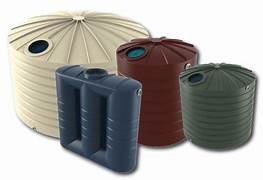


A tank that is too small runs dry when you need it most. A tank that is too large can tie up budget and space you could have used elsewhere. If you’re asking what size water tank needed for your property, the right answer comes down to how much water you use, how much rain you can collect, and how much buffer you want when the weather turns dry.
For most Australian properties, tank sizing is not just about picking a common capacity and hoping for the best. Household water use, livestock demand, garden irrigation, fire protection, shed access, pump selection and local rainfall patterns all affect the final number. The practical approach is to size the system around real demand and site conditions, not guesswork.
What size water tank needed for different uses?
The first question is simple – what is the tank meant to do?
If the tank is supplying drinking water and household use only, you need enough storage to cover daily demand and periods of low rainfall. If it is topping up toilets, laundry or garden use, a smaller system may be enough because mains water can carry the load when the tank is low. On farms and acreage properties, stock water and washdown can push demand much higher than most homeowners expect. Commercial sites often need more storage again, especially where water is needed for cleaning, amenities or process use.
A small weekender, tiny home or shed setup might suit a modest tank. A full-time family home on rainwater usually needs a much larger reserve. A rural property with stock troughs, gardens and machinery washdown often needs multiple tanks working together.
That is why there is no single answer to what size water tank needed. The same roof area and the same suburb can produce very different outcomes depending on how the water will be used.
Start with daily water demand
The most reliable way to size a tank is to estimate daily consumption first. For a household, this usually means looking at the number of people living on the property and how water-efficient the fixtures are. A careful household with efficient appliances will use far less than a larger family with older fittings, frequent laundry loads and significant outdoor use.
As a broad guide, household demand can range from around 120 to 200 litres per person per day when rainwater is used for normal domestic supply. If the tank is only feeding toilets and the laundry, the figure will be much lower. If it is supplying the whole house, the number rises quickly.
On rural properties, stock demand can be just as important as household use. Cattle, horses and other animals each have their own daily requirements, and that requirement increases during hot weather. Irrigation is another common trap. A garden can seem manageable in winter and then become the biggest water user on the site through summer.
When customers undersize a tank, it is often because they only count indoor use and forget seasonal demand.
Typical examples
A couple in a small home using rainwater for all household needs may be comfortable with a smaller capacity than a family of five on a large block. A shed used for machinery washdown may need only intermittent storage, while a livestock property may need a steady supply every day regardless of rainfall.
The pattern matters as much as the total. Short bursts of heavy demand can affect pump and plumbing performance, while long dry periods affect storage capacity.
Roof catchment and local rainfall matter just as much
Once you know roughly how much water you need, the next step is working out how much you can collect.
Your roof area acts as the catchment surface. The larger the roof, the more rain you can harvest. As a rule of thumb, 1 millimetre of rain on 1 square metre of roof can yield about 1 litre of water before losses. In practice, some water is lost through first flush devices, gutter overflow, debris and evaporation, so the usable amount is lower.
A large tank connected to a small roof will not magically stay full. Likewise, a good roof area in a high-rainfall region may refill a tank often enough that you do not need the biggest capacity available.
This is where local knowledge matters. Rainfall in coastal and regional Australia is not only different from place to place, it is often uneven through the year. Some sites receive good annual rainfall on paper but go through long dry stretches. In those cases, annual averages can be misleading. The tank has to bridge the dry months, not just survive the yearly total.
The balance between collection and storage
A common mistake is focusing only on how much rain falls, without looking at how quickly the tank empties. If your property collects plenty of water in wet months but very little in dry months, extra storage can make sense because it lets you hold more of that seasonal rainfall.
On the other hand, if your roof area is limited, adding a much larger tank may not give you much benefit because there simply is not enough runoff to keep it topped up.
That balance between roof catchment, rainfall pattern and daily demand is the core of good tank sizing.
Common tank sizes and where they fit
Many residential properties start looking at tanks from around 5,000 litres upwards. For light garden use, toilet supply or a small supplementary setup, that may be enough. Once a tank is expected to supply a household more seriously, capacities around 10,000 to 22,500 litres are often more realistic.
For full-time homes relying heavily on rainwater, larger tanks such as 27,000 litres or multiple connected tanks are common. Rural properties, mixed-use sites and farms may need significantly more, especially where there is stock water demand or a need for extended dry-weather backup.
There is also the practical side. Access for delivery, available footprint, height restrictions, pad preparation and pump placement all influence what can be installed. In some cases, two tanks are a better solution than one large tank because they suit the site better and provide more flexibility.
What size water tank needed if you are off mains water?
If you are fully dependent on rainwater, the answer to what size water tank needed becomes more conservative. You need a stronger safety margin because there is no mains backup to cover a dry spell.
For off-grid or fully rainwater-supplied homes, storage has to carry not only average use but peak use and seasonal shortfall. This is where many property owners benefit from sizing above the bare minimum. A tighter budget might tempt you to install the smallest workable tank, but running out of water usually costs more in stress, cartage and system upgrades later.
For these setups, filtration and pump selection matter as well. A well-sized tank still needs the right pump pressure, reliable plumbing and suitable treatment if the water is for household consumption. Storage is only one part of a dependable system.
Fire protection, farming and backup reserves
Some properties need to hold water for reasons beyond daily consumption.
In bushfire-prone areas, owners may want dedicated reserve capacity for firefighting. Agricultural sites often keep storage for emergency stock water. Commercial and industrial users may need reserve volume for operational continuity. Once reserve water is included, the required size can jump well beyond standard domestic calculations.
This is one of those areas where the cheapest option on day one may not be the best long-term choice. If your property needs resilience, reserve storage should be planned from the start rather than added as an afterthought.
It is not just the tank – it is the whole system
A properly sized water tank works best when the rest of the system is matched to it. Gutters and downpipes need to move water efficiently. First flush and filtration components help protect water quality. Pumps should suit the distance, pressure and flow demands of the property. If the setup includes household use, stock troughs, irrigation or multiple buildings, that distribution needs to be planned properly.
That is why experienced advice can save money. A tank that looks right on paper can underperform if the catchment, plumbing or pump arrangement is not considered at the same time.
For many homeowners, acreage owners and farm operators, the best result comes from treating storage, pumping and filtration as one practical solution rather than separate purchases. That is the sort of approach North Coast Water Tanks works with every day.
A simple way to estimate your ideal tank size
If you want a starting point, use this sequence. Estimate your daily water use, then multiply it across the period you want to cover during low rainfall. Compare that against the water your roof can realistically harvest through the year and during your dry season. Then allow extra capacity if you need stock water, irrigation, firefighting reserve or future expansion.
If the numbers are tight, it is usually worth leaning slightly larger rather than smaller, provided the site and budget allow it. Storage gives you breathing room, and in Australian conditions that buffer matters.
The right tank size is the one that matches your property, your water source and your risk tolerance – not the one that happens to be most common. If you take the time to size it properly now, you are far more likely to end up with a system that works well through wet years, dry years and everything in between.
A water tank should make life easier, not leave you second-guessing every drop when the forecast stays dry.
the rite size tank