


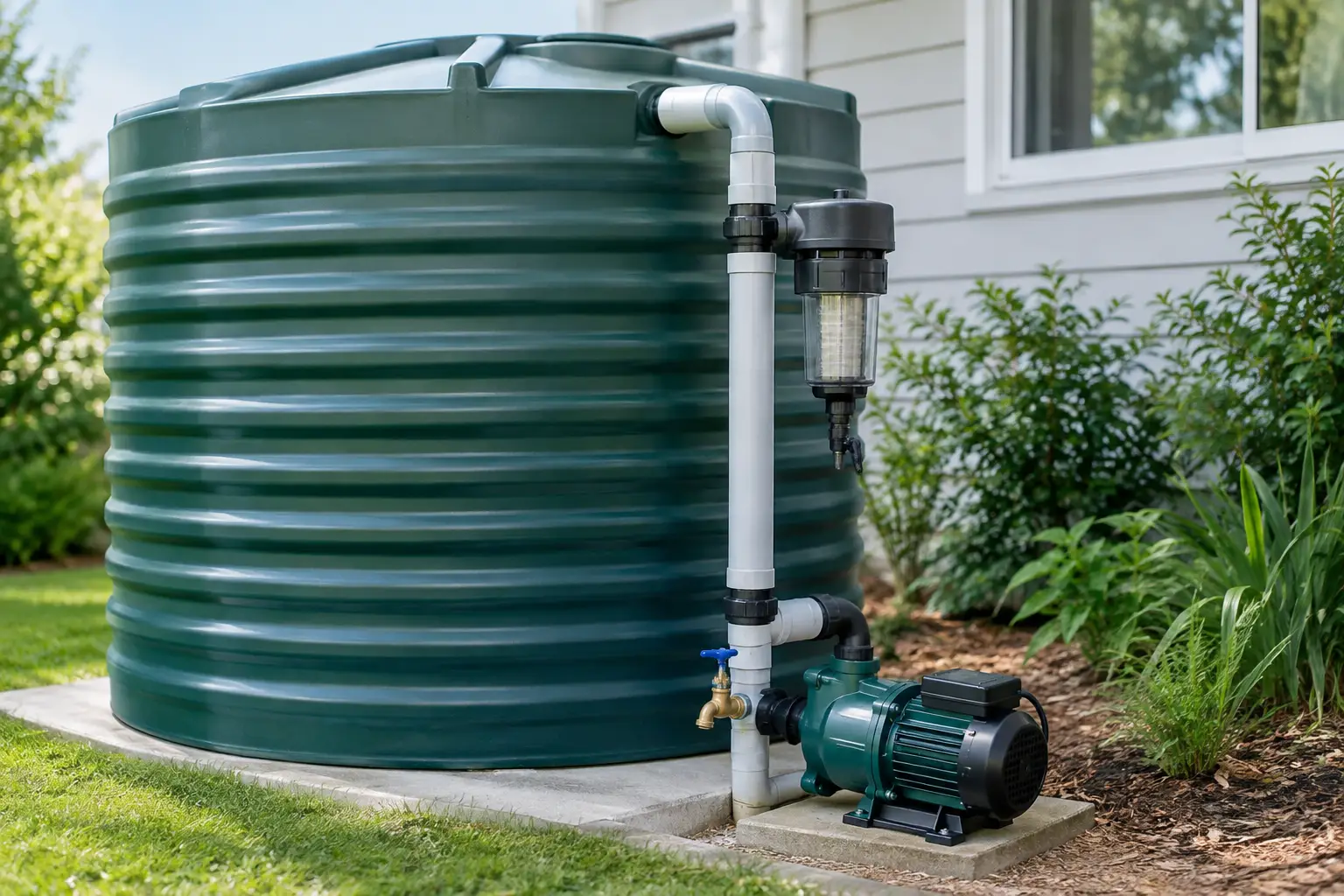
A tank on its own stores water. The right rainwater tank accessories determine whether that water arrives cleanly at the tap, reaches the stock trough with useful pressure, or overflows safely away from your slab. For a suburban home, acreage block or working farm, these small components are where a dependable water system is won or lost.
After more than 30 years in the industry, Central Coast Water Tanks has seen that the best results come from matching accessories to the way water is actually used. A garden-only tank has different needs from a whole-house supply, while a rural tank feeding livestock, irrigation and fire protection needs a different level of capacity and control again.
Start with the water path
Before adding fittings to a shopping list, follow the path of every litre. Rain falls on the roof, moves through gutters and downpipes, enters the tank, leaves through an outlet, then passes through a pump and, where required, filtration before reaching its final use. Each stage needs protection.
The most common mistake is choosing a tank capacity first and treating everything else as an afterthought. That can leave a new tank with a poorly positioned overflow, no practical way to isolate the pump, or filtration that is too small for the household’s water demand. Planning the complete system upfront usually saves money, installation time and future call-outs.
For a basic garden setup, a leaf diverter, inlet screen, overflow and tap may be enough. For household use, add a suitable pressure pump, pressure controller or rain-to-mains switch, isolation valves and drinking-water filtration. If the tank supplies a farm, shed or remote dwelling, consider long pipe runs, elevation changes, multiple outlets and backup water requirements before selecting pumps and fittings.
Rainwater tank accessories for clean collection
Keeping contaminants out is easier and cheaper than filtering them out later. Leaves, twigs, roof grit and insects can block pipework, reduce storage quality and create unnecessary maintenance.
Leaf diverters and first-flush devices
A leaf diverter sits in the downpipe before the tank. It separates larger leaves and debris from the incoming flow, helping protect the inlet screen and reducing the amount of material that settles on the tank floor. It is a practical first line of defence, especially under gum trees or in areas with frequent leaf drop.
A first-flush diverter goes further by diverting the first portion of rainfall away from the tank. This initial runoff can carry dust, bird droppings and other material collected on the roof between showers. The right size depends on roof area, local conditions and how the stored water will be used. A household relying on rainwater for drinking has more reason to fit one than a tank used solely for garden watering, although clean collection is worthwhile in both cases.
Both products need occasional cleaning. A diverter packed with leaves cannot do its job, so choose a location that is safe and easy to reach.
Tank inlet strainers and mosquito protection
Every tank inlet should be screened. A quality inlet strainer keeps debris out while allowing water to enter freely, and fine mesh helps prevent mosquitoes and other insects accessing stored water. Check that the screen area suits the expected roof runoff. During a heavy summer storm, a restricted strainer can force water back through the downpipe or over the gutter.
For bush blocks and rural properties, also inspect screens after wind events. Fine dust, chaff and leaves can reduce flow faster than many owners expect.
Overflows that protect the site
Overflow pipework is not optional plumbing. A full tank needs a clear path for excess water, sized to handle incoming flow from the roof. The outlet should direct water away from footings, paths, retaining walls and neighbouring properties.
An overflow mosquito screen is a simple addition with a major benefit. Make sure it can be inspected and cleared, because a blocked overflow can lead to water backing up where it should not. Where drainage is limited, speak with an installer about dispersing overflow across a suitable area or directing it to an approved drainage point.
Outlets, taps and fittings: get the basics right
Tank outlets, threaded fittings, valves and taps can appear minor next to a 20,000-litre tank, but they control access for every job that follows. Fit outlets at practical locations for your pump connection, garden tap, drain point and any planned secondary use.
A bottom outlet is often used to draw water to a pump, while a separate low-level tap is handy for filling buckets, connecting a hose or taking water when power is out. Include a valve between the tank and pump. It allows the supply to be isolated for servicing without draining the tank or making a mess around the pump base.
Use fittings designed for water tanks and compatible pipe sizes. Trying to adapt a collection of mismatched threads can turn a straightforward installation into a slow leak that is difficult to repair. For larger poly or steel tank systems, confirm the tank outlet size before ordering fittings. Bigger is not automatically better, but undersized fittings can restrict flow to high-demand pumps and irrigation lines.
Pumps and controls: match pressure to the job
A pump needs to suit the demand, not just the tank size. A small pressure pump may be ideal for a garden hose, toilet laundry supply or compact home. It may struggle if several taps, showers and appliances operate at once, or if water must travel uphill to a second dwelling or elevated trough.
For domestic supply, consider the expected number of outlets running together and whether the system needs to feed a whole house, granny flat, shed or garden. For rural applications, calculate pipe length, height difference and required flow at the farthest point. A pump that appears powerful at the tank can deliver disappointing pressure after a long run of undersized pipe.
Pressure controllers automate pump operation when a tap opens and closes. They are convenient for many household and garden systems, but should be protected from weather and installed according to the manufacturer’s requirements. A pressure vessel can also reduce pump cycling in some systems, which may improve operation where demand is frequent but low.
Rain-to-mains switches for connected homes
Where a home uses tank water but needs town water backup, a rain-to-mains switch can make the changeover straightforward. When tank water is low or the pump cannot supply, the unit switches the affected supply to mains water. This is particularly useful for toilets, laundry and other non-drinking applications, and can be part of a properly designed whole-house system.
The arrangement must meet local plumbing rules and protect the mains supply from cross-connection. This is not an area for improvised pipework. Use a licensed plumber and clarify exactly which fixtures will be supplied by rainwater and which will remain on mains water.
Filtration depends on how you use the water
Not every tank requires the same filtration. Water used for gardens and livestock may only need clean collection and sensible system maintenance. Water used inside the home, particularly for drinking, cooking and bathing, requires a more considered approach.
A sediment cartridge can remove fine particles before they reach taps, appliances and finer filters. Carbon filtration can improve taste and reduce odours. UV treatment can provide another level of protection for microbiological water quality, but it works best when water is already clear. If sediment blocks the UV light, the system cannot perform as intended.
Whole-house systems need enough flow for the property. A filter that is too small may cause a noticeable pressure drop when the shower, washing machine and kitchen tap run together. Cartridge size also matters: larger cartridges generally offer more capacity and may need changing less often, which can be useful for busy homes or remote properties.
Replace cartridges on schedule and keep service kits on hand. Waiting until water tastes unusual or flow has fallen away is not a maintenance plan. UV lamps likewise have a service life even when the light still appears to be operating.
Do not overlook access and maintenance
Tank screens, lids, strainers and access points should be secure, but they also need to be serviceable. A tank lid helps keep debris and light out while preventing unauthorised access. Never leave an opening unsecured, particularly around children, pets or livestock.
Install pumps on a stable base, out of pooling water and where routine checks are realistic. A pump hidden behind a shed wall may look tidy on day one, but it becomes frustrating when a filter needs changing or a controller needs resetting during rain.
For properties with fire preparedness requirements, keep dedicated outlets, fittings and fire-fighting equipment clearly identified and maintained. Do not assume a domestic pressure pump is suitable for every fire-fighting task. The required pump, hose and fittings depend on the intended use and local conditions.
Buy the system, not a box of parts
The value of quality rainwater tank accessories is in how they work together. A correctly selected inlet, overflow, outlet, pump and filter system protects your investment and makes stored water easier to use every day. It also reduces the temptation to patch problems later with adapters and temporary fixes.
Shop online and save by planning the tank, pump, filtration and fittings as one package. If you are unsure about pump duty, filter sizing or the right accessories for your roof and water use, ask before ordering. A few practical checks now can help your rainwater system keep working through dry spells, heavy downpours and the everyday demands of life from coast to country.