

A pump that is too small makes itself known quickly: the shower drops away when someone opens a tap, the irrigation line barely reaches the last sprinkler, or the pressure switch cycles endlessly. Working out what size pump needed is not about buying the biggest motor you can afford. It is about matching the pump to the water job, the pipework and the distance it must work.
For a rainwater tank supplying a home, a shed, stock troughs or irrigation, the right choice comes down to three practical figures: required flow, required pressure and total head. Get those right and you will have dependable water delivery without paying for unnecessary pump capacity or electricity use.
What Size Pump Is Needed? Start With the Job
First, decide exactly what the pump needs to do. A pressure pump supplying a family home has a very different job from a transfer pump filling a header tank, an irrigation pump running sprinklers, or a fire pump kept ready for emergency use.
For household rainwater supply, the goal is usually steady pressure at taps, toilets, washing machines and showers. Most homes need a pump that can provide enough flow for more than one fixture operating at once, while maintaining comfortable pressure. A small cabin with one bathroom may have modest demand. A larger home with two bathrooms, a dishwasher, washing machine and outdoor taps needs more capacity.
For rural properties, consider the full water routine rather than one outlet at a time. You may need to fill troughs, wash down equipment, run garden irrigation and supply a residence from the same tank system. If those jobs happen together, the pump must be sized for the combined demand or the system needs separate pumps for separate tasks.
A transfer application is different again. Moving a large volume of water from one tank to another often calls for higher flow but does not necessarily require high pressure. Selecting a domestic pressure pump for that role can be an expensive mismatch. Likewise, a high-flow transfer pump may not give a home the pressure it needs.
Estimate the flow you need
Pump flow is commonly shown in litres per minute (L/min) or litres per hour (L/h). For a home, allow for the fixtures likely to run at the same time, not every tap on the property.
As a general guide, a shower may use around 8 to 12 L/min depending on the showerhead, a tap around 6 to 10 L/min, and a washing machine or dishwasher draws water in cycles. A household where a shower, a kitchen tap and a toilet refill may operate together will need considerably more flow than a weekend shed with a single sink.
Many average homes are well served by a pressure pump sized around 30 to 50 L/min, but that is only a starting point. High-flow showers, multiple bathrooms, long pipe runs and irrigation from the same pump can push the requirement higher. Water-saving fixtures can reduce the demand, making an oversized pump unnecessary.
For drip irrigation, flow requirements may be quite low, but the system still needs enough pressure to work properly. For sprinklers, add the stated flow requirement for each sprinkler zone. If one zone uses six sprinklers at 8 L/min each, the pump needs to deliver at least 48 L/min at the operating pressure required by those sprinklers – not merely achieve 48 L/min under ideal conditions.
Pressure and Head Matter as Much as Flow
A pump’s maximum flow rating can be misleading if you do not also check the pressure or head it delivers at that flow. Water gets harder to move when it travels uphill, through long pipe runs, around fittings and through filters.
Pressure may be stated in kilopascals (kPa), bar or metres of head. As a useful rule, 10 metres of vertical lift is approximately equal to 100 kPa or 1 bar of pressure. A tank at the bottom of a sloping block with a house 15 metres higher already places a significant demand on the pump before pipe friction is considered.
Most domestic water systems aim for usable pressure at the outlet, often around 250 to 350 kPa. The pump must create that pressure after allowing for elevation and losses through the system. If water has to climb 10 metres to the house, and you want 300 kPa at the shower, you need a pump with substantially more than 300 kPa available at your required flow.
Filters are particularly worth allowing for. Whole-house sediment and carbon filters protect appliances and improve water quality, but cartridges create resistance as water passes through them. A clean filter has a smaller pressure drop than a cartridge nearing replacement. UV systems and rain-to-mains equipment may also contribute to system resistance depending on the installation.
Do not overlook pipe size and distance
Long, undersized pipework can make a good pump look poor. Friction loss rises sharply when high flow is forced through a narrow pipe. A pump on a tank 80 metres from the house will need more available head than the same model sitting beside the house, especially if the pipe has numerous elbows, valves, filters and branches.
For larger homes, acreage blocks and irrigation, pipe diameter is a major system decision. Increasing the main line size can reduce friction loss and help maintain pressure at the far end. It can be better value to specify suitable pipework than to continually compensate with a larger, more costly pump.
The suction side also matters. Surface pumps do not pull water from unlimited depth. Keep suction pipework short, correctly sized and airtight, and use an appropriate foot valve or tank outlet arrangement. Where the water source sits well below the pump, a submersible pump may be the more reliable option.
Choose the Pump Type Before Choosing the Size
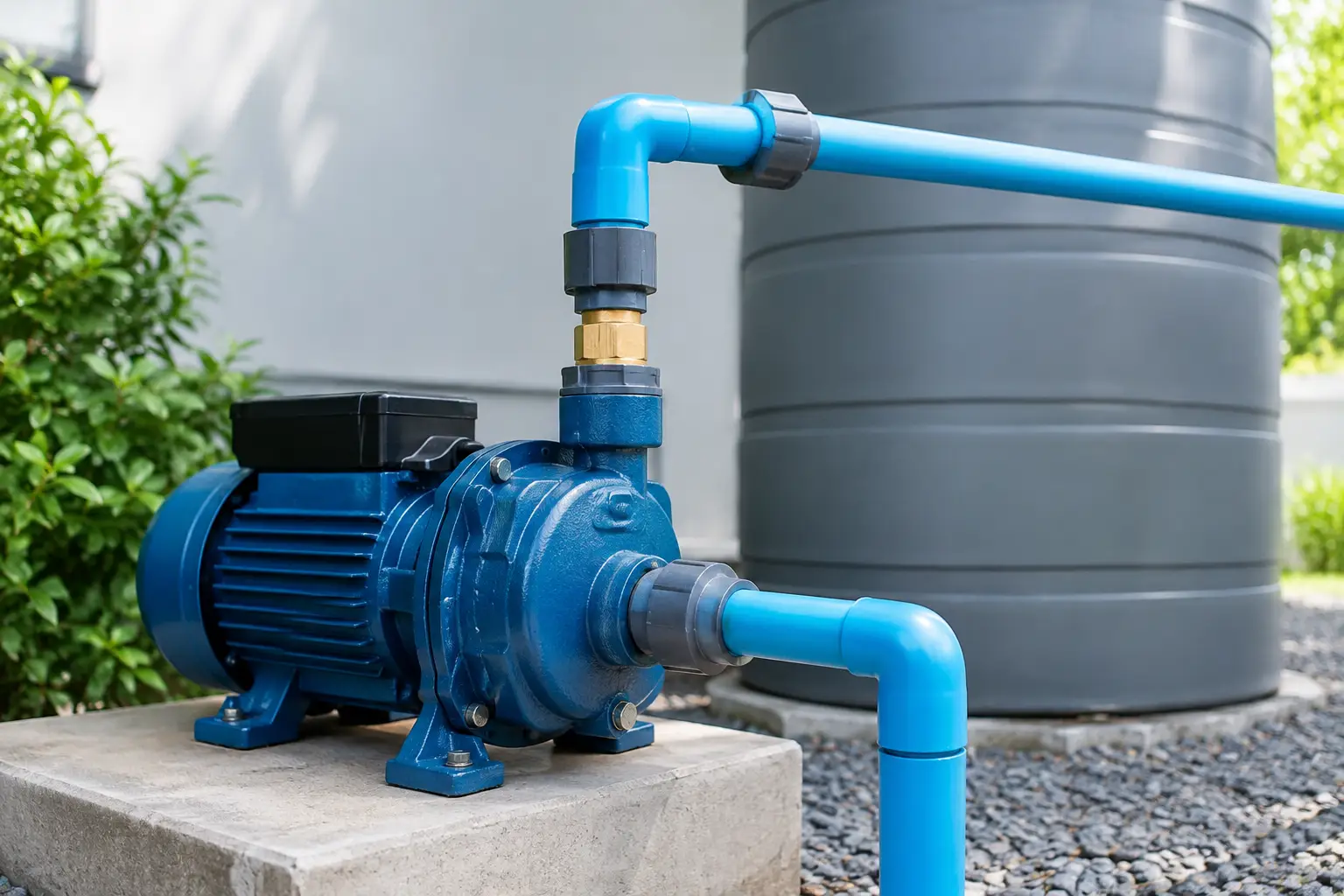
A domestic pressure pump, usually a multistage or pressure-controlled model, is suited to rainwater tanks supplying household fixtures. It starts and stops automatically as water is used and is designed to maintain pressure through normal domestic demand.
A jet pump can suit certain domestic and rural applications, particularly where suction conditions need more consideration. Transfer pumps are built to move water efficiently between tanks, dams, troughs or storage points, while irrigation pumps are selected around the pressure and flow required by sprinklers, sprays or drip zones.
Fire pumps should be selected with extra care. The required flow, hose diameter, water source, available power and local bushfire planning requirements all affect the right setup. A pump that suits garden irrigation is not automatically suitable for firefighting. Seek advice based on the actual protection requirement and ensure the installation meets applicable local requirements.
Petrol, diesel, electric and solar-powered pumps also involve trade-offs. Electric pumps are practical for most homes with reliable mains power. Petrol or diesel units can suit mobile farm work and emergency applications, while solar pumping can be an effective option for remote stock water where power supply is limited. The right power source depends on how often the pump runs, where it is located and whether water must remain available during a blackout.
Read the Pump Curve, Not Just the Box Rating
Every quality pump has a performance curve. This graph shows how flow changes as head increases. At low head, a pump may move a large volume. As pressure demand rises, its flow drops. The point that matters is where your system’s required flow and total head meet on that curve.
For example, a pump advertised with a maximum flow of 70 L/min may only deliver 35 L/min once it is pushing water uphill through filters and long pipework. That may still be ideal for a standard household, but it will not run an irrigation zone that needs 55 L/min at high pressure.
Also look at the duty rating, motor protection, pressure controller or mechanical pressure switch, noise level and warranty support. A pump is a working part of your water system, not a place to chase a headline specification alone. Established brands with available spare parts and service support are often the better long-term buy.
Two Common Sizing Examples
A single-storey three-bedroom home beside its rainwater tank, with one bathroom, standard water-saving fixtures and a whole-house filter, may suit a domestic pressure pump delivering roughly 35 to 45 L/min at the required operating pressure. The final selection still depends on filter setup, pipe size and whether outdoor watering runs at the same time.
An acreage home with two bathrooms, a long underground water line and garden sprinklers needs a closer look. The household may require 45 to 60 L/min with enough head to overcome elevation and friction loss. If the sprinklers need high flow, separating household supply and irrigation onto different pumps can provide better performance and avoid a large pump cycling for small indoor water uses.
Get the Details Ready Before You Buy
Before selecting a pump, measure the distance from tank to outlet, the height the water must rise, the pipe diameter and the number of fixtures or irrigation outlets that may run together. Note whether there are filters, UV units, rain-to-mains switches or long branch lines. For irrigation, record the flow and pressure stated for each sprinkler or emitter, plus the number running in one zone.
This information turns a vague question into a dependable pump selection. It also helps identify whether a packaged tank, pump and filtration system will save money and reduce compatibility issues.
With more than 30 years in the industry, Central Coast Water Tanks can help match quality products to practical conditions, from a compact home tank system to a serious rural water setup. Bring the measurements, the intended use and a realistic picture of simultaneous demand – then choose the pump that will keep water moving properly from coast to country.