

A rainwater tank is not a small purchase you replace on a whim. Once the pad is poured, plumbing is connected and gutters are feeding the system, the tank needs to suit the property for years ahead. This poly steel comparison looks at the practical differences between polyethylene and steel rainwater tanks, so you can buy with confidence whether you are supplying a suburban home, shed, acreage block or working farm.
The best choice is rarely about one material being better across every job. Tank capacity, access, water use, available space, site exposure and budget all matter. A well-chosen tank, pump and filtration setup will do far more for reliable water supply than choosing on tank material alone.
What changes between poly and steel tanks?
Poly tanks are rotationally moulded from UV-stabilised polyethylene. They are supplied as a single-piece tank, usually with fittings already moulded or installed, and are available in a wide range of round and slimline shapes. Their smooth internal surface and corrosion-free construction make them a common choice for homes, smaller rural properties and tight-access sites.
Steel rainwater tanks are generally manufactured from coated steel sheeting and use a purpose-made internal liner to hold the water. AquaPlate steel tanks are a familiar choice across Australian residential and rural properties because they can provide large storage volumes with a traditional round tank footprint. The external steel shell provides the structure, while the liner is the water-containing component.
Both types can collect quality rainwater when installed properly. Keeping leaves, sediment and pests out of the system matters more than the material alone. Good gutter protection, first-flush management where appropriate, a sealed lid and regular tank maintenance all help protect stored water.
Poly steel comparison: the key buying differences
Strength, movement and site conditions
Poly tanks have a degree of natural flexibility. That can be useful where minor ground movement occurs, provided the tank sits on a properly prepared, level base. They do not rust, and coastal air is not a corrosion concern for the tank body itself. For Central Coast homes and properties exposed to salty conditions, this can be a significant advantage.
Steel tanks are rigid and suited to large capacities. They are commonly selected where a property needs substantial water storage for household supply, livestock, irrigation or fire preparedness. Their performance depends on correct installation, including a flat, compacted base that fully supports the tank and protection against water sitting around the base.
Neither style should be placed on an uneven pad, loose pavers or a few concrete slabs. A full tank is extremely heavy. A 10,000-litre tank holds roughly 10 tonnes of water before the tank weight is considered, so base preparation is not the place to cut costs.
Capacity and available space
If your priority is maximum storage in one tank, steel often gives you more options at larger diameters and capacities. This makes it a strong fit for acreage homes, farms and sites with room to position a large round tank. Larger storage can reduce reliance on mains water, improve dry-period security and provide a useful reserve for stock or garden use.
Poly offers excellent choice where shape matters as much as volume. Slimline poly tanks can sit beside a house, along a fence line or in a narrow side access area where a round tank will not fit. Round poly tanks remain a practical option for backyards, sheds and smaller rural applications.
Measure the site before selecting capacity. Allow room not only for the tank itself but also for inlet pipes, overflow, pump access, cleaning and future maintenance. Check delivery access too. A tank may fit in the yard but still be difficult to get past a garage, carport, powerlines or narrow gate.
Water quality and maintenance
A quality poly tank has no internal liner to inspect or replace. Its one-piece construction can make ongoing ownership straightforward, particularly for domestic rainwater systems. Dark-coloured tanks also help limit light entering the tank, which assists with algae control when the lid and fittings are properly sealed.
A steel tank liner is designed for water storage, but it needs care during installation and throughout its service life. Sharp objects, poor site preparation, abrasive sediment and incorrect fittings can damage a liner. A liner issue is repairable in many cases, but it is a maintenance consideration that buyers should understand before ordering.
For drinking water, choose products and fittings suitable for potable applications and keep the whole collection system clean. If the water supplies a house, consider whole-house filtration and UV treatment where your water quality assessment or household requirements call for it. A tank stores the water, but filtration determines what reaches your taps.
Appearance and colour choices
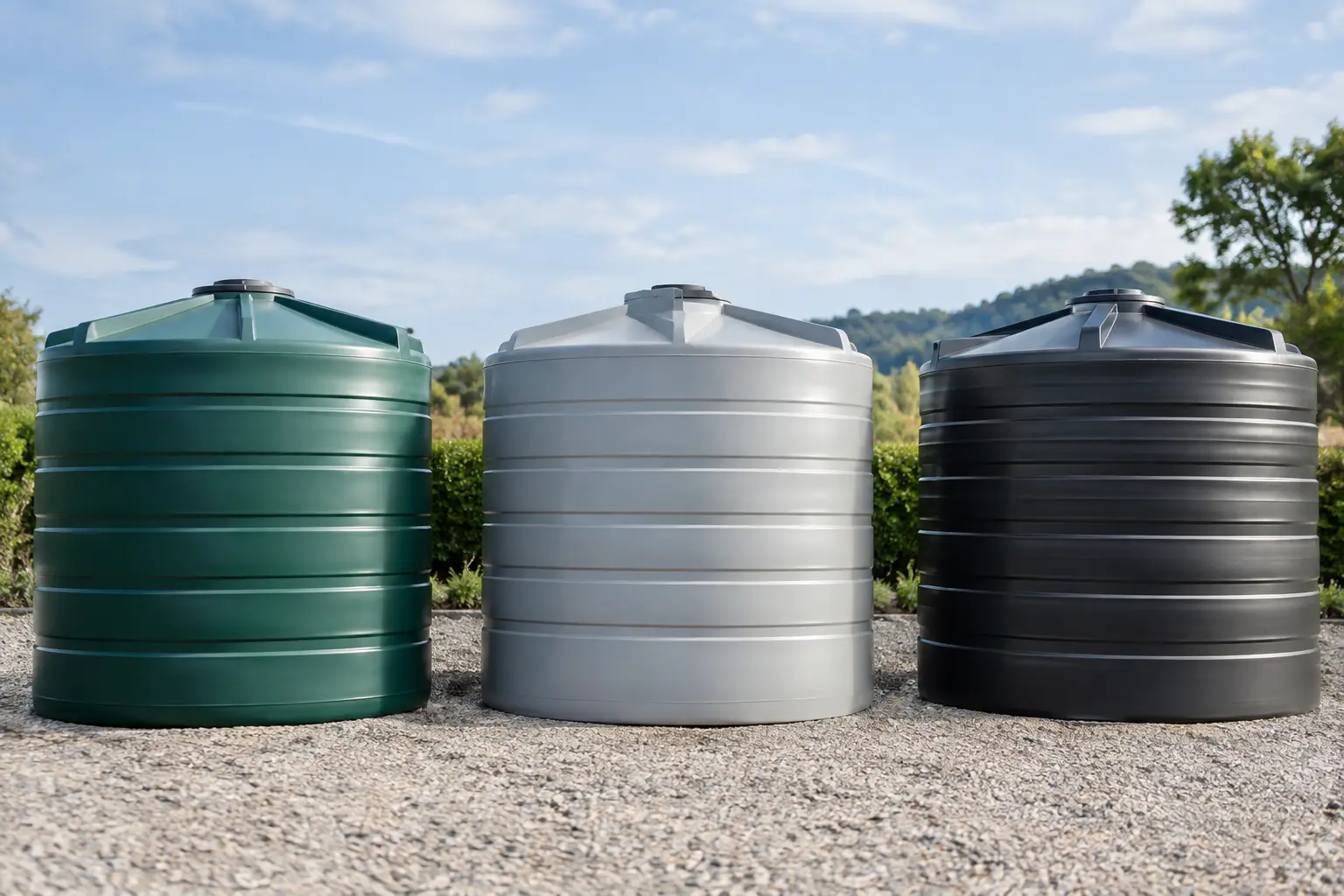
Poly tanks are available in a broad range of moulded colours and have a consistent finish. They suit contemporary homes, sheds and backyard installations where matching roof and fence colours is important.
Steel tanks have a more traditional rural appearance and can suit farm buildings, larger blocks and architectural projects. Available finishes vary by tank range, so confirm colour options early if the tank will be highly visible from the home or street.
Cost is more than the tank price
A smaller poly tank may have a lower upfront price than a comparable steel installation, especially where access is simple and capacity requirements are modest. That does not automatically make it the lower-cost choice over the life of the system.
The true installed cost includes the base, delivery, crane or access requirements, plumbing, overflow management, pump, electrical work, filters and any rain-to-mains equipment. A larger steel tank may cost more initially but deliver better value per litre where high storage is essential. On the other hand, two slimline poly tanks may be the only practical way to add useful capacity to a narrow suburban block.
Think about the cost of running short as well. If the tank is intended to supply toilets, laundry, gardens, livestock or the whole house, undersizing can lead to more mains-water use and less security during dry weather. Start with roof catchment, average rainfall, household demand and the length of dry periods you need to cover.
Choosing for common Australian properties
For a standard home connected to town water, a poly tank is often an easy choice for garden use, toilet and laundry supply, or a compact rain-to-mains system. Slimline models work particularly well where side-yard space is limited. Pairing the tank with the right pressure pump matters if you want reliable pressure at multiple outlets.
For an acreage home relying on rainwater, either material can work well. The decision usually comes down to the volume required, access for delivery and the space available for a tank pad. Where the family home, gardens, sheds and animals all draw from stored water, larger capacity should take priority over saving a small amount on the initial purchase.
For farms, stock water, irrigation and fire reserves, steel tanks are frequently the practical choice because of their large-capacity options. Poly tanks also have a place around the property for smaller reticulation supplies, shed collection and locations where corrosion resistance or delivery access is a priority.
For bushfire-prone areas, tank material is only one part of planning. Tank location, pipework, pump setup, power backup and any local building or fire requirements need to be considered together. Confirm requirements with your builder, certifier or relevant authority before relying on a tank as part of a fire water supply.
Do not buy the tank before planning the system
The tank is the centre of the setup, but it cannot solve poor water collection or weak pressure. Match the inlet and overflow to expected roof runoff, direct overflow safely away from buildings, and choose a pump for the flow and pressure your household or irrigation system actually needs.
A small garden pump may be fine for a hose, but it may struggle if it is asked to run showers, washing machines and multiple taps. Likewise, a large pump can be unnecessary if the job is simply moving water to a trough. Complete tank, pump and filtration packages can simplify the process and prevent mismatched fittings or undersized components.
Central Coast Water Tanks has been trusted for over 30 years to help customers choose quality products from coast to country. Before ordering, have your preferred capacity, tank location, delivery access, roof area and intended water use ready. Those details make it much easier to match the right tank and supporting equipment to the job.
Choose poly when access, corrosion resistance, compact shapes or simple single-piece construction lead the decision. Choose steel when you need large-volume storage and have the site space to support it. The right tank is the one that gives your property useful water when the weather turns dry, not simply the one that looks cheapest on delivery day.