


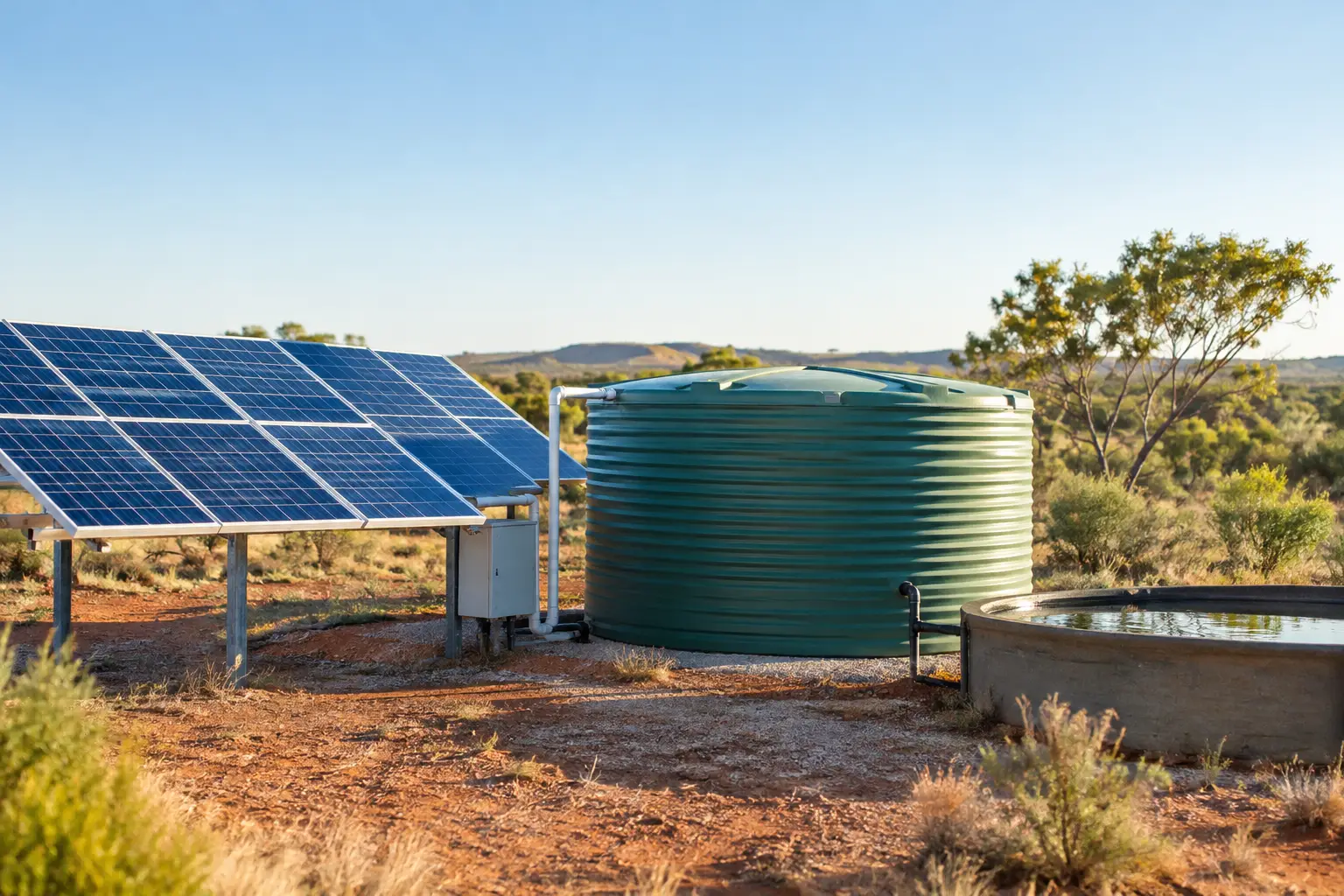
A good off grid water setup is not simply a large tank beside a shed. It is a complete system designed around your roof area, rainfall, household demand, water quality and the reality of a long dry spell. Get those foundations right and you can supply a home, weekend retreat, farm building or livestock area with dependable water. Get them wrong and an expensive tank can still leave you short on pressure, storage or safe drinking water.
For Australian properties, the starting point is to plan for the conditions you actually face, not the average year on paper. A Central Coast acreage may receive regular coastal rain, while a Hunter Valley block can experience extended dry periods and higher evaporation. Remote properties also need equipment that is straightforward to maintain when a tradesperson or replacement part is not just around the corner.
Start Your Off Grid Water Setup With Demand
Work out how much water the property needs before choosing tank capacity. For a full-time home, account for showers, toilets, laundry, kitchen use and outdoor taps. Add irrigation, animals, a granny flat, workshop amenities or a fire-fighting reserve where relevant. A couple using water carefully has very different requirements from a family of five with gardens and stock.
Daily household use is only one side of the calculation. The system must bridge the gap between worthwhile rainfall events. In practical terms, storage capacity is what carries you through dry weeks. A tank that refills quickly in winter may still prove too small after a dry summer, particularly if garden watering is connected to the same supply.
It helps to separate essential and non-essential demand. Drinking, cooking, bathing and toilet flushing are essential. Large lawns, ornamental gardens and some wash-down jobs may need to be restricted when tank levels fall. This approach lets you size a system for reliable household supply without automatically overspending on storage for every possible use.
Calculate Collection Before You Buy
Your roof is the catchment. A larger roof will collect more water, but only if gutters, downpipes and tank inlets can handle the flow. As a simple guide, one millimetre of rain falling on one square metre of roof produces roughly one litre of water before losses. A 200-square-metre roof receiving 25 mm of rain can therefore yield about 5,000 litres, less any first-flush diversion and overflow.
Roof shape, gutter condition, leaf load and local rainfall patterns all affect real collection. Do not size your tank from annual rainfall alone. Look at when rain falls and how long the property may go without meaningful top-ups. For many homes, multiple tanks can be a sensible choice. They increase total storage, can fit around site access, and allow one tank to be isolated if maintenance is needed.
Choose the Right Tank for the Site
Tank material and shape should suit access, available space and intended use. Poly rainwater tanks are a popular choice for homes, sheds and rural properties because they are durable, economical and available in many round, slimline and under-deck formats. A slimline tank can make good use of a side setback, while a large round tank often provides the best litres-per-dollar result where space is available.
Steel AquaPlate tanks are well suited to larger capacities and rural applications. They can be a strong option where a property needs substantial storage for domestic supply, stock, irrigation or fire preparedness. Underground tanks are worth considering when site appearance, space or planning requirements make above-ground storage difficult, but installation costs and access for servicing need to be allowed for from the start.
Every tank needs a properly prepared, level base. This is not a place to cut costs. An uneven or undersized base can put stress on the tank and fittings, particularly when it is holding tens of thousands of litres. Plan the overflow route as well. During heavy rain, water should drain safely away from buildings, footings, driveways and neighbouring land.
Pumps Make Stored Water Usable
Gravity may be enough for a tank positioned above a trough or garden, but most homes need a pressure pump. The best pump depends on flow demand, pipe length, elevation change and how many outlets may run at once. A modest cabin with one bathroom has a different duty from a family home where showers, washing machine and kitchen tap may operate together.
For household supply, choose a pump capable of maintaining comfortable pressure without excessive cycling. Constant-pressure and pressure-controlled systems can provide a more consistent experience, though the right choice depends on the layout and budget. A pump that is too small can leave taps weak and appliances underperforming. One that is oversized may cycle unnecessarily, cost more and make faults harder to diagnose.
Farm and acreage water systems often need more than one pump. A domestic pressure pump may serve the house, while a separate transfer, irrigation or fire pump handles larger flows. Keeping these duties separate protects household supply and avoids trying to make one unit do every job. Where grid electricity is unavailable, match the pump to the available solar, battery or generator capacity and consider the higher start-up load of some motors.
A tank outlet should include an isolation valve and suitable filtration before the pump where required. Protect exposed pipework from impact, sun damage and stock. For remote systems, keep critical spare parts on hand, such as a pressure controller, filter cartridge, seals and common fittings.
Filtration Depends on How You Use the Water
Rainwater can be suitable for household use when the collection and treatment system is properly managed, but it should not be assumed to be clean simply because it came from the sky. Roof debris, dust, bird droppings and sediment can all enter the system.
Start at the roof with clean gutters, gutter guards where suitable, rain heads and a first-flush device. A first flush helps divert the dirtiest water from the beginning of a rainfall event before it reaches the tank. At the house, a sediment filter removes fine particles and helps protect plumbing and appliances. For drinking water, many properties add carbon filtration for taste and odour, followed by UV treatment to manage microbiological risk.
The exact filter sequence depends on the source and intended use. Water used only for toilets, washing machines and gardens may need less treatment than water used for drinking and food preparation. If bore, dam or creek water is part of the supply, have it tested before selecting filtration. These sources can contain minerals, iron, sediment or contamination that require a different treatment approach from rainwater.
Filters are only effective when maintained. Replace cartridges on schedule, clean housings, check UV lamps and service pumps as recommended. A neglected filter can reduce flow and compromise water quality. Set a reminder based on actual use, especially after storms, bushfire smoke events or periods of dusty weather.
Build in Backup and Fire Preparedness
An off-grid system should have a plan for low tank levels. This might mean trucked water, a second source for non-potable tasks, or rain-to-mains switching where mains water is available as a backup. If your property is fully off-grid, monitor tank levels so you can respond before the supply becomes critical rather than after the pump starts drawing air.
Fire preparedness deserves separate thought. A dedicated reserve, clearly accessible fittings and a suitable fire pump can be valuable on rural and bushland properties. Requirements can vary with council conditions, building approvals and bushfire planning rules, so confirm what applies before finalising tank size or plumbing. Do not rely on a domestic pressure pump as a substitute for a properly selected fire-fighting setup.
Buy the System, Not Just the Tank
The most economical purchase is not always the cheapest tank advertised. Include the base, gutters, downpipes, screens, first flush equipment, fittings, pump, filtration, pipework and installation in your budget. Packaged tank, pump and filter deals can remove guesswork and often save money compared with buying mismatched parts separately.
Central Coast Water Tanks has been trusted for over 30 years to help customers select quality products from coast to country, from compact home tanks through to larger rural storage and complete pumping and filtration systems. A clear plan means you can order the right gear once, rather than adding costly fixes after the first dry spell.
The best time to improve water security is before the next run of dry weather. Measure the roof, map the site, decide what water use is essential, and choose a system that gives your property room to cope when rain is scarce.