

A rainwater tank can look crystal clear and still need treatment before the water reaches your kitchen tap. That is where the choice between UV versus carbon filters matters. They do very different jobs, and choosing one when your water needs the other can leave you paying for equipment without solving the real issue.
For homes, rural properties and sheds using tank water, the best answer is often not UV or carbon. It is a correctly sized filtration train that deals with sediment first, improves water quality where needed, then treats microbiological risk at the point of use. The right setup depends on your water source, intended use, pump flow and the condition of your tank system.
UV versus carbon filters: the key difference
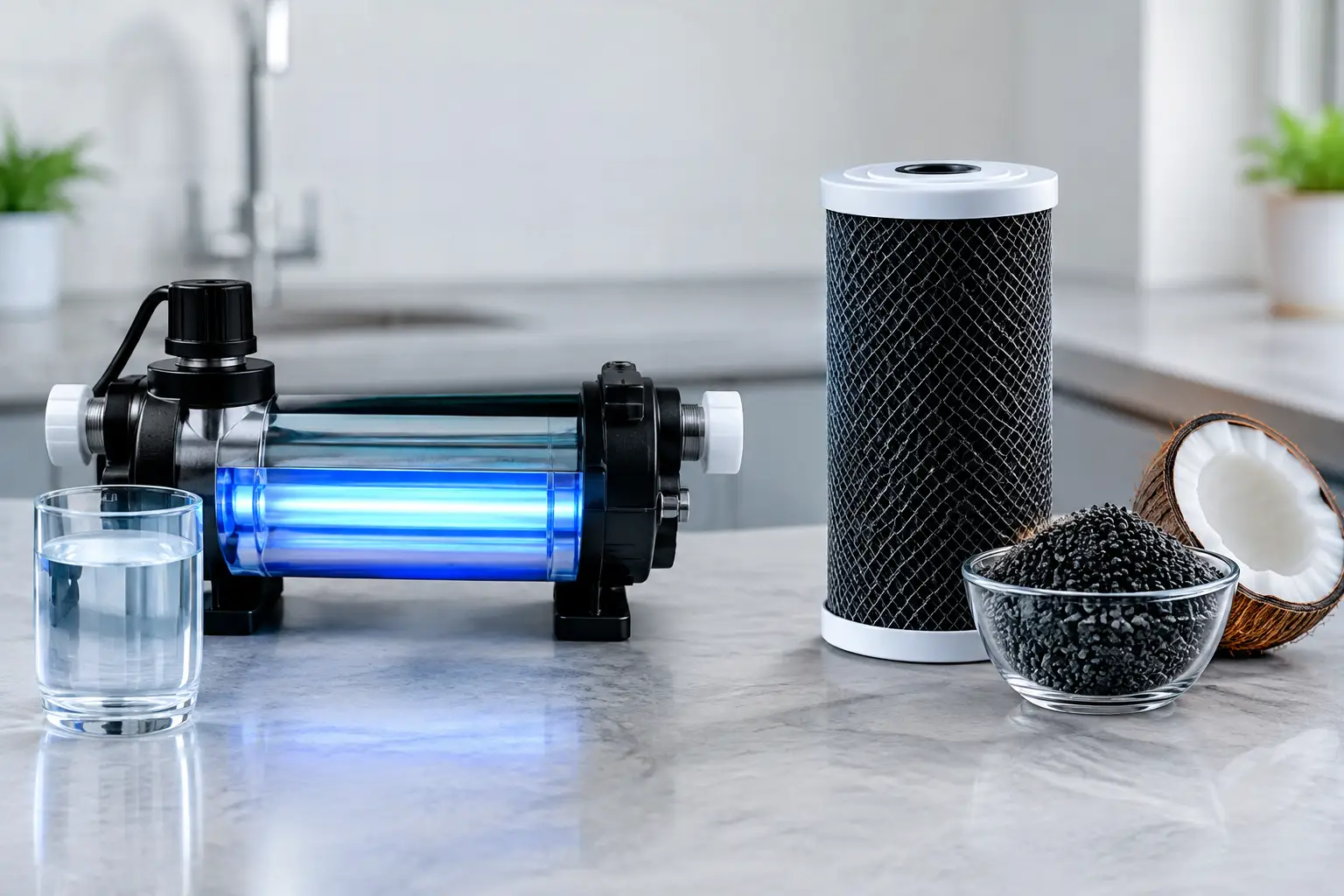
A UV water filter disinfects water. It uses ultraviolet light to damage the DNA of microorganisms, preventing bacteria, viruses and protozoa from reproducing. It does not add chemicals to the water and does not change its taste, smell or colour.
A carbon filter improves the chemical and aesthetic quality of water. Activated carbon is highly porous and absorbs many unwanted compounds as water passes through it. Depending on the cartridge type and the contaminants present, it can reduce chlorine taste and odour, earthy or musty smells, some organic compounds and certain chemical residues.
Put simply, UV is about microbiological protection. Carbon is about taste, odour and selected chemical contaminants. Neither is a substitute for good rainwater collection practices, a clean tank and proper pre-filtration.
What UV filtration does well
UV filtration is particularly useful for rainwater used for drinking, cooking, brushing teeth and other potable household uses. Bird droppings, small animals, insects and organic material can enter a roof catchment or tank, even with a good leaf guard and inlet screen in place. A UV unit provides a final disinfection barrier before water reaches the tap.
It is also a practical choice for remote properties where regular water testing and chemical dosing are not realistic. When paired with suitable pre-filtration, a correctly sized UV system offers continuous treatment as long as power is available and the unit is maintained.
UV has clear limits. It does not remove sediment, rust, dirt, dissolved metals, pesticides, chlorine, bad tastes or odours. It also cannot work effectively through cloudy water. Fine particles can shield microorganisms from the UV light, which is why UV systems should never be installed as the only treatment stage on untreated tank water.
What carbon filtration does well
Carbon cartridges are common in whole-house and under-sink systems because they make water more pleasant to drink. They are especially effective on chlorinated mains water, where reducing the pool-like taste and smell can make a noticeable difference at the kitchen tap.
For rainwater, carbon can help if water has an earthy, stale or organic taste after storage. It may also be selected where a water test identifies contaminants that a particular certified carbon cartridge is designed to reduce. The cartridge specification matters here. Not every carbon filter removes the same substances, and broad claims should always be checked against the manufacturer’s stated performance.
Carbon is not a reliable method of disinfection. While it can trap some particles and may reduce some microorganisms, it should not be relied on to make potentially contaminated rainwater safe to drink. In fact, a carbon cartridge that is left in service too long can become a place where bacteria multiply. Regular cartridge changes are essential.
Why rainwater systems often need both
For many Australian households using rainwater as a primary supply, the strongest approach is a staged system. Water is collected from the roof, stored in the tank, pumped through sediment filtration and then treated at the point of use.
A typical whole-house arrangement may include a washable or disposable sediment filter first, followed by a carbon cartridge if taste, odour or chemical reduction is required, then a UV unit as the final stage. The sediment filter protects both the carbon cartridge and the UV chamber from dirt. The UV unit sits last so that treated water is not exposed to contamination further along the line.
The exact cartridge micron rating should suit the quality of your water and the flow your household needs. A fine cartridge can produce cleaner water, but if it is too restrictive or allowed to block up, it can reduce shower pressure and place extra load on the pump. This is one reason a complete tank, pump and filtration system should be planned as a system, not bought as separate parts that may not suit each other.
When a UV filter is the better choice
Choose UV as a priority when you rely on untreated rainwater, bore water or another private supply for drinking and household use, and there is a realistic risk of microbiological contamination. It is also appropriate where children, older residents or anyone with a reduced immune system uses the water supply.
A UV unit must be matched to your actual maximum flow rate. A large house with several bathrooms, a high-flow pressure pump or a farm homestead with multiple outlets needs a unit rated to treat that flow. If water moves through the chamber faster than the unit is designed for, it may not receive the required UV dose.
Power supply also needs consideration. UV systems need electricity whenever treated water is being used. For off-grid properties, account for the unit’s ongoing power draw and ensure the installation is protected from weather and electrical faults.
When carbon filtration is the better choice
Carbon may be all you need for municipally treated mains water where the goal is better-tasting drinking water. In this situation, chlorine is usually already providing disinfection through the network, while carbon is used to improve flavour and smell at the tap.
It can also be a sensible addition to rainwater systems where the water is already microbiologically treated but has a noticeable taste or odour issue. If your tank water smells unpleasant, though, do not automatically assume a carbon cartridge is the fix. Check the tank first. Decaying leaf matter, sludge in the base of the tank, a damaged insect screen or poor inlet protection should be corrected at the source.
For chemical concerns, arrange a water test before selecting a cartridge. Water quality varies between properties, particularly around rural areas, agricultural land and older plumbing. A filter that works well for chlorine may not be suitable for a specific metal, pesticide or dissolved contaminant.
The maintenance that protects your investment
Both filter types need service, but their maintenance tasks are different. Sediment and carbon cartridges need replacing at the interval recommended for the cartridge and sooner if water pressure drops, water quality changes or the cartridge becomes visibly dirty. The replacement interval will vary with tank condition, household water use and seasonal rainfall.
UV lamps typically require replacement every 12 months, even if the lamp still appears to be glowing. UV output reduces over time, so visible light is not proof that the unit is delivering effective disinfection. The quartz sleeve around the lamp also needs inspection and cleaning because mineral scale or film can block UV transmission.
Keep a simple service record near the filter housing or in your phone. Note cartridge changes, lamp replacement dates and any changes in taste, pressure or water clarity. This small habit makes it much easier to spot a problem before it affects your water supply.
Start with the water source, not the filter label
Before buying, consider whether the water comes from a roof tank, mains supply, bore or dam; whether it is used for drinking or only for toilets, laundry and irrigation; and the highest flow your household or property demands. Also inspect the basics: roof cleanliness, gutter guards, first-flush diversion, tank screens, tank condition and pump performance.
A well-maintained tank with sound collection hardware gives any filter a better chance of doing its job. No cartridge or UV lamp can compensate for a tank full of sediment or an uncovered inlet inviting contamination.
Central Coast Water Tanks has been trusted for over 30 years because practical water systems start with the right components in the right order. Whether you need a compact drinking-water filter for a home, a whole-house UV system for tank water or replacement cartridges for an existing setup, choose equipment that suits your source and flow rate. A little planning now can mean cleaner water, steadier pressure and fewer surprises when the next dry spell arrives.