

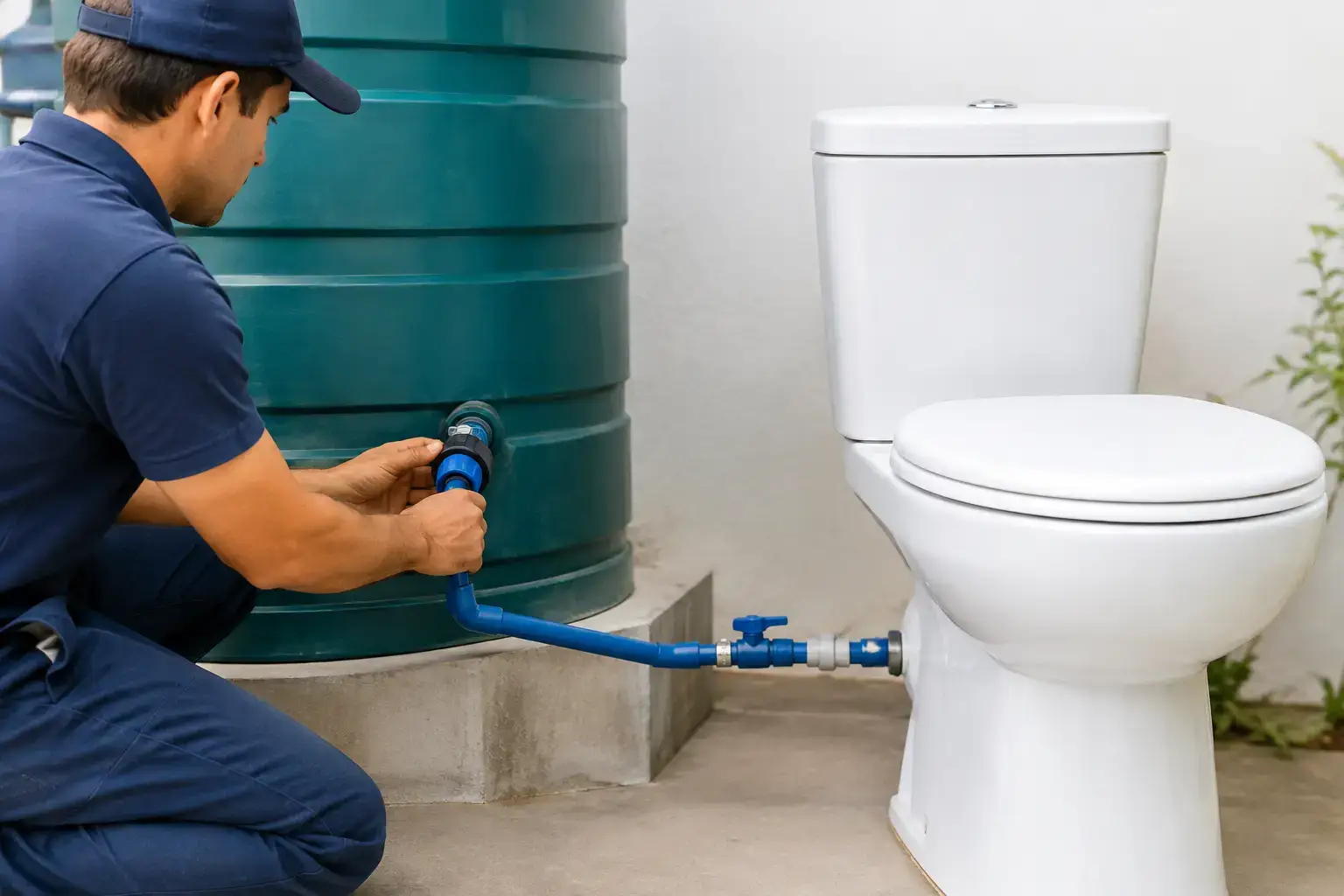
A toilet can account for a sizeable share of a household’s daily water use, particularly in a busy family home. Choosing to connect tank water to toilets can therefore make practical sense: it puts captured rainwater to work every day, reduces reliance on town supply and keeps more water in reserve for the jobs that need it.
The key is not simply running a pipe from the tank to the bathroom. A dependable setup needs adequate collection, the right pressure pump, correctly separated plumbing and a compliant way to keep toilets operating when the tank is low. Get those parts right and a rainwater tank can become a reliable part of your home water system rather than another job on the maintenance list.
Can You Use Rainwater for Toilet Flushing?
Yes. Rainwater is commonly used for toilet flushing in Australian homes, as well as for laundry and outdoor taps where the system is designed for those uses. Toilet flushing is a sensible application because it gives tank water regular turnover without requiring drinking-water treatment at the point of use.
Whether it is worthwhile depends on your roof area, local rainfall, household size and tank capacity. A small tank under a deck may comfortably carry one or two toilets through wetter periods, while a larger family home on the Central Coast, in the Hunter Valley or on acreage may need a larger storage volume to see consistent savings across dry spells.
A rainwater system supplying toilets also needs a town-water backup where mains water is available. This is not a shortcut around correct plumbing. It is a controlled changeover arrangement that protects the mains supply and ensures the cisterns still flush if the tank runs empty, a pump fails or power is interrupted.
Plan the Tank-to-Toilet System First
Before selecting fittings or a pump, work out what the system needs to deliver. Start with the number of toilets, the number of people using them and whether the tank will also serve the laundry, garden or other household uses. Every extra outlet increases demand and can affect the required pump flow, pressure and storage capacity.
Roof catchment matters just as much as tank size. A large tank cannot refill without sufficient roof area and rainfall, while a small tank on a large roof may overflow often but still be useful for regular toilet use. First-flush diverters, leaf strainers and gutter guards are worthwhile considerations, especially under trees or in rural areas where roof debris can quickly load up filters.
Think about the tank location too. A tank close to the house can reduce pipe runs and pressure losses, but access for delivery, installation and future servicing still matters. For new builds, it is generally easier and more cost-effective to allow for separate rainwater pipework before walls, slabs and landscaping are finished. Existing homes can be retrofitted, although the route for new pipework may influence the overall cost.
Keep Rainwater and Mains Water Separate
This is the most important safety rule. Rainwater plumbing and drinking-water plumbing must not be directly cross-connected. A direct connection can allow non-potable water to flow back into the town supply, creating a health risk and potentially breaching local plumbing requirements.
The usual answer is a purpose-designed rain-to-mains changeover device or system installed by a licensed plumber. Depending on the product and installation, it may automatically switch the toilet supply to mains water when tank level or pump pressure drops, then return to rainwater once supply is restored. The right arrangement must provide approved backflow protection and comply with the requirements that apply in your state, council area and water authority district.
Do not rely on a manually opened valve between tank and mains pipes. It is too easy for the wrong valves to be left open, and it does not provide the necessary protection. A qualified plumber can identify the correct connection method and label the rainwater services clearly.
Choosing the Right Pump for Toilet Supply
A toilet cistern does not require enormous flow, but it does need consistent pressure to refill properly. In most homes, a quality automatic pressure pump is the practical choice. It starts when a cistern calls for water and stops once demand ends.
Pump selection should account for the vertical lift from tank water level to the highest toilet, the length and diameter of pipework, and other outlets being supplied at the same time. If the same pump runs toilets, washing machine taps and garden hoses, choose for the combined duty rather than the toilet alone. An undersized pump may lead to slow cistern filling, cycling and disappointing pressure. An oversized unit can cost more than necessary and may cycle excessively on low-demand systems.
A suitable setup commonly includes a tank outlet strainer, isolation valve, pump protection and an appropriate inlet filter. Where fine sediment is likely, filtration ahead of the pump can protect seals and moving parts. Some pumps include loss-of-prime or dry-run protection, which can be valuable where tanks are occasionally allowed to run low.
For properties with unreliable power, consider what happens during an outage. A mains backup arrangement may still depend on electrically operated components, while an off-grid property may need battery, generator or solar-pump planning. The best choice depends on how essential the toilet supply is and what backup power is already on site.
Plumbing the Toilets from the Tank
The plumber will install a dedicated rainwater line from the pump or changeover system to the toilet cisterns. This line should be identified as rainwater supply so that future owners, trades and service technicians can understand the system quickly. The exact pipe material, pipe sizing and identification requirements vary by installation and local rules.
Avoid running the pipe where it is likely to be damaged by vehicles, digging or UV exposure unless it is properly protected. Long, undersized lines can restrict flow and make a good pump perform poorly. Where pipes pass through walls or under paths, allow for protection and accessible isolation points where possible.
Toilets themselves do not usually require special cisterns, but the inlet valve should be in good condition. A leaking inlet valve can make a pump start repeatedly, waste tank water and shorten pump life. If a cistern hisses, overflows or refills at random, repair it promptly.
Water Quality and Maintenance That Matter
Rainwater used only for toilet flushing does not need the same treatment as drinking water, but clean collection and basic filtration still protect the system. Keep gutters reasonably clear, clean leaf strainers after heavy wind or storms, and inspect the tank inlet screen. Sediment and organic debris can block filters, reduce pump performance and contribute to odours.
Check the pump operation periodically by flushing each connected toilet and listening for unusual cycling or vibration. Inspect cartridge filters according to their condition and replacement schedule, not just when water flow has already fallen away. On larger rural properties, check that stock, machinery or a ute cannot damage exposed pipes or fittings around the tank.
Tank water should not be assumed safe for drinking unless the system is specifically designed, filtered and managed for potable supply. Keep hose connections and non-potable outlets clearly understood, particularly where children, visitors or contractors may use them.
When a Toilet Connection Makes the Most Sense
Connecting a tank to toilets is especially effective for households with regular occupancy and enough roof catchment to replenish storage. It can also suit new homes looking to reduce mains demand, renovations where bathrooms are already being opened up, and rural properties where rainwater is the primary domestic supply.
It may be less economical where a tiny roof, frequent low rainfall or very limited tank capacity means the system spends much of the year on mains backup. In that case, a larger tank, more catchment area or limiting the tank to one toilet may be the better value decision. The aim is a system that works reliably for your property, not the biggest system on paper.
Central Coast Water Tanks has been trusted for over 30 years for quality tanks, pressure pumps, rain-to-mains equipment, filtration and the fittings needed to build a complete water solution. Choose proven components, have the plumbing completed correctly and give the system a simple maintenance check through the year. That is how tank water keeps flushing long after the first good rain.