


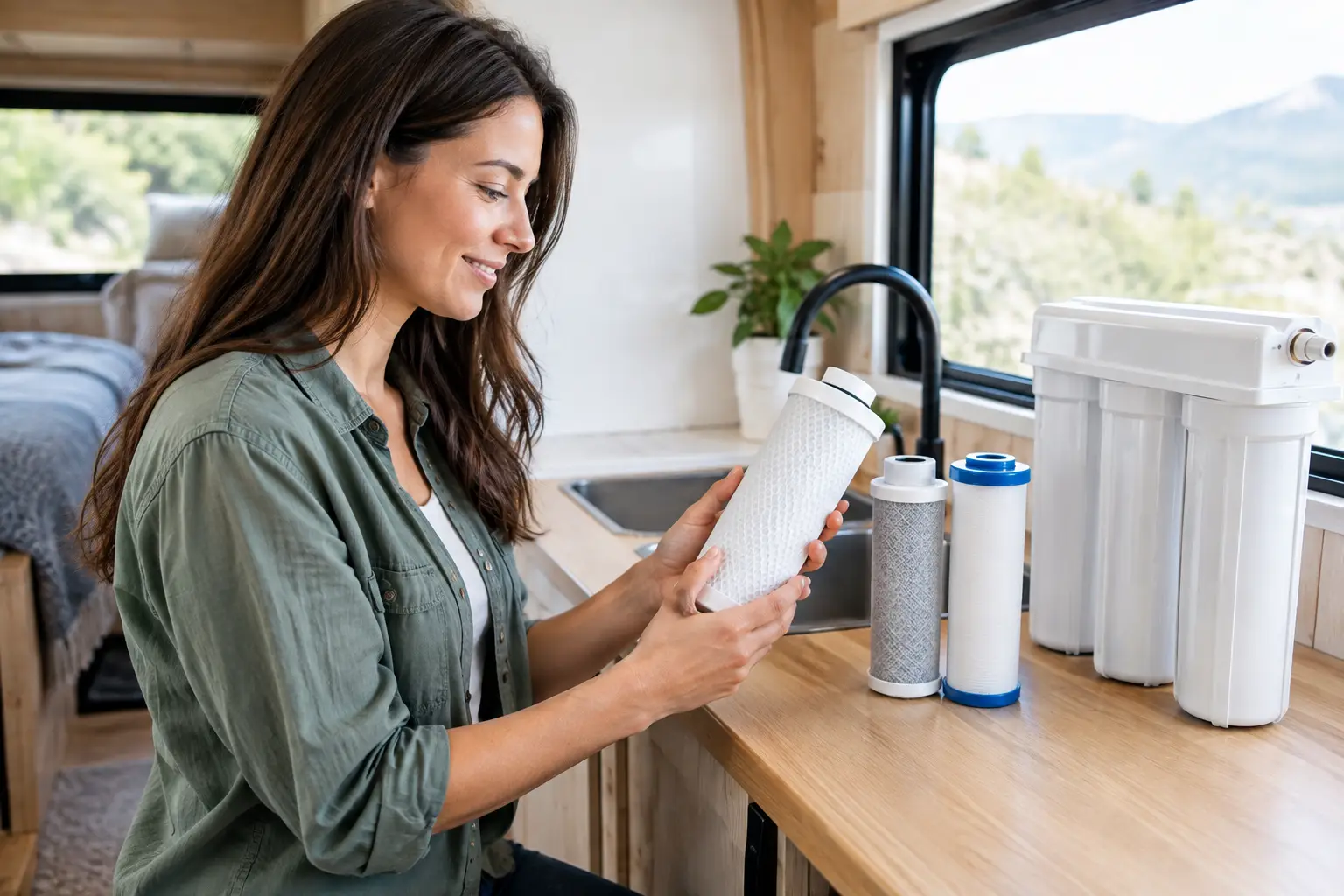
A tiny home water filter has to do more than make water taste better. In a compact home, it needs to protect your drinking water, suit the source you have available, work with a small pump or mains pressure, and fit into a cupboard, service bay or external enclosure without making maintenance a headache.
For many Australian tiny homes, water comes from a rainwater tank, although some connect to town supply, a bore or a mixed rain-to-mains arrangement. Those sources do not call for the same filter. Choosing the right setup starts with how you collect and use water, not simply with the smallest filter you can find.
Start with your water source
Rainwater is a practical choice for tiny homes on rural blocks, lifestyle properties and off-grid sites. With a clean roof catchment and well-maintained tank, it can provide a reliable household supply. It can also carry roof debris, fine sediment, organic matter and, in some situations, microbiological contamination. A filter system should address those risks in the right order.
Town water is already treated, so the usual goal is improving taste, reducing chlorine and catching any sediment picked up through old pipework or storage. A carbon cartridge filter is often enough for a tiny home connected solely to mains water. Adding more stages may be worthwhile where water quality is known to be poor, but unnecessary filtration adds cost, takes up space and can reduce flow.
Bore, dam and creek water need a more careful approach. Their quality can vary after rain, through dry periods and between locations. Sediment is only one part of the picture. Minerals, iron, manganese, salinity and bacteria may also need attention. Have this water tested before selecting equipment, especially if it will supply drinking, cooking and bathing water.
What a tiny home water filter should include
A good tiny-home setup is usually a compact whole-house system rather than a small under-sink drinking-water filter. An under-sink unit can improve water at one tap, but it does not protect the shower, hot-water service, washing machine, toilet or pump from grit and sediment.
For rainwater used throughout the home, the practical arrangement is generally a sediment filter first, followed by a carbon filter and, where potable water is required, UV disinfection. The sediment cartridge catches particles that would otherwise clog the carbon cartridge and block UV light. Carbon helps improve taste and odour while reducing organic compounds. UV treats bacteria and other microorganisms, but only works properly when the water reaching it is clear.
The right cartridge micron rating depends on the water source. A coarser sediment cartridge may suit water with visible grit or a tank that has collected roof dust after a dry spell. A finer cartridge gives clearer water, but will block sooner if the water is dirty. Many homeowners get better results from staged filtration than expecting one fine cartridge to do every job.
UV is not a substitute for good rainwater collection practices. Keep gutters clear, use a leaf diverter or gutter guard where appropriate, fit a first-flush device, maintain a sealed tank and make sure the tank overflow is screened. Filtration works best as part of the whole system, from roof to tap.
Size the system for flow, not just footprint
Tiny homes use less water than a large family house, but they can still demand decent flow. A shower, kitchen tap and toilet may run close together, and a small filter with a restricted flow rating can make a perfectly capable pressure pump feel underpowered.
Check the filter housing’s rated flow and pressure, then compare it with the pump’s expected performance. A compact pump supplying one tiny home may be suitable with standard 10-inch housings, depending on the cartridges selected and the number of outlets. If you want stronger shower pressure, have a larger pump, or expect to run an outdoor tap as well, larger housings can reduce pressure drop and hold more sediment before cartridge changes are needed.
There is a trade-off. Larger housings cost more and need more installation room, but they can be better value over time because replacement cartridges last longer. Small housings suit genuinely low-use homes where the system is easy to reach. Do not install a filter so tightly behind cabinetry or under a raised floor that changing a cartridge becomes a half-day job.
A pump should generally sit after the tank and before the filter system, with a suitable pressure controller or pump controller where required. Protect the pump intake with a tank outlet strainer, and make sure the filtration system has isolation valves. Those valves let you service housings without draining lines across the tiny home.
Plan for town-water backup
A rain-to-mains switch can be a sensible addition where the tiny home is connected to town supply but normally runs on tank water. It gives you an automatic or managed backup when tank levels are low, avoiding the inconvenience of running dry during a hot summer or extended dry spell.
The filtration arrangement needs to suit both supplies. Carbon filtration can be useful for town water, while UV is commonly retained for rainwater used as potable supply. The exact layout depends on whether water sources are switched before or after the filtration system. A licensed plumber can help ensure backflow prevention, pressure requirements and local compliance are properly handled.
Make maintenance part of the buying decision
Every filter needs attention. The question is whether the system is designed around maintenance you will realistically do. A tiny home makes this especially important because filters are often installed in tight external boxes, under benches or beside a water tank.
Check cartridges regularly in the first few months. This tells you how fast your particular water source loads up the sediment stage. A cartridge that looks clean can still have reduced flow, while a heavily stained cartridge may be doing exactly what it is meant to do. Replace sediment and carbon cartridges according to their condition, water use and the manufacturer’s recommendations rather than waiting until water pressure collapses.
UV systems require routine lamp replacement and periodic cleaning of the quartz sleeve. They also need a reliable power supply. If your tiny home is solar-powered, factor the UV unit’s continuous electrical draw into your energy budget. It is modest, but it is continuous, and that matters in a small off-grid system.
Keep spare cartridges on hand, particularly on rural or remote properties. A simple service kit is cheaper and easier than delaying maintenance while waiting for parts. Record the installation date inside the filter cupboard or on the housing itself, so the next service is not based on guesswork.
Three setups that suit most tiny homes
For a tiny home on town water, a single carbon filter or sediment-and-carbon twin system is often the sensible starting point. It improves water quality without taking up excessive space or creating complicated servicing.
For a rainwater tiny home where tank water supplies the whole house, a sediment filter, carbon filter and UV unit is a dependable potable-water arrangement. It suits owners who maintain their roof, gutters and tank and want consistent water at every tap.
For a fully off-grid tiny home using bore or surface water, start with testing. The final system may need sediment filtration, specialised treatment for mineral or iron issues, carbon filtration and UV. In some cases, reverse osmosis may be appropriate for drinking water only, rather than treating every litre used for showers and laundry. That approach can keep equipment size, wastewater and ongoing costs under control.
Buy the complete system, not isolated parts
A filter cannot compensate for a poorly matched tank outlet, undersized pump or unsuitable pipework. When planning your water supply, consider the tank, pump, pressure control, filtration, fittings and backup arrangement together. It avoids the common problem of buying a quality filter that cannot deliver the flow your tiny home needs.
Central Coast Water Tanks has been trusted for over 30 years for practical water storage, pumping and filtration solutions, from coast to country. Choosing compatible equipment from established brands can make installation simpler and future servicing far less frustrating.
If you are unsure where to begin, write down your water source, tank size, number of occupants, pump model, available installation space and whether the water will be used for drinking. Those details will point you towards a tiny home water filter that suits the way you actually live, rather than one that only looks compact on the shelf.