

Bore water can look perfectly clear at the kitchen tap and still leave orange stains in the shower, scale inside hot-water systems, or an unpleasant taste in drinking water. The best filters for bore water are not simply the biggest or most expensive units. They are the filters matched to what is actually in your supply, how much water your property uses, and whether you are treating every tap or only drinking water.
For homes, farms and acreage properties, getting this right protects pumps, appliances, pipework and livestock infrastructure as well as improving household water quality. A properly planned bore-water filtration system can be a long-term saving. A mismatched cartridge system that blocks every few weeks is usually not.
Start with a bore-water test, not a filter catalogue
Bore water changes from district to district and sometimes from one bore to the next. It may contain sand and fine sediment, iron, manganese, hardness minerals, sulphur odour, salts, bacteria or other contaminants. The water can also change after heavy rain, flooding, a dry spell or work on the bore.
Before choosing filtration, arrange a laboratory water test that covers the issues relevant to your property. At a minimum, ask about pH, hardness, iron, manganese, total dissolved solids, turbidity and microbiological quality. If there is a known local concern, such as nitrates, salinity or chemical contamination, include that in the test.
This result tells you what treatment is needed. It also prevents a common and costly mistake: fitting a standard carbon cartridge to solve a problem caused by hardness, dissolved iron or high salt levels. Carbon has an important role, but it is not a cure-all.
Best filters for bore water: build the system in stages
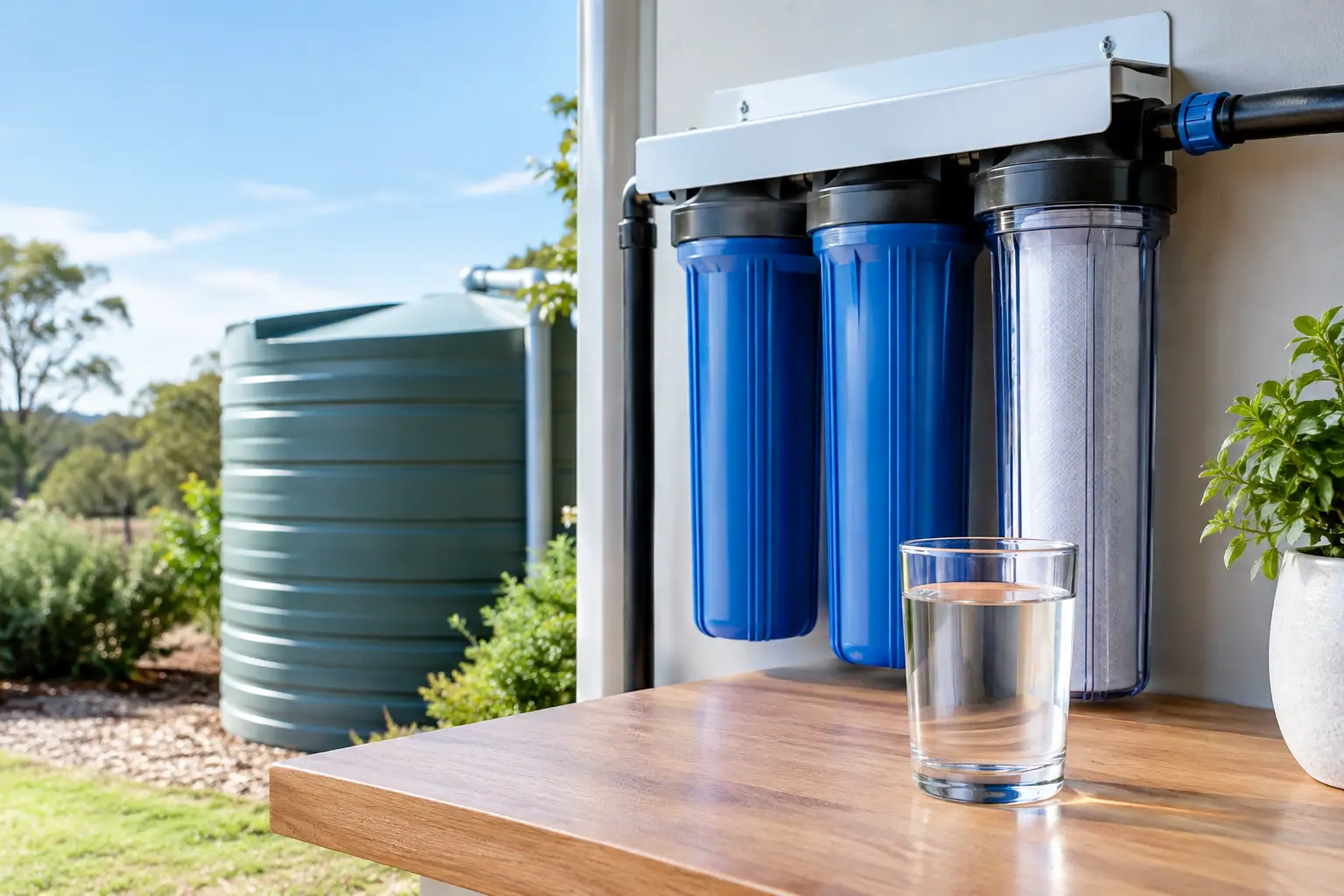
Most bore-water systems work best as a treatment train rather than one filter. Each stage handles a particular problem so the next component can do its job properly. The usual order is sediment removal first, then treatment media for minerals or iron, then taste and odour filtration where needed, followed by UV disinfection if the water is intended for household use.
The right arrangement depends on your test results, but the following filter types cover the most common Australian bore-water issues.
Sediment filters for sand, grit and dirty water
A sediment filter is usually the first line of defence. It removes visible particles such as sand, silt, rust and organic debris before they reach taps, pumps, valves and finer filters. This is particularly useful where the bore produces grit, or where water is stored in a tank before entering the house.
For light sediment, a washable screen filter or a larger cartridge housing may be enough. For heavier loads, consider a backwashable media filter or a staged setup with a coarse pre-filter followed by a finer cartridge. Fine cartridges can improve clarity, but they block faster. If your water is visibly dirty, starting too fine means frequent cartridge changes and reduced pressure.
Choose the housing size around your flow rate. A small under-sink cartridge is not suitable for filtering water for a four-bedroom home, irrigation line or stock troughs. Whole-house housings with larger cartridges generally offer better flow and longer service intervals.
Iron and manganese filters for staining and metallic taste
Orange, brown or black staining around toilets, basins, sprinklers and washing machines often points to iron or manganese. These minerals may be dissolved in clear water when it first leaves the bore, then oxidise when exposed to air and leave stains behind.
Iron and manganese are rarely handled well by a basic sediment cartridge alone. Depending on the concentration, pH and water chemistry, treatment may require oxidation, aeration, specialised filter media or a backwashing iron-removal system. In some cases, a chlorine dosing system is used before filtration, but this should be designed to suit the test result and required contact time.
Backwashing systems cost more upfront than a cartridge filter, but they are often the practical choice for consistently high iron. They clean their media automatically on a programmed cycle and are better suited to higher household or rural water demand. They do require a suitable drain point for backwash water and enough flow to perform the cleaning cycle correctly.
Water softeners for hardness and scale
Hard water contains calcium and magnesium. It is not usually a health concern, but it can be hard on plumbing. White scale on taps, reduced hot-water efficiency, stiff laundry and shortened appliance life are familiar signs.
A water softener uses ion-exchange resin to reduce hardness. This is the right category of treatment when scale is the main complaint, not a sediment or carbon filter. Most conventional softeners require salt for regeneration, so allow for ongoing salt use, servicing and a suitable drainage point.
For some properties, treating the whole house is worthwhile, especially where bore water feeds showers, hot water, dishwashers and washing machines. Others choose to soften only the hot-water supply or protect selected equipment. It depends on water use, installation layout and how severe the hardness result is.
Activated carbon for taste, odour and selected chemicals
Activated carbon is useful for improving taste and odour and can reduce a range of organic compounds. It is often fitted after sediment treatment because dirty water quickly fouls carbon media.
Carbon can help where the water has an earthy smell, a sulphur-like odour or an unpleasant taste. However, the cause of sulphur odour needs checking first. Hydrogen sulphide may require oxidation and specialised treatment rather than carbon alone, particularly at higher levels.
Carbon filters also have limits. They do not soften hard water, remove salts from saline bore water or reliably deal with high dissolved iron. Use them as one stage in the system, not as a substitute for test-based treatment.
UV filters for microbiological protection
A UV system disinfects water by exposing it to ultraviolet light. It can be an excellent final stage for bore water used for drinking, cooking, bathing and household supply, particularly where a water test identifies bacteria or where there is a risk of contamination entering the bore or storage tank.
UV only works properly with clear water. Sediment, colour and iron can shield microorganisms from the UV light, which is why pre-filtration is essential. Select a UV unit rated for your required flow, install it after the relevant filters, and keep up with lamp and sleeve maintenance. A UV unit does not remove sediment, minerals, salts or chemical contaminants.
Reverse osmosis for drinking water where salinity is high
If your bore-water test shows high total dissolved solids, salinity, nitrates or a specific dissolved contaminant, reverse osmosis may be suitable at a dedicated drinking-water tap. This approach is often more economical than trying to treat all household water where the main concern is drinking and cooking quality.
Reverse osmosis systems produce purified water, but they are slower than whole-house filters and create a reject-water stream. They need pre-filtration and regular membrane servicing. For a salty bore supplying a full home, a larger desalination-style solution may be required, and that calls for proper system design rather than an off-the-shelf cartridge kit.
Size the filter system for your property, not just the pipe size
A good bore-water system must provide enough flow for normal use without a major pressure drop. Think about the number of bathrooms, occupants, appliances, stock troughs and outdoor taps that may run at once. A family home may need a very different setup from a farmhouse with irrigation, a shed and multiple dwellings.
Check the pump’s flow and pressure against the filter’s rated flow. If the filter is undersized, it can starve the house of pressure even when the pump is performing properly. For whole-house treatment, larger housings, backwashing filters and correctly sized plumbing are often a better value than repeatedly replacing small cartridges.
Also plan the installation location. Filters need protection from weather, room to change cartridges or service media, access to power for UV or automatic valves, and drainage where backwashing is involved. A bypass line is a sensible inclusion so water can still be supplied while servicing is carried out.
Plan for ongoing maintenance
Every bore-water filter needs maintenance. The difference is whether that maintenance is predictable and manageable. Sediment cartridges need changing when pressure drops or they become visibly loaded. Carbon cartridges and UV lamps should be replaced to the manufacturer’s schedule. Softeners need salt, while backwashing media filters need periodic checks and eventual media replacement.
Keep a simple service record with installation dates, cartridge changes and water-test results. If staining returns, flow drops or the water’s taste changes, you have a useful history to work from. Retesting bore water periodically is worthwhile, especially after major weather events or any changes around the bore.
Central Coast Water Tanks can help property owners assemble practical tank, pump and filtration combinations from trusted brands, whether the job is a home bore supply, an acreage system or a rural property upgrade. Shop online and save on quality water-system components, or call us to discuss the flow, water test and filtration stages your property needs.
The best result is water treatment that suits your bore as it is now, while leaving room to service, test and adapt the system as conditions change.