


A dry spell has a way of showing exactly how much water a household, shed or farm operation uses. When mains restrictions tighten or a rural tank runs low, having a properly planned supply makes a real difference. Rainwater harvesting gives Australian property owners a practical way to collect a resource already falling on their roof, store it safely and put it to work when it is needed.
It is not simply a matter of adding the biggest tank that will fit beside the house. A useful system needs the right catchment area, storage capacity, pump, filtration and plumbing arrangement for the job. Get those basics right and rainwater can support gardens, toilets, washing machines, livestock, irrigation, household supply and fire preparedness. Get them wrong and a good tank can become an underused asset.
How rainwater harvesting works
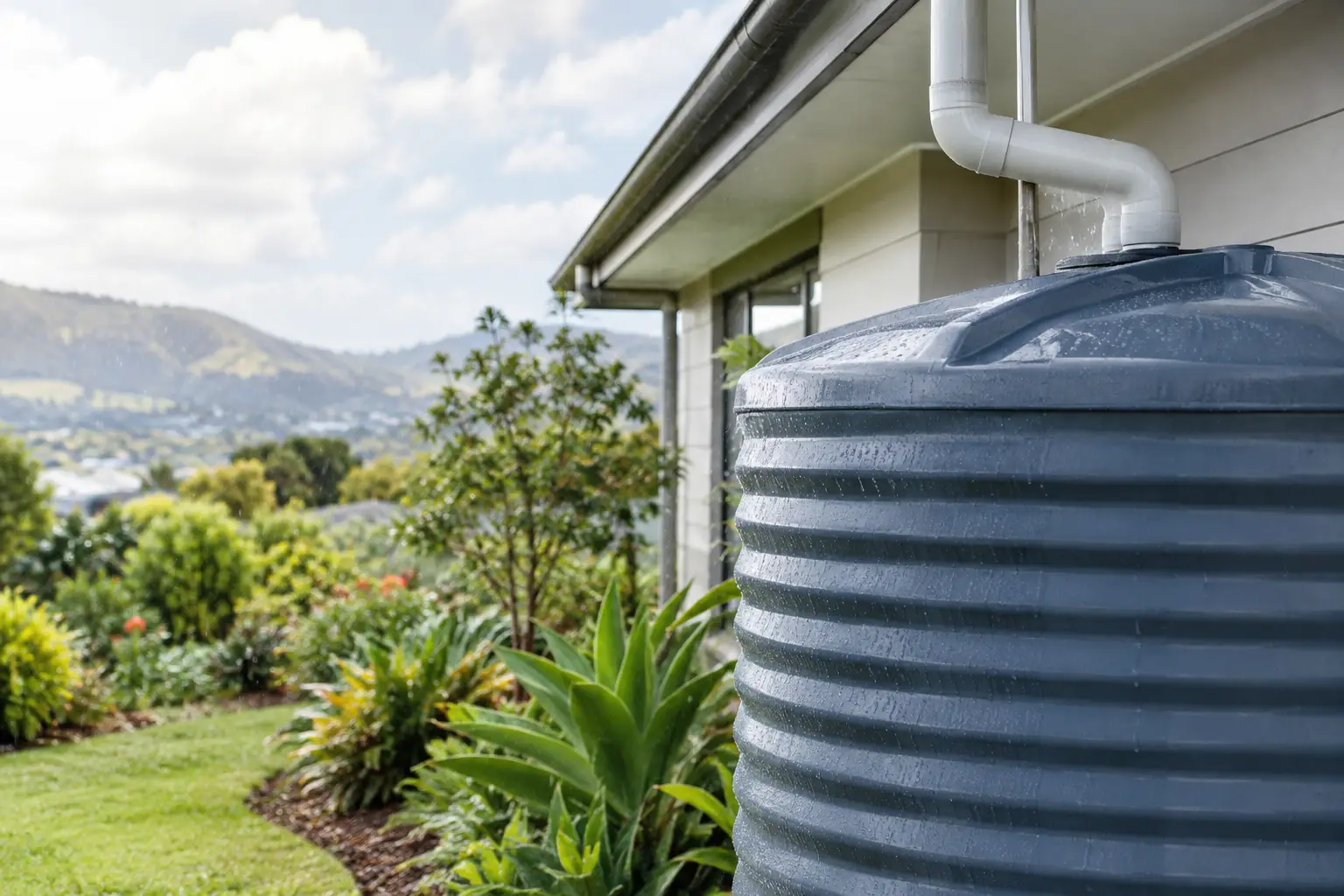
A rainwater harvesting system begins at the roof. Rain runs through gutters and downpipes, passes through a leaf diverter or rain head, then enters the tank. From there, gravity or a pump moves water to taps, irrigation lines, troughs or a filtered domestic supply.
The simple idea hides a few important details. The roof needs clean, well-maintained gutters. The inlet should keep leaves, mosquitoes and other debris out of the tank. An overflow must direct excess water away from footings and neighbouring properties. If a pump is involved, it needs to match the flow rate and pressure required at the outlet, not just the tank size.
For a home on town water, the system may supply selected outdoor taps, the laundry, toilets or the garden. A rain-to-mains switch can provide an automatic backup when tank water is low, where permitted and installed correctly. For acreage and rural properties, the tank may be the main supply for the home, stock, sheds and irrigation. These uses demand more storage and a more considered pumping arrangement.
Start with your water demand, not the tank size
The best tank size depends on two things: how much water you can collect and how much you expect to use between decent rain events. Bigger storage is valuable, but only if your roof and local rainfall can keep it replenished. On the other hand, a small tank may fill quickly and overflow through wetter months, then leave you short during a long dry run.
A straightforward estimate starts with roof area and rainfall. As a guide, one millimetre of rain falling on one square metre of roof produces roughly one litre of water before losses. A 200-square-metre roof receiving 25 mm of rain could therefore collect about 5,000 litres. Allow for first-flush diversion, overflow and losses from wind or guttering, then assess the result against your likely use.
For a suburban household using tank water for garden watering and toilets, a compact slimline or round poly tank may be enough. A renovation with a tight side passage may suit a slimline tank, while an under-deck or underground tank can preserve usable yard space. For an off-grid home, hobby farm or livestock property, larger round tanks, steel AquaPlate tanks or linked tanks often make better sense because reserve capacity matters more than footprint alone.
Do not size only for an average week. Consider summer watering, school holidays with extra people in the house, stock numbers, irrigation demand and the likelihood of extended dry weather. A farm tank that works well for a few cattle may not keep up once troughs, a wash-down area and a growing herd are added.
Roof material and catchment condition matter
Most sound, well-maintained roofing can collect rainwater effectively. The condition of the roof and gutters matters more than chasing perfect theoretical yield. Keep branches clear, repair sagging gutters, check downpipes after storms and remove built-up leaf litter before it reaches the tank.
If water will be used for drinking, take extra care with roof contaminants, bird droppings and overhanging vegetation. First-flush devices can divert the initial roof runoff after a dry spell, reducing the debris that enters storage. They are useful protection, but they do not replace routine cleaning and suitable filtration.
Choose the tank format for the site
Tank material and shape should suit access, capacity, location and water use. Poly tanks are popular for homes, sheds and rural properties because they are durable, corrosion resistant and available in a wide range of colours, diameters and capacities. They are often the practical choice where delivery access is reasonable and a level tank pad can be prepared.
Steel AquaPlate tanks are a strong option where large capacity, a traditional round profile or an engineered storage solution is required. They suit many rural, agricultural and commercial applications and can provide serious water reserve without needing multiple smaller tanks.
Underground tanks are worth considering where space, appearance or planning requirements make above-ground storage difficult. They need proper site preparation, traffic-load consideration and accessible service points. They can be an excellent solution under driveways or landscaped areas, but installation costs are usually higher than for an above-ground tank.
Where a property cannot accommodate a single large tank, linking two or more tanks can increase storage and allow staged expansion. This is often useful for homes adding a second roof catchment, sheds being built later or farms increasing their water demand over time.
Pumps and pressure make stored water usable
A tank does not deliver reliable household pressure by itself. For most domestic and farm applications, the pump is the part that turns stored rainwater into a dependable supply. The right choice depends on whether you need one garden tap, a house with several bathrooms, a long irrigation run or a high-lift rural application.
A pressure pump is generally suited to household use, garden taps and smaller irrigation demands. It should provide enough pressure for normal fixtures while maintaining flow when more than one outlet is in use. A pump that is too small can cause weak showers and poor performance at the far end of the house. One that is oversized may cycle unnecessarily, use more power and wear components faster.
Farm and irrigation pumps need to be matched to pipe diameter, distance, elevation and the number of outlets operating at once. Fire pumps are a separate consideration. If fire protection is part of the plan, check the required water reserve, fittings and local bushfire requirements rather than assuming a standard domestic pump will do the job.
Install a suitable pump cover or protected location where appropriate, keep suction lines short and properly sealed, and make sure electrical work and mains connections are completed by qualified trades. A good system is designed for servicing as well as day-to-day use.
Protect water quality from the roof to the tap
For garden and stock use, a clean roof, screened inlet and sensible tank maintenance may be sufficient. For water used inside a home, especially drinking water, filtration should reflect the intended use and water quality risks.
A whole-house filtration system commonly uses sediment and carbon cartridges to remove particles, improve taste and reduce odour. Cartridge size matters. Larger-format filters usually offer higher flow and longer service intervals, which can be worthwhile for family homes or rural households relying on tank water every day. UV filtration can provide an added treatment barrier where microbiological protection is required, provided the water has already been filtered clear enough for the UV unit to work effectively.
Filters are not fit-and-forget equipment. Cartridges need replacement on schedule, housings need inspection and UV lamps require planned servicing. Keeping a small supply of replacement cartridges and service kits on hand can prevent a delayed change-out from becoming a water-quality issue.
Installation checks that prevent expensive problems
The tank base is one of the most important parts of the entire project. Above-ground tanks need a stable, level base that fully supports the tank when full. A small lean can become a major load issue once thousands of litres are sitting in the tank. Follow the tank manufacturer’s site and base requirements rather than relying on a quick patch of loose gravel.
Position the tank so downpipes can reach it cleanly, access remains available for inspection and overflow is directed safely. Keep in mind pump noise, access for delivery, future filter changes and the route of any pipework to the house or shed. If the tank will connect to internal plumbing or mains backup, check local requirements and use a licensed plumber. Backflow prevention and cross-connection controls are not optional details.
For new builds and major renovations, plan rainwater harvesting early. It is far easier to allow for downpipes, tank pads, pipe runs and pump locations before driveways, retaining walls and landscaping are finished.
Make maintenance part of the system
A rainwater system earns its keep through regular, simple checks. Inspect gutters and leaf screens after heavy weather, confirm the tank inlet mesh is intact and make sure the overflow is clear. Look for leaks around valves, unions and pump connections, and listen for a pump that is cycling when no water is being used.
At least seasonally, review your water level against expected demand. If the tank is regularly empty, you may need more storage, better catchment capture or a change to how water is used. If it continually overflows, another tank or a linked system could make more financial sense than letting valuable runoff disappear.
Central Coast Water Tanks has been trusted for over 30 years to help customers match tanks, pumps, filtration and accessories into practical complete systems. Whether you are fitting out a suburban renovation, a shed, an acreage block or a working farm, choose quality products that suit the water you need now and leave room for the property you are building towards.