


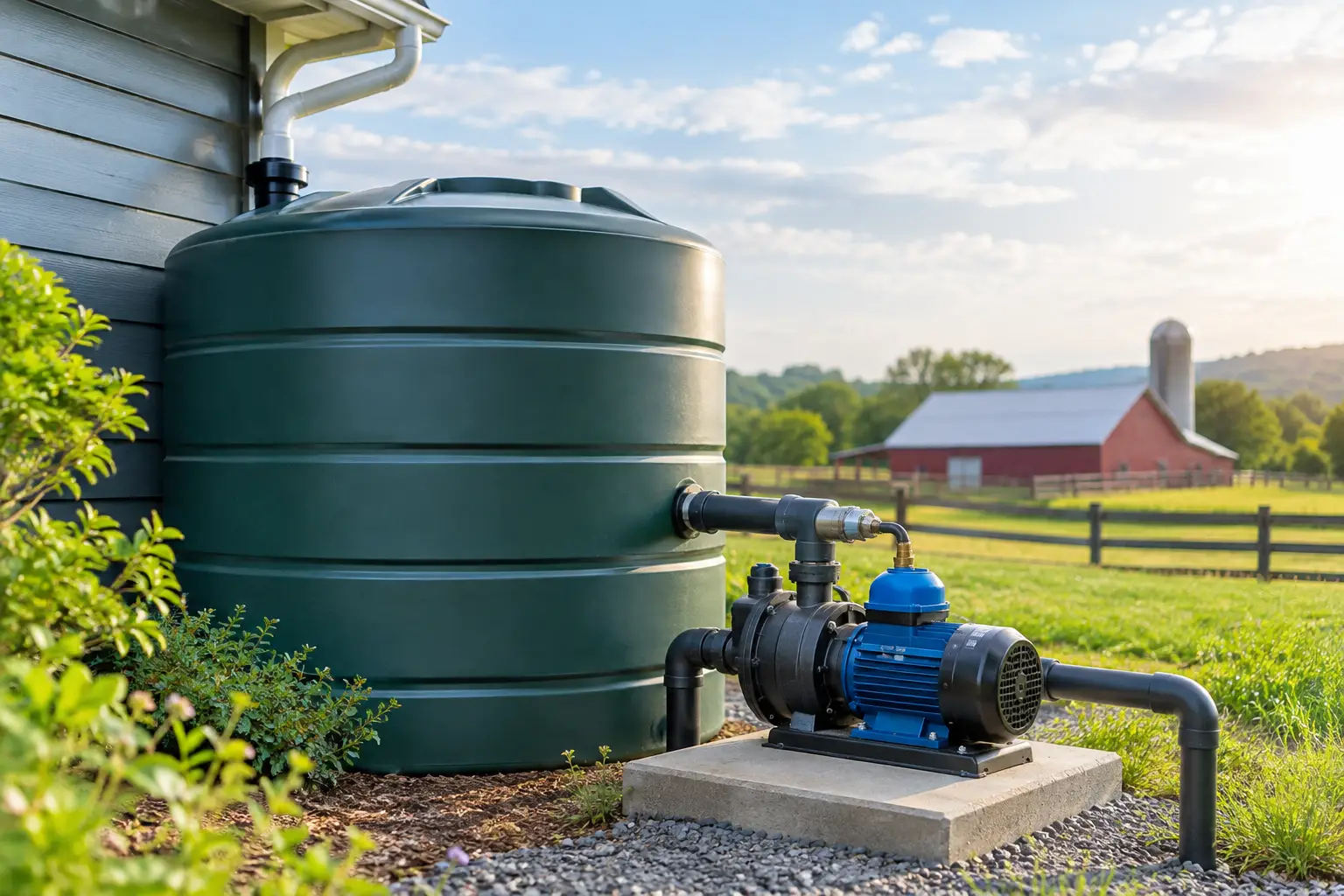
A tank can hold plenty of water and still leave you with a disappointing shower, a slow-filling trough or sprinklers that barely lift. Correct rainwater pump sizing is what turns stored water into a dependable supply at the tap, the garden, the shed or across the paddock. The right answer is not simply the biggest pump you can afford. It is a pump matched to how much water you need, how far it must travel and the pressure required at the end of the line.
For more than 30 years, Central Coast Water Tanks has helped customers build practical water systems from coast to country. Whether you are supplying a suburban home, a rural property or a stock trough well beyond the tank, getting the pump specification right before you buy can save money, power and frustration.
Start With the Job Your Pump Must Do
The first question is simple: what is the pump supplying? A small pressure pump for a garden tap has a very different workload from a whole-house system feeding two bathrooms, a washing machine, kitchen and toilets. Likewise, a farm pump may need high flow for irrigation, while a trough system often needs modest flow over a long distance.
Think about normal use and peak use. For a house, peak use is the period when more than one fixture runs at once: someone showers while the washing machine fills and another tap is opened. A pump that only handles one outlet comfortably may cycle constantly or lose pressure when demand increases.
For irrigation, identify the water requirement of the zone that runs at one time, not every sprinkler on the property. If one irrigation zone needs 45 litres per minute, the pump must deliver at least that flow at the required pressure. Running all zones together changes the calculation and may call for a larger pump, larger pipework or separate pumping arrangements.
A useful guide is to size around the following applications, then check the pump performance curve rather than relying on a broad label:
- Garden taps, small drip systems and a single toilet supply commonly need lower flow.
- Standard homes on tank water usually need reliable pressure with enough flow for simultaneous household use.
- Larger homes, dual dwellings and filtration systems may require greater flow and pressure stability.
- Livestock, wash-down and irrigation applications often need higher flow, with the final requirement set by distance, pipe size and outlet type.
Flow Rate and Pressure Are Not the Same Thing
Pump specifications usually show flow in litres per minute or litres per hour, and pressure in kilopascals, bar or metres of head. Both figures matter. A pump can move plenty of water with little pressure, or produce strong pressure at a very low flow. Your system needs the right balance.
Flow rate is the volume delivered. Pressure is the force that pushes water through pipework, filters, valves and outlets. A household pressure pump may need to maintain comfortable pressure at a shower while delivering enough water for another fixture. A sprinkler may need a stated operating pressure to achieve its advertised throw and coverage.
The catch is that a pump’s maximum flow and maximum pressure are not delivered at the same time. At very low resistance, it moves more water. As lift, pipe friction and required outlet pressure increase, flow falls. This is why the pump curve is one of the most useful documents when comparing models.
Reading a Pump Curve
A pump curve charts flow against head. Find the flow your application requires along the bottom, then trace upwards to see the head the pump can provide at that point. If the curve does not reach your required head and flow at the same point, it is undersized.
Avoid selecting a pump only by its maximum head or maximum litres-per-minute figure. Those headline numbers can look impressive but may not represent real working conditions. A trusted pump brand with clear performance data is worth more than a bargain unit with vague specifications.
Calculate Total Head Before Choosing a Pump
Total head is the resistance your pump must overcome. It combines vertical lift, the pressure you want at the outlet and friction losses in the pipework. It is the key calculation for practical rainwater pump sizing.
Vertical lift is the height from the water level in the tank to the highest outlet. A single-storey home with a tank at ground level has less lift than a two-storey house, but both still need enough pressure for comfortable fixtures. If the tank is below the house, or water must climb a slope to a shed or trough, that elevation matters quickly.
Required outlet pressure depends on the application. Household taps and showers generally need consistent operating pressure for a comfortable result. Sprinklers, drippers and stock-water valves each have their own practical range. Check the equipment being supplied rather than guessing.
Pipe friction is often overlooked. Water loses pressure as it travels through pipe, elbows, tees, filters, check valves and narrow fittings. Long runs, undersized pipe and high flow all increase this loss. A pump that looks adequate beside the tank can struggle at a trough 300 metres away if the line is too small.
As a rule, investing in correctly sized pipe is often smarter than continually upsizing the pump. Larger pipe reduces friction, improves delivery and can lower the power needed to achieve the same result. This is especially relevant for acreage properties and irrigation lines where long distances are unavoidable.
Rainwater Pump Sizing for Common Setups
For a typical tank-water home, a quality automatic pressure pump is generally the practical choice. It starts when a tap opens and stops when demand ends. Select a model capable of meeting your expected household flow after allowing for lift, filtration and pipe losses. If your home has multiple bathrooms, high-flow showers or regular simultaneous use, do not size it like a one-bathroom cottage.
A whole-house filter should be included in the calculation. Sediment cartridges, carbon filters and UV systems each create some resistance, particularly as cartridges collect sediment. Allowing sensible capacity helps maintain pressure between filter changes. It also reduces nuisance cycling and protects the pump from working harder than necessary.
For a garden-only tank, a compact automatic pump can be a cost-effective solution, provided you are realistic about the hose length and sprinkler demand. A high-output sprinkler at the end of a long narrow hose needs far more from the system than a hand-held hose nozzle beside the tank.
For rural supply, divide the requirements into jobs. A domestic pump can supply the house, while a separate transfer, irrigation or fire pump handles higher-flow work. One oversized pump may seem convenient, but it is not always the most efficient or economical way to run a property. Separating duties can also give you useful backup if one system needs servicing.
Fire-fighting requirements deserve dedicated planning. A fire pump must meet the applicable duty for hose length, fittings and the intended water source. It should not be selected as an afterthought from a domestic pump range. Consider priming arrangements, fuel or power availability, suction hose, strainers and access during an emergency.
Tank Outlet, Suction and Pump Position Matter
Most household rainwater pumps are installed close to the tank outlet, with a short, well-supported suction line. Pumps push water more effectively than they pull it. Long suction lines, air leaks and poorly sealed fittings can cause loss of prime, noise, poor flow and premature wear.
Use suitable tank fittings, a quality strainer and correctly sized suction pipe. Keep the intake clear of sludge near the bottom of the tank, while ensuring there is enough water available during dry periods. A floating intake can be a worthwhile option where water quality is a priority, drawing cleaner water from below the surface rather than from the tank floor.
If a pump is installed below tank water level, it benefits from flooded suction. If it sits above the outlet, check its suction-lift capability carefully and make every connection airtight. The stated suction lift is a best-case figure, not a reason to stretch the installation to its limit.
Allow for Power, Controls and Future Needs
A correctly sized pump also needs suitable electrical supply and controls. Check whether the property has standard single-phase power, requires three-phase equipment or suits a petrol, diesel or solar pumping option. Remote sites may favour solar transfer pumping into a header tank, then gravity or a smaller pressure pump at the point of use.
Pressure controllers, pressure tanks and rain-to-mains switches each have a role. An automatic controller is convenient for many homes, while a pressure tank can reduce rapid cycling in systems with small intermittent demands. A rain-to-mains switch can maintain household water when tank levels are low, subject to correct installation and local requirements.
It pays to allow a little capacity for future additions such as another bathroom, a granny flat, stock troughs or an expanded irrigation area. That does not mean buying the largest model available. It means choosing a pump with a sensible operating margin at your actual duty point.
Before you order, write down the highest outlet, the distance from tank to use point, pipe sizes, the fixtures or sprinklers that may run together, and any filters or valves in the line. Those details make pump selection far more accurate. If you are unsure, call with the layout of your system and intended use – a few minutes of planning can put dependable tank water where you need it for years to come.