


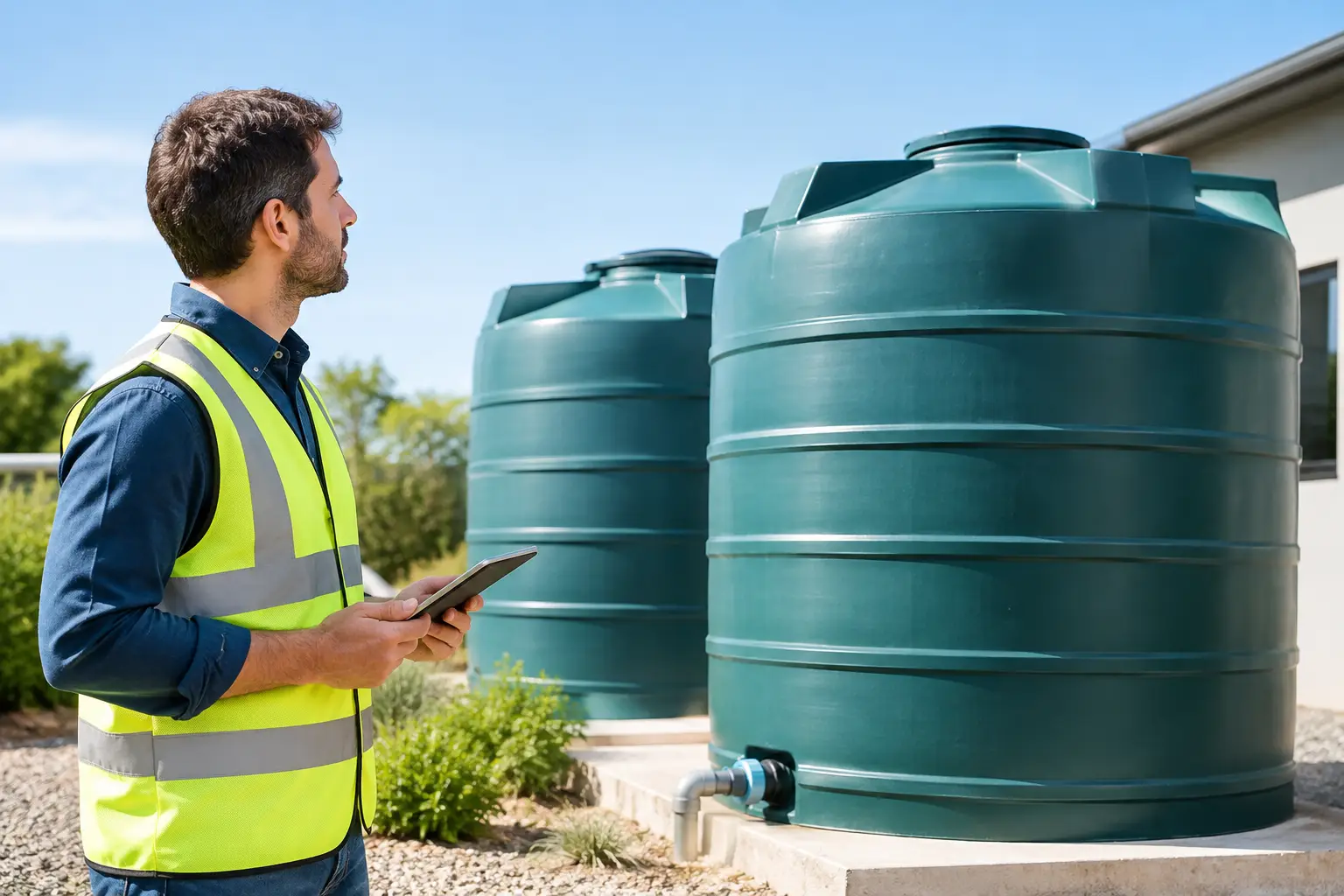
A tank that looks generous beside a shed can run dry after a few weeks without rain. A tank capacity calculator turns guesswork into a practical starting point by matching the water you can collect with the water your property actually uses. Whether you are supplying toilets and laundry, a full off-grid home, livestock troughs, irrigation or fire reserve, the right size is about more than the number printed on the tank.
Start with the water job your tank needs to do
Before measuring a roof or comparing tank shapes, decide what the stored water is for. A suburban home using rainwater for garden taps and toilet flushing has a very different requirement from a Hunter Valley acreage relying on tank water for the whole house, stock and a pump-fed shed.
For household use, consider the number of people, whether rainwater supplies drinking water, and the fixtures connected to the tank. Toilets, washing machines, outdoor taps and irrigation can consume far more water than expected, especially through a dry summer. If you are adding whole-house filtration, allow for the small amount of water used during filter servicing or backwashing where applicable.
On rural properties, demand is often less regular. Livestock drinking needs change with stock numbers and hot weather. Irrigation may be occasional but heavy. A fire-fighting reserve should be treated as protected water, not extra capacity you plan to draw down for the garden. Where one tank supports several jobs, size it around the essential supply first and build extra storage around the seasonal uses.
How a tank capacity calculator works
A calculator generally uses the internal dimensions of a tank to estimate the volume it can hold. For tanks measured in metres, the result is converted to litres because one cubic metre equals 1,000 litres.
For a rectangular or slimline tank, the calculation is:
Length × width × water height × 1,000 = litres
For example, a tank with an internal water space of 3 m long, 1.5 m wide and 2 m high holds approximately 9,000 litres. That makes slimline tanks a useful choice along a side passage or under an eave where a round tank would take up too much usable yard space.
For a round tank, use:
3.1416 × radius² × water height × 1,000 = litres
If the tank diameter is 3 metres, the radius is 1.5 metres. With a water height of 2.4 metres, the estimated capacity is about 16,965 litres. Tank manufacturers publish nominal capacities and dimensions, so use their supplied specifications when selecting a model rather than relying only on an outside measurement.
The distinction matters because a tank is not normally filled to the absolute top. Inlet positions, overflow arrangements, roof shape and manufacturer design all affect usable volume. A tank capacity calculator gives a sound estimate, while the product specification confirms the rated capacity you are buying.
Underground tanks need usable-volume planning
Underground water tanks can be an excellent answer where space, appearance or bushfire access makes above-ground storage difficult. Their quoted capacity is still the key number, but planning goes further than litres. You need adequate access for installation, a suitable excavation, traffic loading where relevant, pump selection and a practical way to inspect and maintain the system.
It is also worth allowing for the water that may sit below a pump intake or for a pump cut-out point. If a system must retain a minimum level to protect a pump or maintain emergency supply, that volume is not day-to-day available water.
Calculate how much rain you can collect
Tank size only tells half the story. The other half is your roof catchment and local rainfall pattern. The useful rule is simple: 1 mm of rain falling on 1 square metre of roof produces 1 litre of water before losses.
Use this estimate:
Roof area in m² × rainfall in mm × collection efficiency = litres harvested
A 200 m² roof receiving 50 mm of rain could collect 10,000 litres in theory. Once first-flush diversion, gutter overflow, wind and minor losses are allowed for, use a collection efficiency of around 80 to 90 per cent for a practical estimate. At 85 per cent, that rainfall event supplies about 8,500 litres.
Use the horizontal footprint of the roof, not the sloping sheet area. For multiple roof sections, add each catchment area that drains to the tank. A garage, shed or barn can make a major contribution, provided its roof material and guttering are suitable for the intended use.
Annual rainfall totals are useful, but monthly rainfall is more valuable for choosing capacity. Two areas may receive a similar yearly total, yet one may have long dry periods between heavy falls. A tank sized only around annual collection can look adequate on paper and still leave you short when you need water most.
Size storage for dry spells, not average weeks
The best tank size depends on the balance between supply, demand, budget and available space. Bigger storage gives more security through dry weather and reduces overflow in heavy rain, but it costs more, needs a suitable base and may require more room for delivery access and installation.
For a home using tank water as a supplement, a smaller tank may work well if the roof area is good and mains water can take over when the level is low. A rain-to-mains switch can make this arrangement easier by moving supply back to mains water automatically when tank water is unavailable.
For a property relying on rainwater as its main source, work from daily consumption and the longest likely dry period. If household demand averages 600 litres a day and you want 60 days of coverage, you need 36,000 litres of usable water before allowing for any fire reserve or seasonal garden use. That may point to multiple tanks rather than one oversized unit.
Multiple tanks offer practical advantages. They can fit around buildings, be installed in stages and provide some backup if one tank needs maintenance. Connecting tanks correctly is essential so they fill and equalise as intended. A larger single tank can be simpler where space and access allow, but it is not automatically the better choice.
Check the site before choosing a tank shape
A calculator cannot assess whether a tank will physically suit the block. Measure the clear space, including pump location, pipe runs, downpipes and room to access lids, strainers and filters. Also consider delivery access. A tank must be manoeuvred onto site safely, and a narrow gate, steep driveway or low overhead lines can change the best option.
Round poly tanks are a proven choice for high-volume domestic, farm and rural storage. Their shape suits open areas and offers strong capacity without a complicated footprint. Slimline tanks make better use of narrow residential spaces, while squat tanks can suit under-deck or low-clearance applications. Steel AquaPlate tanks are often selected for large capacities and rural installations where a durable, site-assembled solution suits the job.
Every tank needs a properly prepared base. An uneven or undersized base can place stress on the tank, affect fittings and create problems that no capacity calculation can fix. Follow the manufacturer’s base requirements, particularly for larger tanks where the full weight is substantial. Water weighs about one kilogram per litre, so a 22,500-litre tank holds more than 22 tonnes when full.
Include pumps, filtration and overflow in the plan
Stored water is only useful when it reaches the point of use at the right pressure and quality. A tank supplying a garden tap may need a straightforward pressure pump. A house system may need a pump sized for the number of outlets, pipe length and required flow, plus filtration suited to the water source and household use.
For drinking water, clean roof catchment, gutter guards, a first-flush diverter and appropriate filtration all contribute to better water quality. Cartridge filters need replacement at the correct intervals, and UV systems require regular lamp and service attention. A large tank does not replace maintenance.
Do not overlook overflow. During a big rain event, excess water needs to discharge away from footings, neighbouring properties and areas likely to become boggy. A well-planned overflow can direct water to a safe drainage point or a useful part of the landscape, depending on site conditions and local requirements.
Make the final number practical
Once you have estimated catchment, demand and dry-spell cover, compare the result with the capacities that fit your site and budget. It is often sensible to choose the next practical size up if the price difference, base area and delivery access are manageable. Rainfall is variable, household use changes and an extra margin can prevent a costly water shortfall.
Central Coast Water Tanks has been trusted for over 30 years to help customers choose quality products from coast to country, including tanks, pumps, filtration and complete water-system options. Bring your roof measurements, expected water use and site dimensions to the buying process, then choose storage that gives your property breathing room when the rain stops.