


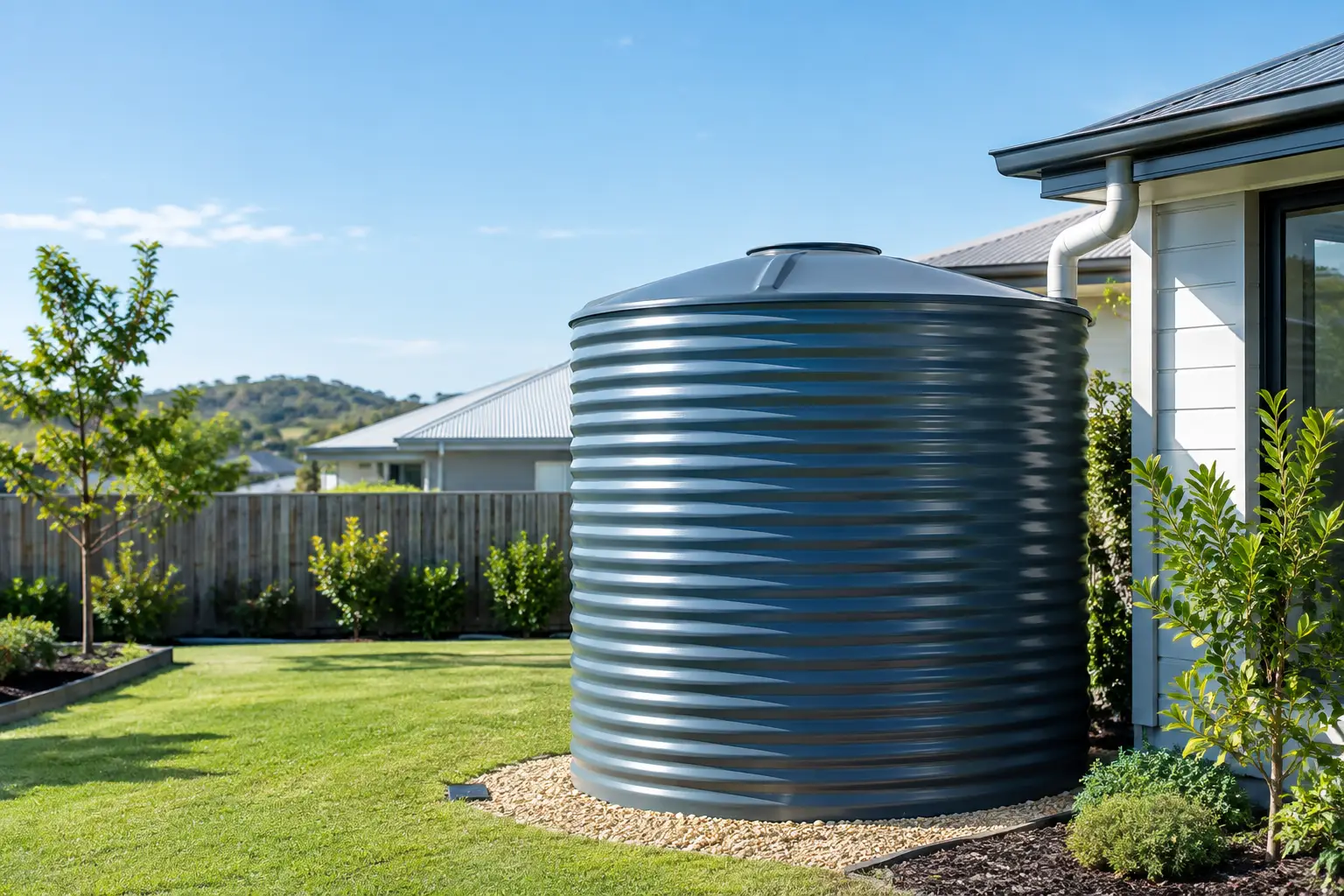
A rainwater tank has to do more than look right beside the shed or home. It needs to handle years of weather, store the volume your property actually uses and work properly with your pump, plumbing and filtration. Steel AquaPlate water tanks are a popular choice for Australian homes, acreage blocks and rural properties because they combine large storage capacity with a practical, proven steel tank design.
For many buyers, the appeal is straightforward: a steel tank can hold serious water without taking up unnecessary ground space, and AquaPlate steel is designed for the harsh conditions Australian tanks face. The right result still depends on choosing the correct capacity, tank shape, site preparation and complete water system around it.
Why choose steel AquaPlate water tanks?
Steel AquaPlate water tanks are manufactured from steel sheet with a protective metallic coating designed for water tank applications. This gives property owners a strong, long-lasting option for harvesting rainwater from a house, shed, barn or rural roof catchment.
They are especially well suited where a larger round tank is the most efficient use of space. A round tank distributes stored water pressure evenly around its walls, which makes it a practical format for high-capacity domestic and rural storage. Whether you are supplying toilets and laundry, watering stock, running irrigation or building an off-grid water supply, stored volume is often the difference between getting through a dry spell comfortably and watching the level too closely.
Steel tanks also offer a traditional appearance that sits naturally on rural blocks, behind homes and alongside sheds. Colour choices can help the tank blend with Colourbond roofing and surrounding buildings. For many customers, that matters just as much as capacity, particularly when the tank is visible from the house, driveway or entertaining area.
That said, steel is not automatically the best choice for every location. A slimline poly tank can be more suitable for narrow side access, under-eave positioning or a small suburban yard. Underground storage may make more sense where outdoor space is limited. The best tank is the one that matches the property, roof catchment and intended water use.
Choosing the right tank capacity
Buying the largest tank that fits is not always the best value. Capacity should be based on how much water you can collect and how quickly you will use it. A large tank connected to a small roof may take a long time to fill. Conversely, a generous roof catchment feeding a small tank can send valuable rainwater straight to overflow during heavy falls.
Start by considering your roof area, local rainfall pattern and household demand. A family using tank water for laundry, toilets, gardens and outdoor taps will need more storage than a household using it only for garden watering. A rural property with livestock troughs or irrigation demand may need considerably more again, particularly where mains water is unavailable or unreliable.
It is also worth planning for the driest part of the year, not only the wettest. In coastal and hinterland areas, rainfall can be variable. Inland and rural properties often face longer gaps between useful falls. Extra storage provides a buffer, but it should be paired with realistic expectations about catchment and usage.
For a new build or major renovation, think ahead. If you expect to add a granny flat, larger shed, garden irrigation or more livestock, installing adequate storage at the start can save the cost and inconvenience of expanding too soon.
Match the tank to the job
A steel tank used as a garden reserve has different requirements from one supplying drinking water to a home. For household use, plan the whole system: roof collection, gutters, leaf protection, first-flush management, pump, pressure control and filtration where required. A tank is central to the setup, but it cannot compensate for undersized pipework, poor roof drainage or the wrong pump.
For stock water, reliable volume and suitable trough delivery are usually the priorities. For fire preparedness, ensure the nominated reserve is clearly planned and accessible, with appropriate fittings for the intended firefighting arrangement. For irrigation, consider the pump flow and pressure your sprinklers, drippers or transfer lines actually require. High tank capacity does not automatically mean high pressure at the outlet.
Site preparation is not optional
A full water tank is extremely heavy. One litre of water weighs about one kilogram, so a 22,500-litre tank holds more than 22 tonnes of water before allowing for the tank itself. That weight needs a properly prepared, level base.
A suitable tank base is generally a compacted, level pad built to the tank manufacturer’s requirements. It needs to support the entire footprint evenly, provide drainage and remain stable after heavy rain. An uneven base can place unnecessary stress on the tank wall and outlet area, creating problems that are far more expensive than preparing the site correctly from day one.
Before ordering, measure the available area carefully and allow room for delivery access, installation and future maintenance. Check gates, corners, overhead branches, powerlines and the path from the street to the final tank position. On sloping sites, factor in earthworks, drainage and safe access around the tank.
The tank position should also make sense for your plumbing. Placing it close to downpipes can simplify water collection, while positioning it sensibly in relation to the pump and house can reduce pipe runs and pressure losses. Keep practical access to the outlet, pump, filter housings and any rain-to-mains equipment. Equipment that is difficult to reach is less likely to be serviced when it should be.
Build a complete rainwater system
The best rainwater systems are planned as a package rather than assembled piece by piece after the tank arrives. This is where homeowners can avoid mismatched fittings, underperforming pumps and repeat call-outs.
Start at the roof. Gutters and downpipes should be clean, appropriately sized and fitted with screens or gutter protection suited to the site. Leafy blocks may benefit from better debris management, while properties near dusty roads or open paddocks need to consider sediment entering the system.
Next comes the tank inlet and overflow. A properly installed inlet arrangement helps keep pests and debris out, while an overflow needs to direct excess water safely away from the tank base and buildings. Do not let overflow create erosion around the pad or flood a neighbouring area.
Then select the pump for the application. A pressure pump for household supply needs to deliver comfortable pressure to taps, showers and appliances. A garden or irrigation pump should be selected for the flow and pressure needed at the farthest outlet, not simply the closest tap. Fire pumps, farm pumps and transfer pumps each have different duties, so choosing by price alone can be a costly shortcut.
If rainwater supplies indoor fixtures, filtration may be required depending on how the water is used and local requirements. Sediment filtration protects plumbing and appliances, while carbon filtration can improve water quality characteristics. UV treatment may be appropriate where treated drinking water is required, provided the water is properly pre-filtered first. Replacement cartridges and service kits should be readily available, because a filtration system only performs as intended when it is maintained.
Looking after a steel tank over time
Steel AquaPlate water tanks are built for long service, but every tank benefits from routine checks. Inspect gutters, strainers and inlet screens regularly, especially after storms or periods of heavy leaf fall. Clear debris before it affects water quality or blocks flow into the tank.
Keep the tank surroundings tidy and make sure overflow water drains away freely. Check fittings, valves and pipe connections for leaks. If your system uses a pump, listen for changes in cycling, pressure or noise, as these can point to an issue with the pump, pressure vessel, suction line or plumbing.
Water quality management is equally practical. Keep the roof catchment clean, maintain screens and first-flush devices, and replace filter cartridges on schedule. If the tank is used for potable water, follow the product instructions and relevant health guidance for your area. Tank water quality is influenced by the whole collection system, not just the tank material.
Get advice before you buy
Tank selection can look simple online until you compare dimensions, capacity, delivery access, base requirements, pump duty and water-use plans. Getting those details right before purchase saves money and avoids compromises later.
Central Coast Water Tanks has been trusted for over 30 years, supplying quality water storage, pumps, filtration and complete system options from coast to country. If you are comparing tank sizes or planning a full rainwater setup, speak with an experienced supplier before ordering. A properly sized steel tank on a sound base, matched with the right pump and filtration, gives your property a water supply you can rely on when the next dry stretch arrives.