


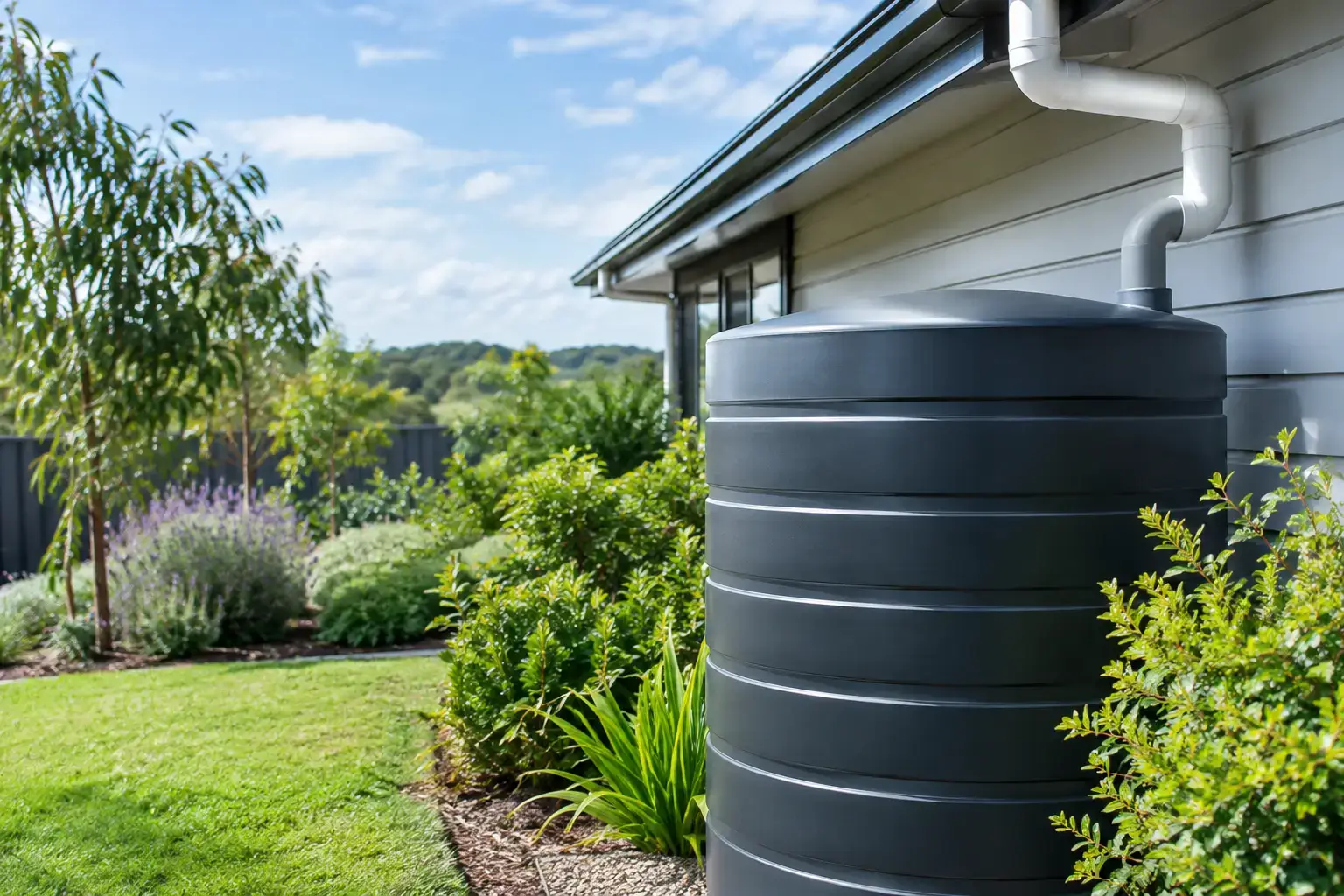
A decent downpour can send thousands of litres off a roof in a matter of hours. Without a planned collection system, that water is lost to the driveway, drains and paddocks just when stored water could reduce pressure on your mains supply or keep stock troughs topped up. This stormwater harvesting guide explains how to turn rainfall into a practical, dependable water source for Australian homes, acreages and working properties.
For most properties, the best starting point is roof runoff collected through gutters and downpipes. It is generally cleaner and easier to manage than water flowing across driveways, lawns or hardstand areas. True surface-water harvesting can suit larger rural operations, but it needs more careful treatment, sediment control and approval considerations.
Start with the job the water needs to do
Tank size, pump selection and filtration all depend on how you intend to use the water. A garden-only system can be simple: a tank, outlet and suitable garden pump may be enough. A household supply needs more planning, including reliable pressure, filtration and a safe mains-water backup where required.
Common uses include toilet flushing, washing machines, gardens, livestock, irrigation, shed wash-down, firefighting supply and whole-house water. For rural and off-grid properties, stored rainwater may be the main domestic supply. In those situations, capacity and water quality are not optional extras – they are central to the system design.
Be realistic about demand. A large house with several occupants, long showers, a laundry and regular garden watering will use far more than a weekend cabin. Likewise, a tank intended to support cattle through a dry spell needs to be sized around stock numbers, daily consumption and the likely gap between useful rainfall.
Stormwater harvesting guide: calculate your potential supply
A quick collection estimate helps set realistic expectations. One millimetre of rain falling on one square metre of roof produces about one litre of water. Multiply your roof catchment area by annual rainfall, then allow for losses from first-flush diversion, overflow, wind and gutter inefficiency.
For example, a 200-square-metre roof receiving 900 mm of annual rain has a theoretical yield of 180,000 litres. The amount you can actually use depends on tank capacity and when rain falls. A small tank may overflow repeatedly in a wet month, then run low after a few dry weeks. A larger tank captures more of those heavy falls, but costs more and needs a suitable site.
The right size is a balance between roof area, rainfall pattern, household or farm demand, available space and budget. On the Central Coast, Newcastle and the Hunter Valley, rainfall can be generous but uneven. Designing for storage through dry periods is often more useful than simply looking at the annual average.
Choose a tank that fits the site and the water task
Above-ground poly tanks are a popular choice for homes, sheds and rural properties because they are durable, straightforward to install and available in a wide range of capacities. Round tanks make efficient use of open space, while slimline tanks suit narrow side access and smaller suburban blocks. Under-deck tanks can make otherwise unused areas work harder.
Steel AquaPlate tanks are well suited to larger storage requirements and properties where a steel finish or higher capacity is preferred. Underground tanks can preserve yard space and are useful where planning rules, site appearance or access makes an above-ground tank impractical. They do, however, require correct excavation, drainage, anchoring and traffic-load considerations.
Do not choose solely by litres. Check the delivery path, pad location, level access, overflow route and clearance from boundaries and structures. A full 22,500-litre tank weighs more than 22 tonnes, so the base must be flat, compacted and properly prepared. Poor tank bases cause avoidable stress, settlement and warranty problems.
Collect clean water before it reaches the tank
Good water starts at the roofline. Keep gutters sound, install gutter guards where leaf litter is an issue, and make sure downpipes are securely connected. A screened tank inlet stops leaves, insects and other debris entering storage, while a light-proof tank helps limit algae growth.
A first-flush diverter is worthwhile for many systems. It diverts the first portion of runoff after dry weather, when dust, pollen, bird droppings and roof debris are most concentrated. It does not make water drinking quality on its own, but it reduces the load on your tank and filters.
Your overflow deserves the same attention as the inlet. It needs to safely direct excess water away from tank foundations and neighbouring properties without causing erosion. On larger sites, overflow can be directed to a legal drainage point, swale or landscaped area designed to handle it. Never let overflow continually scour soil beside the tank stand.
Match the pump and pressure system to the application
Gravity-fed water works well where the tank sits above the point of use, but most homes need a pump. The right pump is not simply the one with the biggest motor. It must provide enough flow and pressure for the number of outlets being used, while accounting for pipe length, elevation and friction losses.
A compact pressure pump can suit toilets, laundry and garden taps. A multi-stage domestic pump is often a better fit for whole-house rainwater supply, particularly where several taps may run together. Farm and irrigation pumps need to be matched to the required flow rate, pipe size, sprinkler layout and lift from the tank or dam.
For properties connected to town water, a rain-to-mains switch can automatically change over when the tank level is low. This protects appliances and keeps water available without needing to manually operate valves after every dry period. The installation should prevent any cross-connection between rainwater and drinking-water mains, so use a licensed plumber for the work.
If fire preparedness is part of the plan, set aside a dedicated volume rather than assuming the household tank will always have enough. Check local bushfire requirements, access for firefighting appliances, outlet fittings and whether a petrol fire pump is appropriate for a power outage.
Filter water for how it will be used
Water quality requirements increase with the level of contact. Water used for gardens or stock may need only sensible debris management, depending on the source and livestock requirements. Water used inside the home should pass through suitable sediment filtration to protect pumps, valves and appliances.
For drinking water, a properly selected filtration system may include sediment cartridges, carbon filtration and UV treatment. Filtration is not a set-and-forget purchase. Cartridges need replacement at the recommended intervals, housings need servicing, and UV lamps must be maintained to remain effective. A high-quality filter cannot compensate for a neglected roof, dirty gutters or contaminated tank.
If you are unsure about water quality, arrange testing before relying on tank water for drinking, especially after floodwater exposure, bushfire ash, extended stagnation or contamination from nearby industrial activity. Surface runoff should not be treated as equivalent to roof-harvested rainwater.
Plan installation, approvals and maintenance early
Local rules can affect tank placement, overflow, plumbing, stormwater connections and whether a development approval is required. Requirements vary between councils and sites, so confirm the details before ordering a tank or cutting into roof drainage. Licensed trades should complete electrical and potable-water plumbing work.
After installation, a simple maintenance routine protects your investment. Inspect screens and gutters after windy weather, clear the first-flush device, check that the pump starts and stops correctly, and look for leaks around fittings. Keep the area around the tank clear so you can spot issues early. During dry periods, monitor levels rather than waiting for the pump to lose prime.
Central Coast Water Tanks has been trusted for over 30 years and can help customers coast to country build a complete system around the tank, pump, filtration and accessories that suit their property. Buying compatible components together can save time, avoid fitting surprises and make future servicing simpler.
The most useful harvesting system is not necessarily the largest one. It is the one sized for your roof, rainfall, water use and site conditions, then maintained well enough to be ready when the next dry spell arrives.