

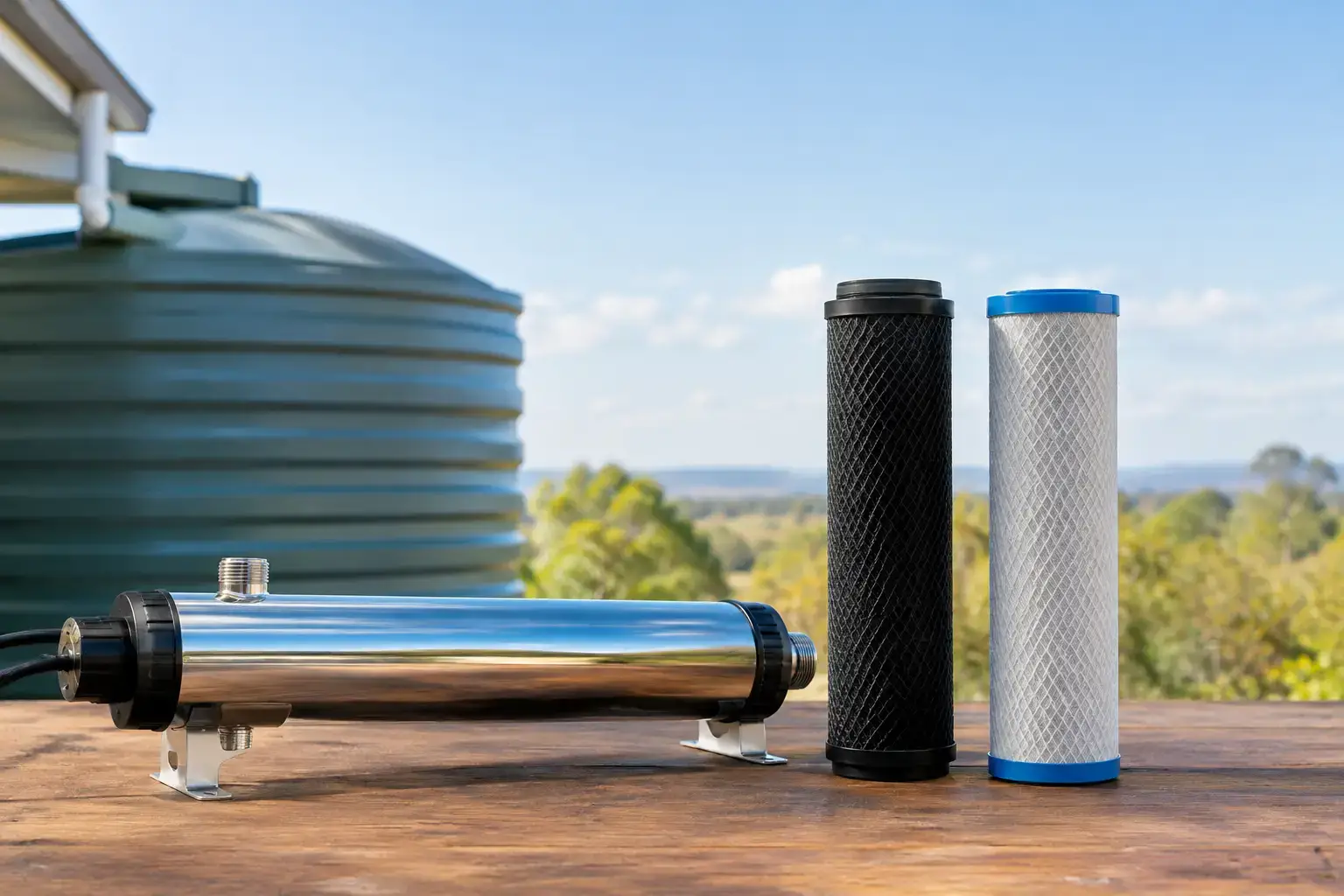
A clear UV carbon comparison starts with one practical fact: UV and carbon filters do completely different jobs. One is designed to treat microorganisms using ultraviolet light; the other improves water by adsorbing selected chemicals, tastes and odours. For rainwater tanks, bore water and whole-house supplies, the best choice is rarely about which technology is “better”. It is about what is actually in your water, how it is being used and whether the system is maintained properly.
For many Australian properties, a combined sediment, carbon and UV filtration system is the sensible approach. But it is not automatically necessary for every tank, every shed or every stock-water line. Choosing the right setup can save money on replacement cartridges while giving your household a more dependable water supply.
UV carbon comparison: what each stage does
UV water treatment uses a specialised lamp inside a chamber to expose flowing water to ultraviolet light. The light damages the genetic material of microorganisms, stopping them from reproducing. When correctly sized and maintained, UV is used to manage bacteria and other microorganisms in clear water supplies.
UV does not remove dirt, sediment, rust, tannins, dissolved minerals, chemical residues or bad taste. It also leaves no residual protection in pipework or stored water after treatment. Water is treated only as it passes through the UV chamber.
Carbon filtration works differently. Activated carbon has a large internal surface area that adsorbs certain compounds from water. It is commonly used to reduce chlorine taste and odour in town water, as well as organic tastes, musty smells and some chemical compounds where the cartridge is suitable for the job.
For rainwater, carbon can improve the taste and odour of water affected by roof debris, leaf matter or organic material. However, carbon is not a disinfection method. A carbon cartridge should never be relied on to make microbiologically unsafe water safe to drink.
The short version is simple: UV targets microorganisms, while carbon targets certain taste, odour and chemical concerns. Neither stage replaces proper tank hygiene, a good inlet screen, a first-flush device or sediment filtration.
When UV is the right choice
UV is most relevant when tank water is used for drinking, cooking, brushing teeth, bathing or supplying a whole home. Rainwater can be an excellent household water source, but contamination can occur from bird droppings, small animals, insects, roof debris and dirty gutters. A clean roof catchment and well-maintained tank reduce the risk, while UV provides a final treatment barrier at the point where water enters the house.
It is particularly worth considering for homes that rely fully on tank water, rural properties with variable source quality, accommodation buildings, granny flats and off-grid homes. It can also suit properties with children, elderly residents or anyone who wants added confidence in their drinking-water supply.
UV performance depends heavily on water clarity. If sediment, colour or organic matter is present, it can shield microorganisms from the light. That is why a UV unit should be installed after suitable pre-filtration, not directly after a tank outlet with no protection.
A typical whole-house arrangement uses a sediment cartridge before the UV unit. The sediment rating needs to suit the water source and the UV manufacturer’s requirements. Fine filtration can improve clarity, but it may also reduce flow and require more frequent cartridge changes if tank water carries a lot of sediment.
UV sizing is not just about pipe size
A UV unit must be matched to the required flow rate, not simply selected because it has the same inlet and outlet fitting size as your plumbing. A family home with several bathrooms, a high-flow shower, appliances and outdoor taps may need more capacity than a compact cabin or caravan setup.
Undersizing a UV system can mean water moves through the chamber too quickly for the intended dose. Oversizing is usually less of a safety issue, but can add unnecessary upfront cost. Check the rated flow for the required treatment level and allow for realistic peak demand, especially where pressure pumps deliver strong flow.
UV lamps also age. Even if a lamp is still glowing, its UV output may have dropped below the level needed for effective treatment. Most systems require an annual lamp replacement, along with cleaning or replacing the quartz sleeve when scale or staining affects light transmission.
When carbon filtration earns its place
Carbon is often the stage people notice most because the change in taste or smell can be immediate. If your tank water has a stale, earthy or musty flavour, a quality carbon cartridge may help, provided the issue is related to compounds that carbon can adsorb.
For town water, carbon is especially useful where chlorine taste and odour are unwanted. For tank water, the decision is more dependent on the condition of the catchment, tank and pipework. If the water tastes clean and there is no known chemical concern, carbon may be optional rather than essential.
Carbon cartridges are not all the same. Granular activated carbon cartridges can suit general taste and odour reduction, while carbon block cartridges often provide finer filtration and more contact time with the carbon media. The best option depends on desired flow, housing size, cartridge micron rating and the contaminants being addressed.
A carbon cartridge has a finite capacity. Once its adsorption sites are used, it cannot keep removing the same contaminants effectively. Leaving a spent cartridge in service for too long can also create hygiene concerns, particularly in warm conditions or on low-use systems. Change intervals should follow the cartridge specifications and your actual water quality, not just the calendar.
The best setup for most tank-water homes
For drinking-water rainwater systems, the most practical order is usually sediment filtration first, carbon filtration second where taste, odour or chemical reduction is wanted, then UV as the final stage before household use.
The sediment filter protects the carbon cartridge and UV chamber from grit and suspended matter. The carbon stage can improve the water’s taste and reduce selected organic compounds. The UV unit then treats clear, filtered water immediately before it enters the home’s drinking-water plumbing.
This order matters. Installing UV before a filter means particles can still enter the plumbing after treatment. Installing carbon with no sediment pre-filter may shorten cartridge life quickly. Installing a UV system with no pre-filtration may give a false sense of security if the water is cloudy or dirty.
Not every property needs all three stages. A simple shed hand-wash supply may only need basic sediment filtration. Livestock watering and irrigation generally call for filtration that protects pumps, valves and drippers rather than a domestic UV system. A home using treated town water may choose carbon for taste, while a household depending on rainwater for all internal use will often benefit from a complete filtration and UV arrangement.
Do not use filtration to hide a tank problem
Filters are a final line of defence, not a substitute for maintaining the water source. If water develops a strong smell, unusual colour, visible sediment or recurring cartridge blockages, inspect the full system. Check gutters, roof catchment, leaf guards, tank screens, inlet strainers, first-flush devices, overflow protection and tank sludge levels.
A neglected tank can load filters with organic matter and shorten their service life. Likewise, a poorly placed tank inlet or damaged screen can allow contaminants into water that a small household cartridge system was never designed to handle.
Regular maintenance is usually cheaper than repeated cartridge replacements. Keep gutters clear, make sure screens are intact, prevent light entering the tank where possible, and arrange tank cleaning when sediment accumulation is affecting water quality or pump performance.
Buying on price alone can cost more later
A low-cost UV or carbon unit may look similar to a better-known system, but the ongoing details matter. Consider housing quality, flow rating, replacement lamp availability, cartridge dimensions, replacement costs, service access and whether the system suits your pump’s pressure and flow.
Standard cartridge sizes can make future servicing simpler, particularly for rural properties where it makes sense to keep replacements on hand. For whole-house applications, a larger housing may offer better flow and longer service intervals than a small under-sink cartridge, although it will take up more space and cost more initially.
Central Coast Water Tanks has been trusted for over 30 years to help customers build practical water systems, from tank and pump packages through to whole-house filtration. Selecting compatible components at the start helps avoid the common problem of buying a UV unit, housings and fittings that do not match the property’s real water demand.
A practical decision for your property
Choose UV when you need a final treatment barrier for clear drinking water and want protection against microorganisms. Choose carbon when taste, odour or suitable chemical reduction is the main concern. Choose both, with sediment filtration ahead of them, when your household relies on rainwater and you want a more complete point-of-entry treatment system.
Before ordering, consider a water test if there is a known bore-water issue, unusual staining, persistent odour or suspected contamination. Then size the system around the source water, the number of users, peak flow and your willingness to keep up with cartridge and lamp changes. A well-maintained system gives tank water the best chance to stay clean, pleasant to use and ready when your property needs it.